
On this pageWhy the distinction matters
German heritage is the connection a person or family carries from German ancestry, history, language, customs, places, memories or relationships. It can be strong and visible, or it can survive as one surname, one photograph or one word such as Oma. It is not a legal status, a DNA score or a test with one correct way to pass.
That definition leaves room for different family histories without making every connection identical. Someone raised by German-speaking grandparents has a different experience from someone who has just found a German birthplace in a census record. Both can speak honestly about German heritage when they describe what they know, what they practice and what they are still learning.
Four terms that should not be treated as synonyms
- Ancestry
- Descent or family origin. In U.S. Census Bureau data, ancestry is self-identified and is not the same as birthplace or degree of cultural attachment.
- Heritage
- The broader connection built from ancestry, family memory, language, customs, places, objects and meanings carried across generations.
- Citizenship
- Legal membership in a country. German citizenship has legal rules; German heritage is not a substitute for that status.
- Identity
- How a person describes belonging in the present. Identity may include heritage, but it is shaped by family, community and lived experience as well as descent.
Why the distinction matters
When these terms are collapsed into one label, heritage conversations quickly become gatekeeping. A person with German citizenship is not automatically more knowledgeable about every regional tradition. A person with documented German ancestors does not automatically inherit cultural expertise. Someone who grew up with German family practices may have a deep connection even when the language faded before they were born.
For a closer look at the boundary between descent and cultural connection, German ancestry vs. German heritage compares the two terms directly. This page keeps the wider definition in view.
The U.S. Census Bureau makes a similar distinction in its own limited context. Its ancestry question records self-identification of origins or roots; it does not measure how attached a respondent is to that ancestry. A response can represent an active community life or a memory of ancestors several generations back. Census ancestry data therefore describes reported origin, not a ranking of whose heritage is strongest.
What German heritage can include
Heritage often survives unevenly. One family may retain recipes, church records and regular contact with relatives in Germany. Another may have an Americanized surname and a box of photographs with only a few names written on the back. Migration, marriage, schooling, war and social pressure can all change what a family keeps.
When very little survived, reconnecting with German heritage is a separate practical task: begin with the family evidence at hand, then choose one path to investigate.
The connection may include:
- documented ancestors from a German-speaking place;
- a family name, photograph, letter, certificate or hometown;
- words and forms of address used at home;
- recipes, holiday practices, music, faith or craft traditions;
- membership in a German-American community shaped in the United States;
- a present-day decision to research and preserve what earlier generations could not.
None of those items proves the others. A recipe cannot establish a birthplace, and a birthplace does not show which customs a person practiced. Good heritage work lets each clue do its own job.

Family memory is a starting point, not the final proof
Family stories deserve to be recorded even when they are incomplete. The careful approach is to label them as memory and then compare names, dates and places with records. That preserves the human story without asking it to carry certainty it does not have.
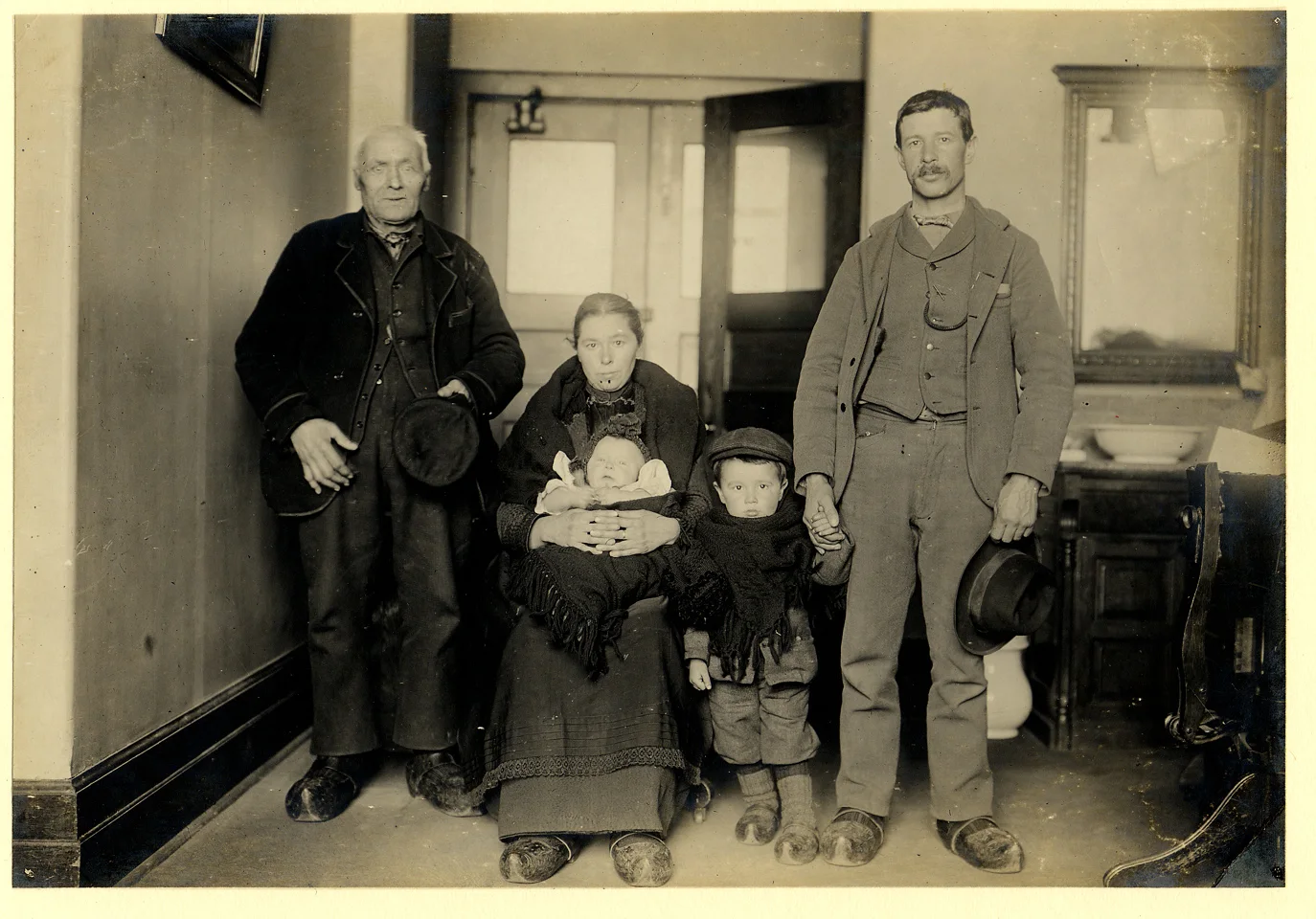
The National Archives recommends preserving family papers and photographs by preventing damage and keeping originals even after digitization. For heritage work, the editorial lesson is just as useful: save the object, record who identified it and separate the original evidence from later interpretation.
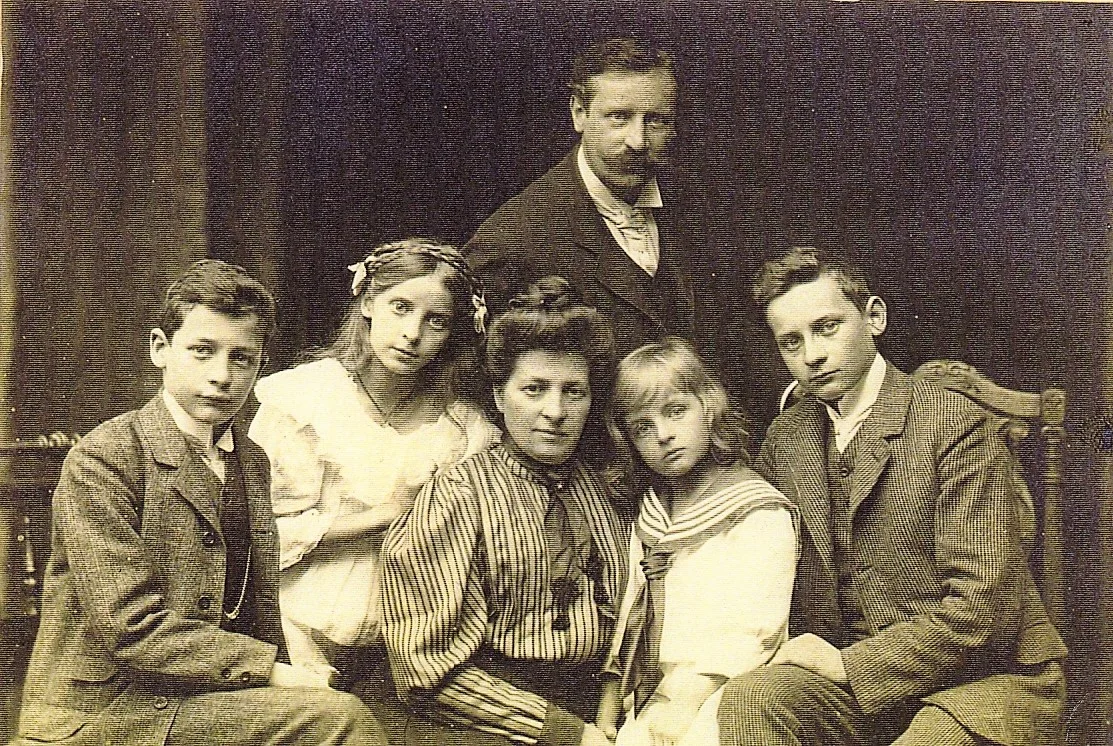
An old photograph becomes more useful when you can write, “Oma identified this as her parents outside their home in Wisconsin,” rather than “This proves our family always followed German customs.” The first statement preserves a source and its provenance. The second reaches beyond what the image can establish.
What German heritage does not require
German heritage does not require fluent German, traditional clothing, participation in Oktoberfest, a particular religion or a minimum ethnicity estimate. Each may matter in a particular family or community, but none is a universal entrance requirement.
It also does not make every claimed connection equally supported. “My grandfather was born near Bremen” is a claim that records may confirm. “Our family has always been typically German” is too broad to verify until the speaker identifies the people, place, period and practice involved.
Common identity tests—and what they miss
You need a high German DNA percentage for the heritage to count.
Ethnicity estimates are evidence about possible ancestry, not measurements of family memory, cultural practice, citizenship or belonging.
Use DNA as one research clue. Do not ask it to answer social and personal questions it was not designed to measure.If your family lost the German language, the heritage disappeared.
Language loss changes a connection, but names, records, relationships, customs and memories may survive and can be studied honestly.
Relearning a language can deepen a connection; fluency is not retroactive proof that one family history matters more than another.Celebrating Oktoberfest is enough to explain German heritage.
Oktoberfest has specific Munich and Bavarian roots. It may be one celebration, but it cannot summarize Germany's regional diversity or a family's ancestry.
A festival is most meaningful when it is named accurately rather than used as a costume for an entire culture.A practical way to describe your own connection
Use three layers instead of reaching for a purity test:
- What you know: a person, date, document, place or relationship you can name.
- What your family remembers or practices: a story, word, recipe, holiday or habit, labeled honestly as memory or tradition.
- What you want to learn: the record, regional history, language or family interview that would make the connection more specific.
A careful description might be: “My great-grandparents came from Württemberg, our family kept a few recipes but not the language, and I am learning which town records survive.” That sentence is modest, concrete and useful. It gives the next research step without pretending one household represents all German experience.
If you need orientation across the wider topic, use the German heritage starting guide. If the distinction between descent and cultural connection is still unclear, continue with German ancestry vs. German heritage. Readers rebuilding a connection can move next to how to reconnect with German heritage.
Expressing heritage without turning it into proof
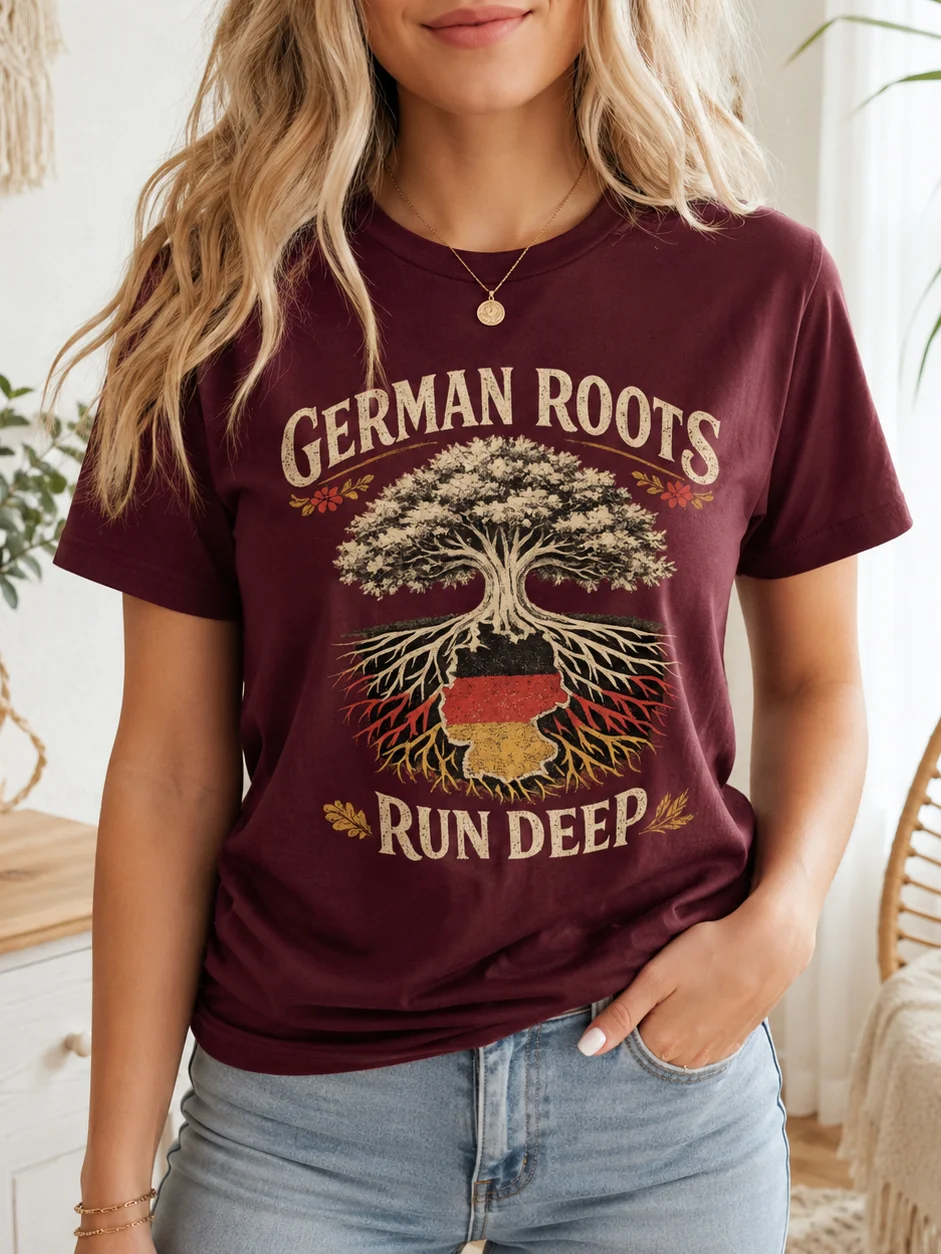
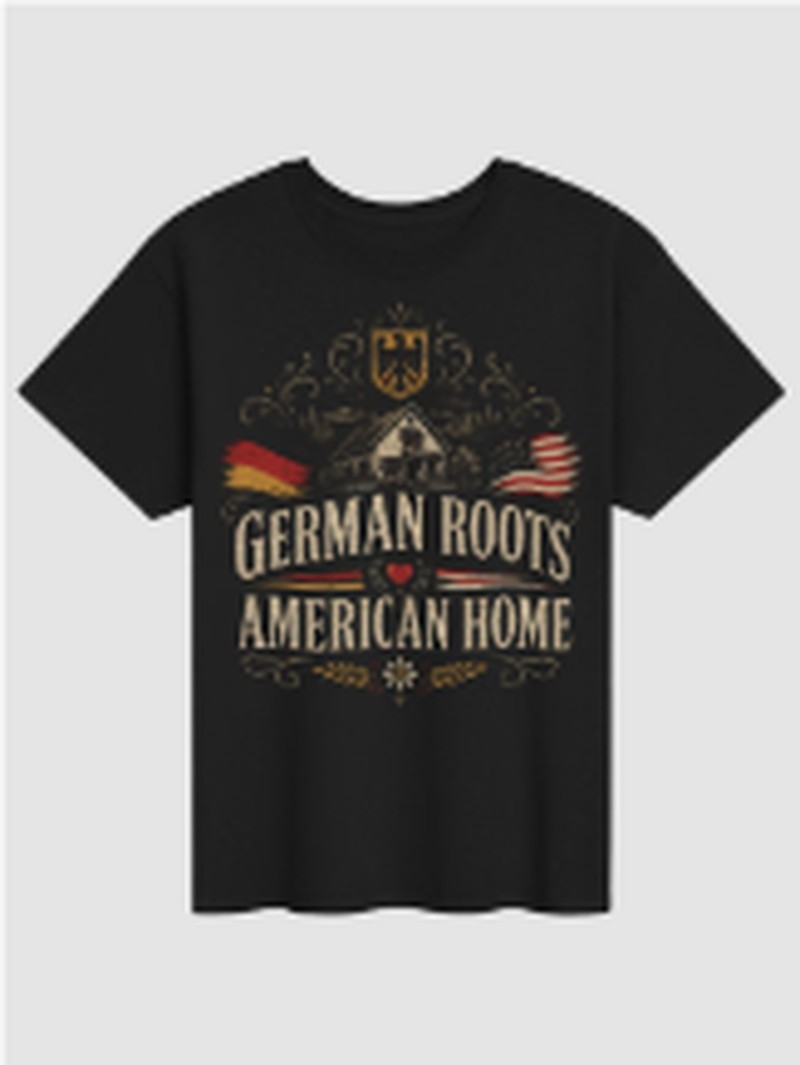
Clothing and keepsakes can express a connection, but they do not certify it. The most honest designs speak from a particular position. “German Roots Run Deep” emphasizes family continuity; “German Roots, American Home” names a German-American experience. A reader may identify with one, neither or both.
That is why the products below are a quiet optional next step, not part of the definition. The article remains complete without buying anything.
German heritage becomes clearer when it moves from a vague label to a specific person, place, object or practice. Begin with one thing your family can name, record where that knowledge came from and leave room for what the evidence has not answered yet.
A quiet way to express the connection
German roots, in two different voices
One design centers the depth of family roots; the other names a German-American story directly. Neither is a test of belonging.
Frequently asked questions
Common questions
Is German heritage the same as German citizenship?
No. Citizenship is a legal status. Heritage describes connections to family history, culture, language, place and memory; a person may have one without the other.
Do I need to speak German to have German heritage?
No. Language can be an important connection, but many families lost German across generations. A surviving word, family story or documented ancestor can still be part of a real heritage connection.
Does a DNA percentage define German heritage?
No. An ethnicity estimate may suggest ancestral connections, but it cannot measure family memory, cultural knowledge, citizenship or personal identity.
Can someone reconnect with German heritage later in life?
Yes. Reconnection can begin by recording what the family knows, checking names and places against records, learning about a specific region or reviving one practice with clear historical context.