

German-American History
Follow the journeys that became German-American lives.
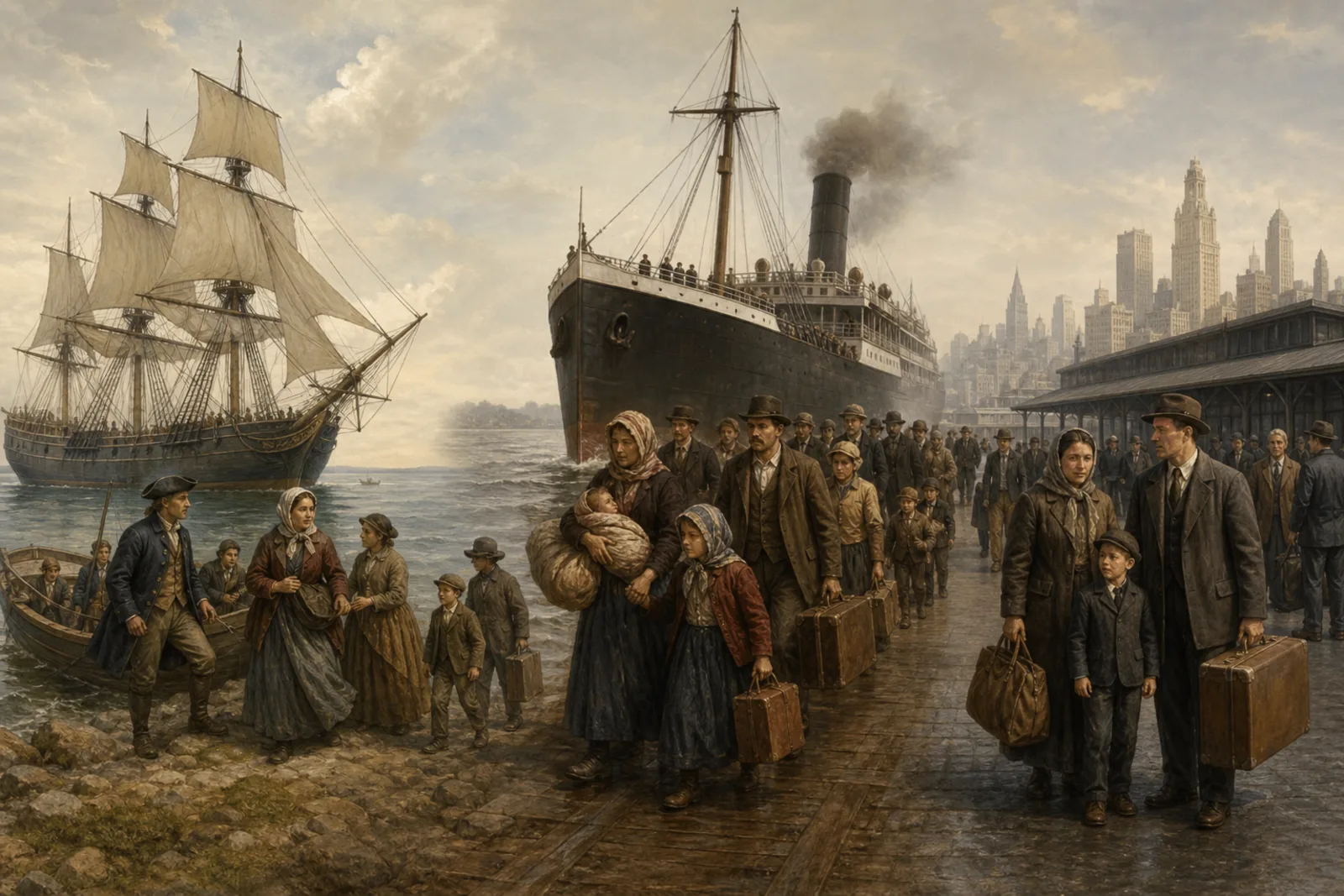
Start with when German-speaking people arrived, why they left and where families built communities across the United States.


Essential history
German Immigration to America: A Complete Timeline
A clear timeline of German immigration to America, from early colonial arrivals and Germantown through mass migration, refugees and postwar arrivals.
Read guide→Essential history
Why Did Germans Come to America?
Why Germans came to America across different eras, including religious freedom, land, work, political exile, family networks and refuge from persecution.
Read guide→Essential history
Where Did German Immigrants Settle in America?
Where German immigrants settled in America, from Pennsylvania to the Midwest, major cities, Texas, the Dakotas and western states—and why clusters formed.
Read guide→History guide
Anti-German Sentiment During World War I
How wartime suspicion targeted German language, schools, newspapers, businesses and families—and accelerated assimilation in the United States.
Read article→History guide
German Americans and the Civil War
How German Americans served in the Union and Confederacy, organized ethnic regiments, shaped Missouri, and faced division and violence in Texas.
Read article→History guide
German Immigration to America: A Complete Timeline
A clear timeline of German immigration to America, from early colonial arrivals and Germantown through mass migration, refugees and postwar arrivals.
Read article→History guide
How German Brewers Changed American Beer
How German immigrant brewers expanded lager, built industrial breweries and changed American beer culture without acting alone.
Read article→History guide
The Founding of Germantown in 1683
How German-speaking families from Krefeld, Francis Daniel Pastorius and Pennsylvania land companies built Germantown—and why 1683 matters.
Read article→History guide
The History of German-Language Newspapers in America
How German-language newspapers connected immigrant communities, shaped public debate and declined under assimilation and wartime pressure.
Read article→History guide
What Life Was Like for German Immigrants
A grounded look at German immigrant life in America: farm and city work, housing, family labor, language, churches, newspapers, clubs and wartime pressure.
Read article→History guide
Who Were the German Forty-Eighters?
Who the German Forty-Eighters were, why they left after 1848, and how a relatively small group influenced American journalism, reform and politics.
Read article→History guide
How German Immigrants Brought Kindergarten to America
How German-speaking educators introduced kindergarten ideas, adapted them to American schools and helped reshape early childhood education.
Read article→History guide
How German-American Communities Were Built
How chain migration, churches, schools, newspapers, clubs, businesses and mutual aid turned German immigrant settlements into durable communities.
Read article→History guide
Who Were the Pennsylvania Germans?
Who the Pennsylvania Germans were, where they came from, how Deitsch developed, and why Pennsylvania German does not simply mean Amish.
Read article→History guide
Why Did Germans Come to America?
Why Germans came to America across different eras, including religious freedom, land, work, political exile, family networks and refuge from persecution.
Read article→History guide
Why German Families Changed Their Surnames in America
Why German surnames changed through spelling, translation, everyday use, legal action and wartime pressure—and how to research the evidence.
Read article→History guide
Why the Revolution of 1848 Sent Germans to America
Why economic crisis, demands for rights, the Frankfurt Parliament’s failure and political repression pushed some German revolutionaries toward America.
Read article→History guide
When Did Germans First Arrive in America?
The careful answer to when Germans first arrived in America: Jamestown in 1608, organized Germantown settlement in 1683, and mass migration much later.
Read article→History guide
The Major Waves of German Immigration Explained
A five-part model of the major waves of German immigration, showing how colonial settlers, mass migrants, political refugees and postwar arrivals differed.
Read article→History guide
Where Did German Immigrants Settle in America?
Where German immigrants settled in America, from Pennsylvania to the Midwest, major cities, Texas, the Dakotas and western states—and why clusters formed.
Read article→History guide
Why So Many Germans Chose the Midwest
Why German immigrants settled heavily in the Midwest: land, river and lake routes, growing cities, chain migration and established German-speaking networks.
Read article→How to use this hub
National history is context, not proof of one family line.
Use these guides to identify the period, region and record environment that fit your question. Then verify a family connection through names, places and records instead of assuming that a national milestone describes every ancestor.
When did German immigration to America begin?
Several Germans were present at Jamestown in 1608. Germantown, founded in Pennsylvania in 1683, is the better-known milestone for an organized and enduring German settlement.
When did most German immigrants come to America?
German immigration reached mass scale in the nineteenth century, especially from the 1830s through the decades before World War I. Colonial, refugee and postwar movements followed different patterns.
Where did German immigrants settle?
Pennsylvania was the strongest early center. Later communities spread through the Midwest and Great Lakes, major cities, Texas, the Dakotas and western states.