

German Genealogy
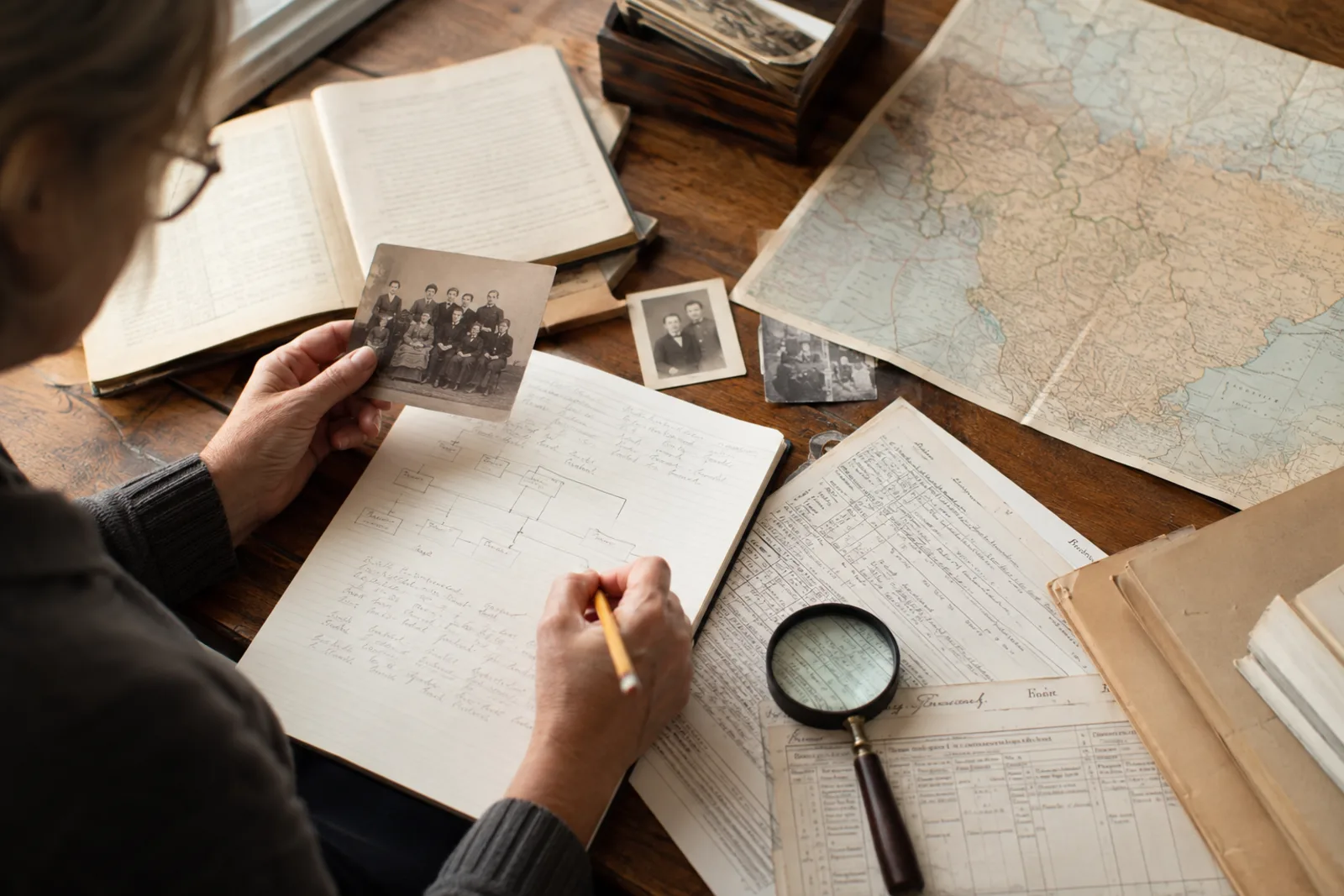
Turn a family clue into a documented German line.
Start with what your family can prove, identify the immigrant in American records, and cross into German archives only when the place and person are stable.




Build record knowledgeCheck edition and scope
Browse German Genealogy Books
Search Amazon for German genealogy references and compare author credentials, edition, regional scope, record coverage, citations, seller and returns.
Track every searchMatch your workflow
Browse Genealogy Research Logs
Search Amazon for research logs and compare page layout, citation fields, binding, page count, seller and returns.
Protect family papersVerify the material
Browse Archival Document Storage
Search Walmart for document sleeves and folders, then compare material, dimensions, closure, seller and return terms.
Keep a second copyOne backup layer
Browse External Backup Drives
Search Walmart for external drives and compare capacity, connector, operating-system compatibility, warranty, seller and returns.
Read small detailsCheck working distance
Browse Magnifying Lamps
Search Amazon for magnifying lamps and compare lens size, magnification, working distance, light controls, mounting style, seller and returns.
Capture bound pagesProtect the binding
Browse Overhead Book Scanners
Search Amazon for overhead scanners and compare capture area, camera resolution, lighting, OCR, software compatibility, seller and returns.
Essential genealogy
Where to Start When You Know Almost Nothing About Your German Ancestors
A zero-information triage plan for turning a vague German family connection into one identifiable ancestor, place and first record question.
Read guide→Essential genealogy
German Genealogy for Beginners
A calm starting guide to German genealogy: the records, places, evidence habits and first workflow a new researcher needs before searching deeply.
Read guide→Essential genealogy
How to Trace Your German Ancestry
A practical evidence-first workflow for tracing a German family line from known relatives and American records to the correct town and German archive.
Read guide→Genealogy guide
How to Trace Your German Ancestry
A practical evidence-first workflow for tracing a German family line from known relatives and American records to the correct town and German archive.
Read article→Genealogy guide
German Genealogy for Beginners
A calm starting guide to German genealogy: the records, places, evidence habits and first workflow a new researcher needs before searching deeply.
Read article→Genealogy guide
How to Build a German Family Tree
Build a German family tree that keeps relationships, name variants, places, sources and uncertainty clear enough for another researcher to verify.
Read article→Genealogy guide
Where to Start When You Know Almost Nothing About Your German Ancestors
A zero-information triage plan for turning a vague German family connection into one identifiable ancestor, place and first record question.
Read article→Genealogy guide
German Genealogy Research Checklist
A reusable German genealogy checklist for checking identity, sources, places, jurisdictions and next steps before extending a family line.
Read article→The working rule
A match is a lead. A documented relationship is an ancestor.
Keep the record image, citation and reasoning beside every relationship. When two sources disagree, preserve the conflict until the identity is clear instead of choosing the tidier answer.
What is the best first step in German genealogy?
Begin with one known relative and work backward through documented relationships. For a German-American line, stabilize the immigrant’s identity in American records before searching Germany.
Why do I need an exact German town?
Civil and church records were created by local jurisdictions. A town, parish or district points toward a record keeper; the country label Germany usually does not.
Can a surname or DNA estimate prove German ancestry?
No. Both can provide clues, but a family connection requires records and reasoning that link one documented generation to the next.