
On this pageReconnection is a practice, not an authenticity test
Reconnecting with German heritage works best when it becomes a small, repeatable practice tied to something real in your family. Start with one name, place, photograph, phrase or document you can describe. Then choose one lane to explore for a month. You do not need to prove a percentage, perform a stereotype or recover everything at once.
Reconnection is a practice, not an authenticity test
A distant connection can still be a real one. What makes it useful is not how loudly it is displayed, but whether you can say what you are connected to and how you are learning about it.
That distinction protects you from two common traps. The first is waiting until you know enough to begin. The second is collecting symbols before you understand what any of them mean. Neither creates much continuity. A better start is smaller: one traceable clue and one question that matters to you.
For someone who truly has no dependable clue yet, begin by writing a short family snapshot: names, approximate dates, known places and the source of each detail. That gives you a stable starting point before you build a longer practice.
Step 1: Choose one anchor you can name
An anchor is a specific part of the family story that gives your curiosity somewhere to attach. It might be:
- a grandparent known as Opa or Oma;
- a surname, including an older spelling;
- a town named on a certificate or obituary;
- a photograph with a person you can identify;
- a recipe card in a relative’s handwriting;
- a German word that remained in household speech;
- a church, club or neighborhood connected to the family.
The anchor does not have to prove an entire lineage. Its job is to make the next question precise. “I want to learn about Germany” is too wide. “I want to know where my great-grandmother Anna Weber lived before Milwaukee” can lead to records, maps and useful conversations.
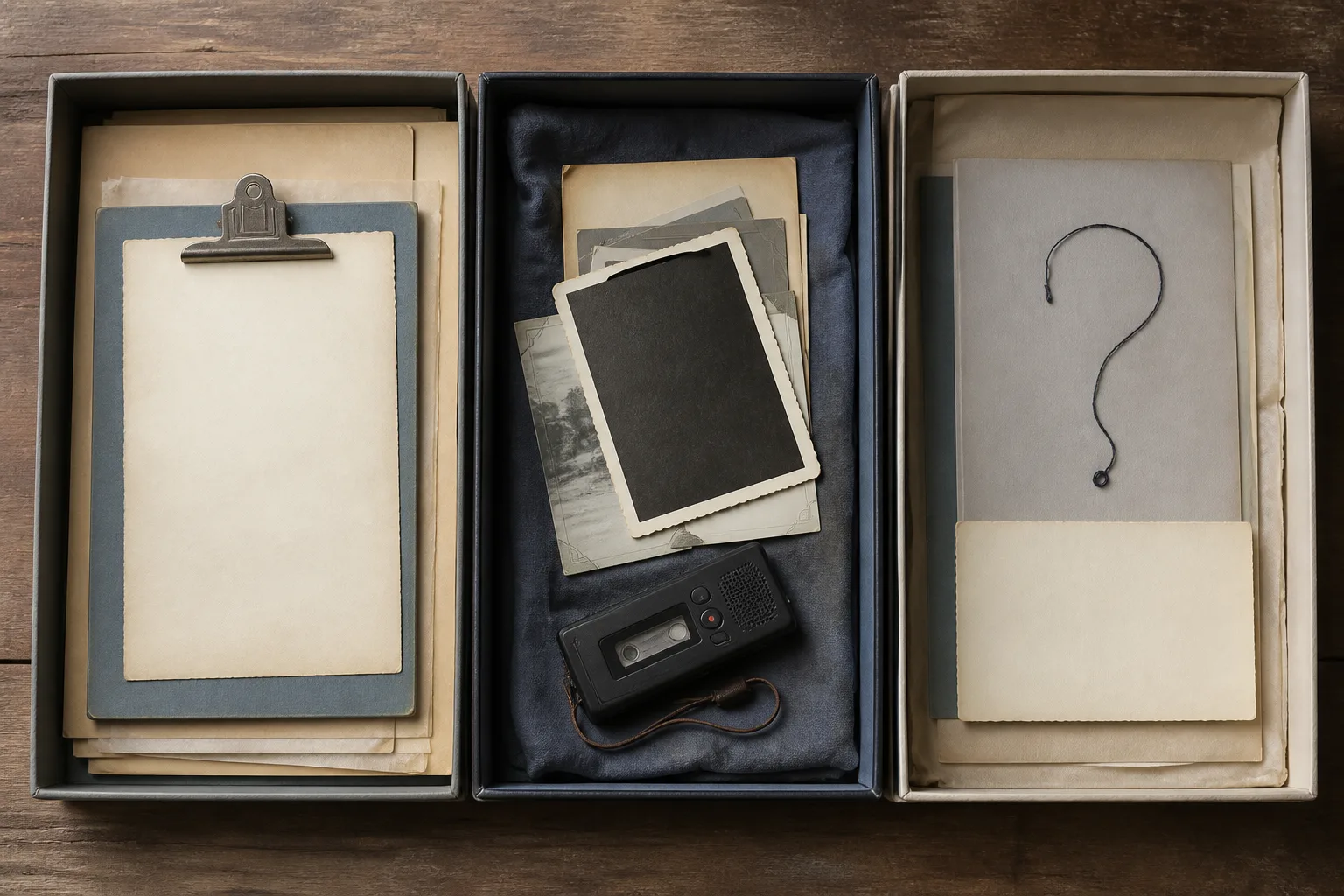
Step 2: Write down what is known, remembered and assumed
Use three labels:
Documented means you have a source you can identify: a certificate, census entry, passenger list, letter, photograph inscription or another record. It may still contain errors, but someone else can inspect it.
Remembered means a person in the family told the story. Memory can preserve details no official record contains. It can also compress dates, merge people or attach a later explanation to an earlier event.
Assumed means the idea seems plausible but its source is unclear. A surname that sounds German, a decorative crest bought years ago or a family habit described as “the German way” belongs here until better evidence appears.
This is not a ranking of emotional importance. A remembered phrase may matter deeply even when it cannot prove a birthplace. The labels simply prevent one kind of information from doing a job it cannot do.
Step 3: Choose one reconnection lane
You do not need to pursue every part of heritage at the same time. Choose the lane that best matches your anchor and your available attention.
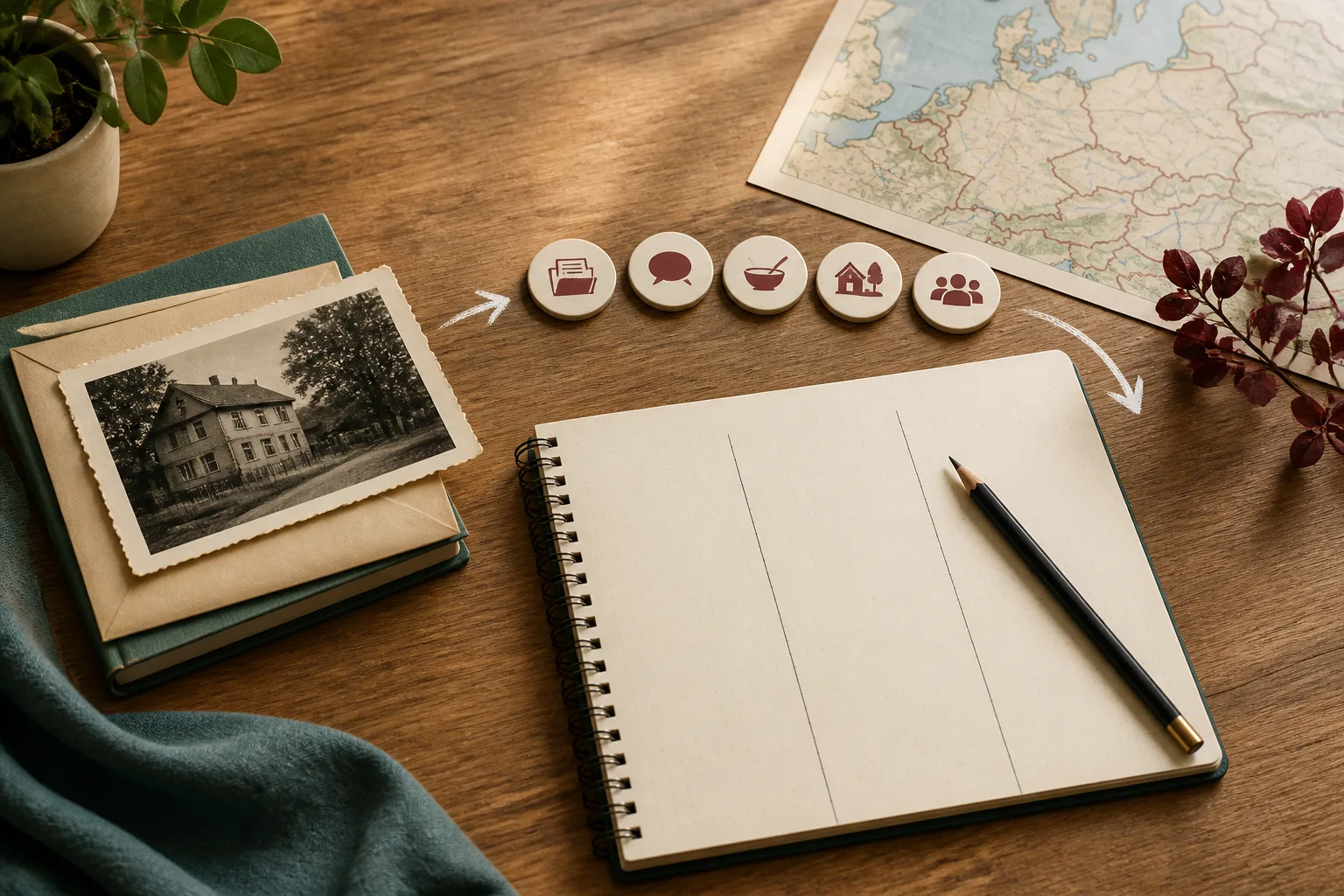
Five lanes and one complete first month
Records
Choose one person and one question. Begin with known relatives and U.S. records before trying to jump directly into German archives.
Language
Learn a small set of words connected to your family or gathering, then use them in context instead of collecting random vocabulary.
Food
Choose one documented family recipe or one clearly labeled regional dish. Record whose version you made and what you changed.
Place
Locate one town, county, parish or American settlement on a modern map and note any historical boundary questions before planning travel.
Community
Read the history of one local church, club, museum, newspaper or cultural society connected to German-American life in your area.
Review
At the end of the month, write what became clearer, what remains uncertain and which lane deserves another month.
Choose the lane that can produce an observable result. “Study German” is open-ended. “Learn the family words for grandparents, greetings and a toast, and check their natural usage” is a month you can finish.
Step 4: Build a rhythm small enough to keep
A useful reconnection routine can fit into thirty minutes a week. The point is continuity, not intensity.
One week might be spent labeling a photograph. The next could be checking a census record, listening to a pronunciation guide or reading about the region named on that record. A later week could involve cooking, visiting a local museum or writing a question for a relative.
Keep the routine narrow enough that family life does not have to reorganize around it. Relatives may be interested, indifferent or uncomfortable. Children and grandchildren may enjoy one activity and reject another. Participation is an invitation, not a duty.

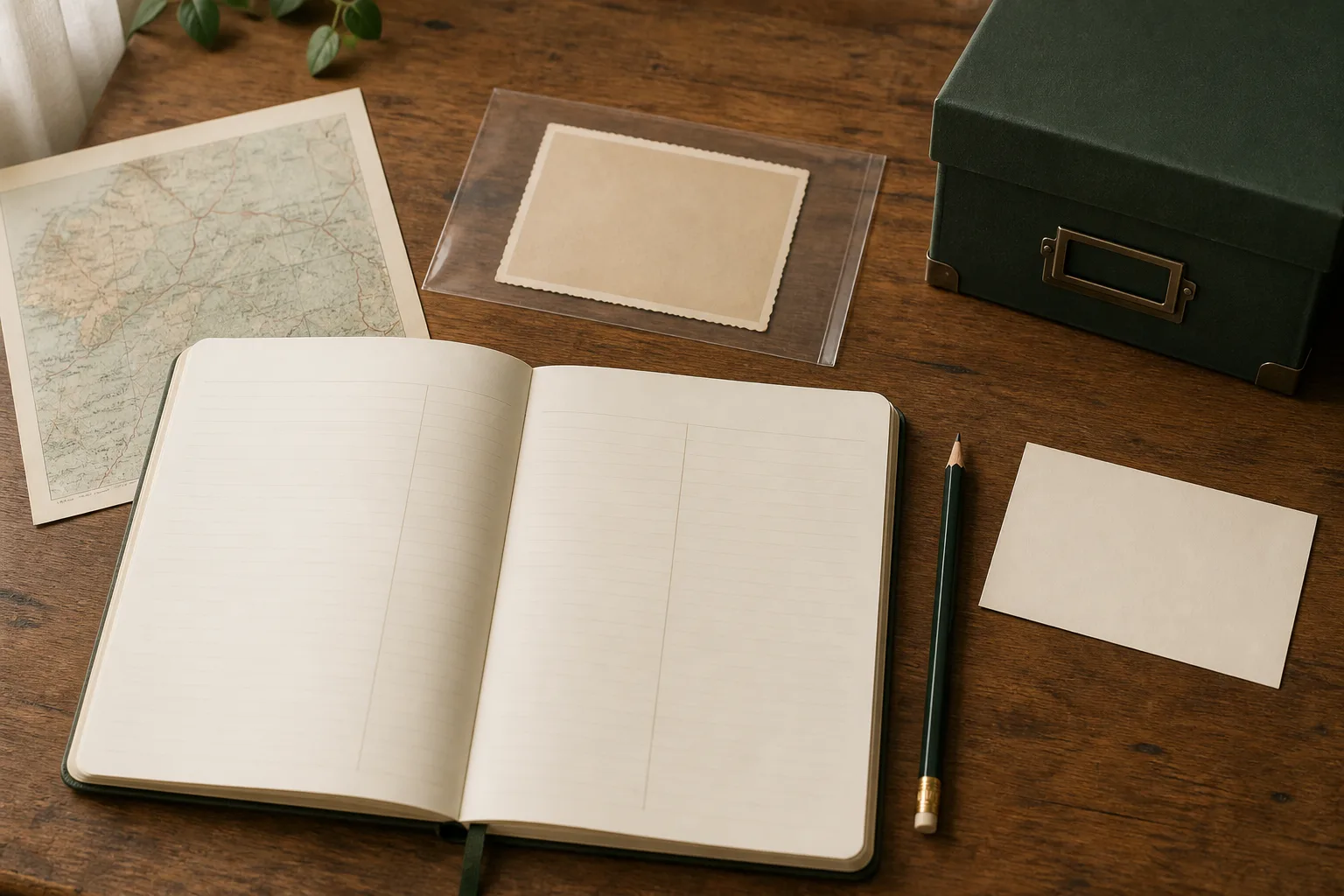
Step 5: Keep a source and question log
A simple log prevents the project from becoming a pile of browser tabs. For each useful item, record:
- what you found;
- where it came from;
- the date you checked it;
- what it appears to show;
- what it does not establish;
- the next question it raises.
The National Archives recommends beginning with yourself and moving backward through known family relationships. That method sounds ordinary because it is: reliable research grows from connected identities, not from searching a surname and adopting the first tree that looks familiar.
If a relative shares a story, note who told it and when. Ask permission before recording or sharing it. A family memory can guide research without becoming public property.
Step 6: Let the connection become more specific
A good month does not have to end with a dramatic discovery. It may end with a corrected spelling, a town placed on a map, a better description of a photograph or the realization that a supposed “German custom” was particular to one household.
Specificity is progress. It replaces a broad performance of heritage with a relationship to real people, places and choices.
This is also where language loss may become part of the story. Many families did not simply decide that German no longer mattered. English-language schooling, work, generational change and anti-German pressure all affected what was spoken at home. Treat that history as context without making fluency a measure of worth.
Wrong turns that make reconnection harder
Reconnect with care
Do
- Begin with a named person, place, object or record.
- Label family memory and documentary evidence separately.
- Ask permission before recording or publishing another person's story.
- Describe regional or newly learned practices accurately.
Avoid
- Search for evidence only to confirm a preferred identity.
- Treat a surname, crest or DNA percentage as complete proof.
- Present one family custom as universal German culture.
- Pressure relatives to discuss memories they want to keep private.
Starting with a verdict about who you are
Research rarely moves in a straight line toward a more impressive identity. It may reveal mixed origins, changing borders, family disagreement or a story that was remembered differently. Begin with a question, not a result you need the evidence to confirm.
Treating one symbol as the whole culture
A flag, eagle, beer stein or festival can be meaningful. It cannot tell you which region a family came from, what language they spoke, how they practiced religion or why they migrated. Symbols work better after context, not instead of it.
Borrowing another family’s certainty
Online trees, social posts and surname pages can suggest leads. They do not become your family history because the names resemble yours. Check relationships, dates and places before repeating a claim.
Turning relatives into sources on demand
An older relative may have valuable memories and still not want to discuss a difficult departure, war, family conflict or changed identity. Ask gently, explain how the information might be used and accept a refusal.
Trying to look knowledgeable too soon
You can say, “This is part of my ancestry, and I am learning about it.” That is often more trustworthy than presenting a regional custom, historical claim or German phrase with confidence you have not earned. Uncertainty is not solved by pretending to know more.
A 30-day reconnection plan
One month, one honest connection
- Name the anchor
Write the person, place, object, phrase or record you are beginning with.
- Label the evidence
Mark each detail as documented, remembered or assumed.
- Choose one lane
Pick records, language, food, place or community—and define one result you can complete.
- Schedule four short sessions
Protect a realistic amount of time rather than relying on a burst of motivation.
- Keep a source log
Record where information came from and what remains uncertain.
- Add one respectful action
Ask permission, credit a source, label a regional variation or preserve a copy safely.
- Review without grading yourself
Decide what became more specific and whether to continue, change lanes or pause.
What a successful first month looks like
Success is not becoming fluent, finishing a family tree or proving a pure line. It is being able to say something more precise than you could before: who the connection involves, which source supports it, what remains uncertain and what you chose to carry forward.
From there, celebration can become ordinary rather than performative. You might label photographs, use a family word correctly, visit a local history site or repeat one gathering tradition once you know what kind of connection you want to strengthen.
A symbol can follow the story, not replace it
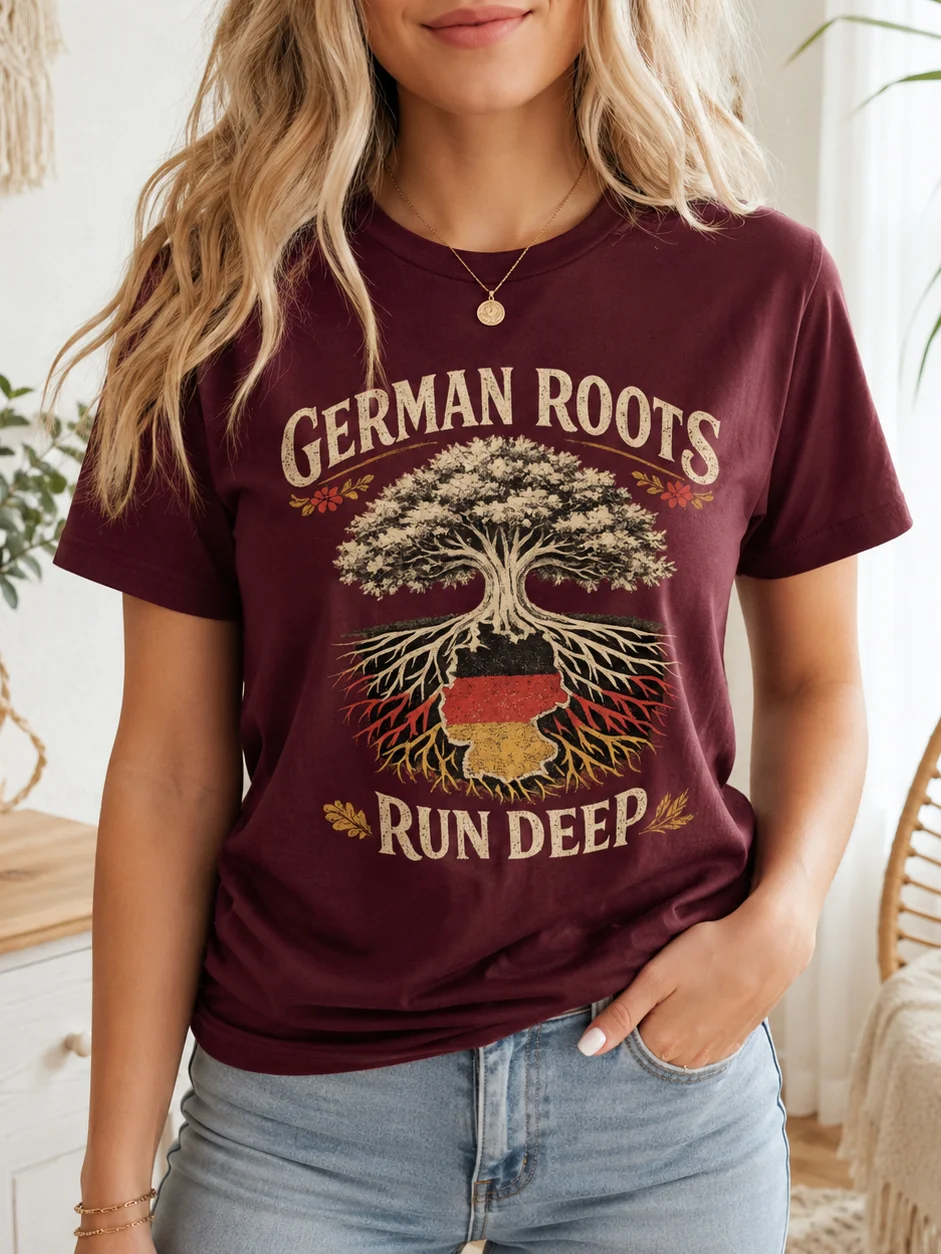
Once you can name the person, place or practice behind your connection, a shirt or keepsake may be a quiet way to express it. “German Roots Run Deep” fits that role because it speaks about continuity without claiming citizenship, fluency or cultural authority. The research and family conversations remain the meaningful part; the product is optional.
A quiet expression after the work
German roots, carried with context
This design can express family continuity after you have begun documenting the story. It is optional and never substitutes for the research itself.
Frequently asked questions
Common questions
Do I need to speak German to reconnect with my heritage?
No. Language can be one meaningful lane, but family records, regional history, photographs, recipes, community institutions and conversations are also valid starting points. Use language as an invitation to learn, not as an authenticity test.
Should I begin with a DNA test?
A DNA estimate can sometimes suggest research leads, but it is not the best first step for everyone and it does not define heritage. Begin with known relatives, home sources and specific questions so any later test result has context.
What if my family does not know much about its German roots?
Start with the nearest known person, record what is certain, and choose one missing detail such as a birthplace, maiden name or immigration period. The beginner guide in this cluster walks through that first session.
Is it disrespectful to restart a tradition my family no longer practices?
Not automatically. Learn where the practice comes from, avoid calling a regional or family custom universal, and be honest that you are learning or adapting it rather than claiming an unbroken tradition.