

On this pageThe vocabulary
A person can have German grandparents and no German citizenship. Another person can become a German citizen without German ancestry. A third can be an American citizen who strongly identifies as German-American. None of those situations is contradictory.
The confusion comes from using the word “German” to answer several different questions at once.

The vocabulary
German nationality, ancestry, heritage and identity
- German nationality or citizenship
- A legal status recognized under German law, with rights and responsibilities attached to it.
- German ancestry
- Descent from one or more ancestors connected to Germany, historical German states or German-speaking communities.
- German heritage
- The family memories, language, traditions, places, objects and values associated with German roots.
- German identity
- A personal or shared sense of being German, German-American, or connected to German roots.
These definitions are useful because they prevent one kind of evidence from being used to answer the wrong question. A passport can establish citizenship. A birth record can help establish ancestry. A family recipe can reveal heritage. None of those alone dictates identity.
German nationality and citizenship: the legal category
Nationality and citizenship are often used interchangeably in ordinary conversation, though legal systems may distinguish them in specific contexts. For most readers, the essential point is that this is a matter of law.
German citizenship can be acquired or retained under rules that depend on facts such as parentage, birth, naturalization, marriage, adoption and historical circumstances. The rules have also changed over time.
That means “My grandfather was German” is not enough information to decide a citizenship case. Dates, documents and the legal status of each generation may matter. An article about heritage should not pretend to perform that review.
Use official German authorities for current eligibility rules. Treat family documents as evidence to be checked, not as a guaranteed legal conclusion.
German ancestry: the genealogical category
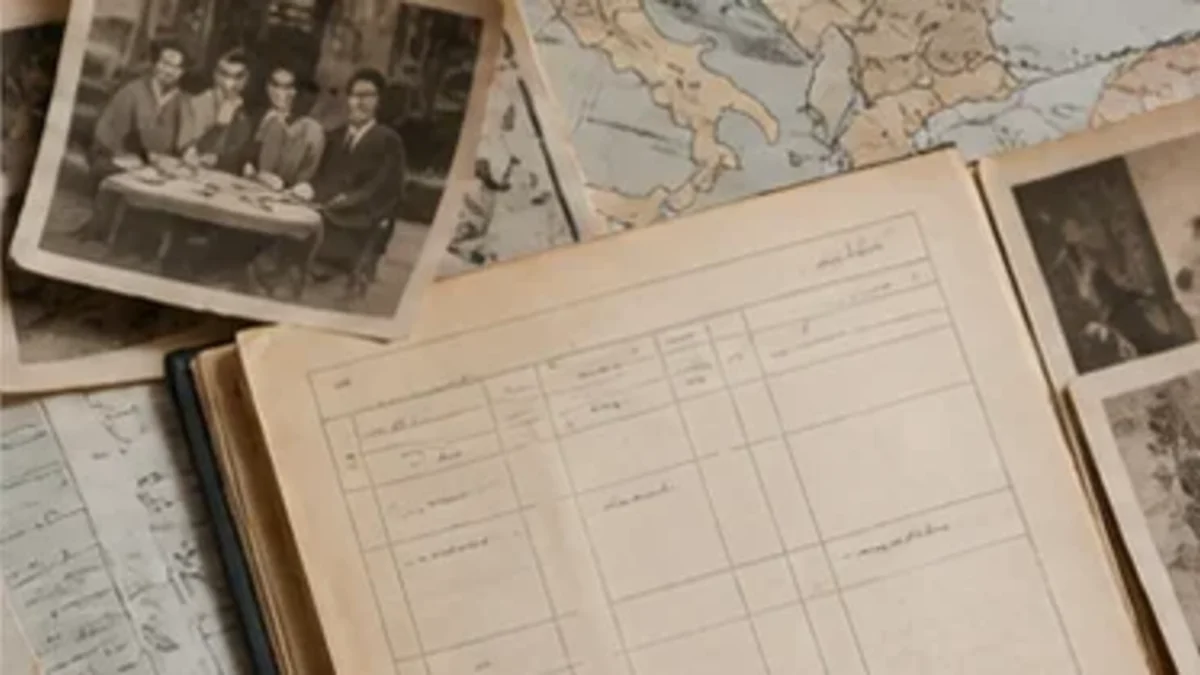
Ancestry follows family lines. The U.S. Census Bureau asks people to report the ancestries with which they identify and notes that ancestry is not the same as birthplace.
A person may have German ancestry through one parent, one grandparent or a much earlier line. They may also have several ancestries at once.
Historical geography complicates the label. Before German unification, records might name Prussia, Bavaria, Saxony, Württemberg, Hesse or another state. Border changes may place an ancestral town in modern Poland, France, the Czech Republic or elsewhere.
Good genealogy therefore begins with the exact place and date rather than assuming every record will use the modern word “Germany.”
German heritage: the transmitted category

Heritage is what moved through the family along with, or sometimes without, complete records.
It can include:
- language or dialect;
- holiday customs;
- food and recipes;
- music, faith and community life;
- family stories and migration memories;
- photographs, letters and objects;
- regional identity;
- values and habits associated with a household.
Heritage can be strong, faint, interrupted or reconstructed. It can also change in America. German-American heritage is not identical to contemporary life in Germany, because immigrant families adapted to a different country and historical moment.
For the distinction between descent and cultural transmission, read German Ancestry vs. German Heritage.
German identity: the personal and social category

Identity is how a person understands and describes belonging. It is influenced by family, citizenship, residence, language, community and experience, but it cannot be reduced to any single one of them.
A person may say “I am German” because they are a German citizen living in Hamburg. An American may use the same words inside a family conversation to mean “my family is German-American.” In an international setting, the second person may choose the more precise “I have German ancestry.”
Those statements are not necessarily dishonest. They operate at different levels of context. Trouble starts when a cultural shorthand is presented as a legal fact, or when one person’s experience is treated as the only authentic version.
Common combinations
German citizen with German ancestry
This is the combination people often assume: legal nationality, family descent and cultural identity overlap. Even here, lived experience varies by region, migration history and family.
German citizen without German ancestry
A person may acquire citizenship through a legal pathway and be fully German without descending from ethnic Germans. Citizenship is civic and legal, not a blood test.
German ancestry without German citizenship
This is common among German-Americans. The family connection may be recent or several generations old, while legal nationality is American.
German heritage with limited documentation
A family may retain stories, customs and identity while lacking complete records. The heritage can be meaningful even when genealogical claims still require verification.
German ancestry with little cultural connection
Records may be clear while language and traditions have disappeared. That does not erase descent; it simply describes a different heritage experience.
Where grandparents fit
Grandparents make the relationship concrete, but they still do not collapse the categories. A German-born grandparent establishes a close ancestral connection. They may also transmit culture. Citizenship remains a separate legal question.
How German Are You If Your Grandparents Came From Germany? addresses that personal question directly.
Where DNA fits
DNA testing estimates genetic ancestry by comparing genetic patterns with reference data. It does not establish nationality and cannot measure culture, memory or belonging.
A result can be one clue in family-history research, especially when combined with records and DNA matches. It should not become an identity score. See Does DNA Percentage Define Your German Heritage? for the scientific and emotional limits.
A precise way to talk about your connection
Use the term that answers the question being asked:
- For family history: “I have German ancestry.”
- For a close migration story: “My grandparents came from Germany.”
- For American cultural identity: “I am German-American.”
- For legal status: “I am a German citizen.”
- For an evolving connection: “German heritage is part of my family story.”
Precision does not weaken identity. It makes the story clearer.
Sources
- U.S. Census Bureau, “About Ancestry.”
- National Archives, “Naturalization Records.”
- U.S. Citizenship and Immigration Services, citizenship and naturalization guidance.
Frequently asked questions
Common questions
Does German ancestry make someone a German national?
No. Ancestry is a family relationship; nationality or citizenship is a legal status determined by law.
Can someone be German-American without German citizenship?
Yes. German-American commonly describes an American identity connected to German ancestry or heritage, not German legal citizenship.
Can someone be a German citizen without German ancestry?
Yes. Citizenship can be acquired through legal pathways and does not require a particular ethnic ancestry.
Why do old family records name Prussia instead of Germany?
Germany's borders and political structure changed over time. Historical records may name a kingdom, duchy, province or town rather than the modern country.