
On this pageStart with yourself, not with a search box
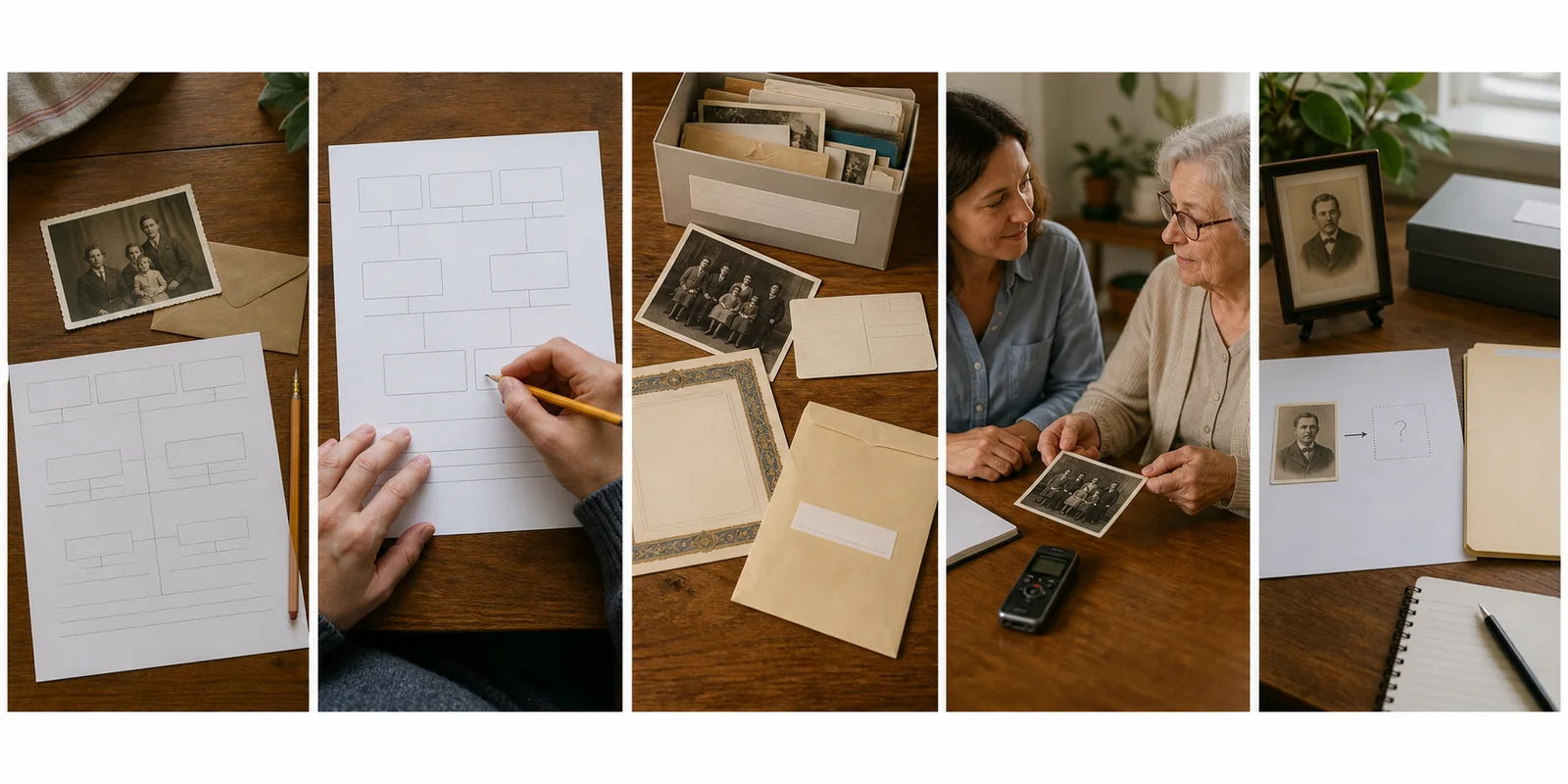
When you know almost nothing about your German roots, do not begin by searching Germany. Begin with yourself and work backward through people you can identify. Your first goal is not a finished family tree. It is a one-page snapshot that separates facts from clues and leaves you with one specific question.
Start with yourself, not with a search box
A search box rewards broad names with broad results. Family-history research needs connected people.
Write your full name, birth information and parents. Add grandparents if you know them. Include relationships, not only names: “my mother’s father” is more useful than a free-floating person with the same surname. Then work back one generation at a time.
The National Archives recommends this basic direction because its records—census schedules, military files, passenger arrivals, naturalization papers and land records—were created about identifiable people in particular places and periods. They are not arranged as a completed family tree waiting for your surname.
This first step can feel too ordinary. It is also where reliable research begins.
Make a one-page family snapshot
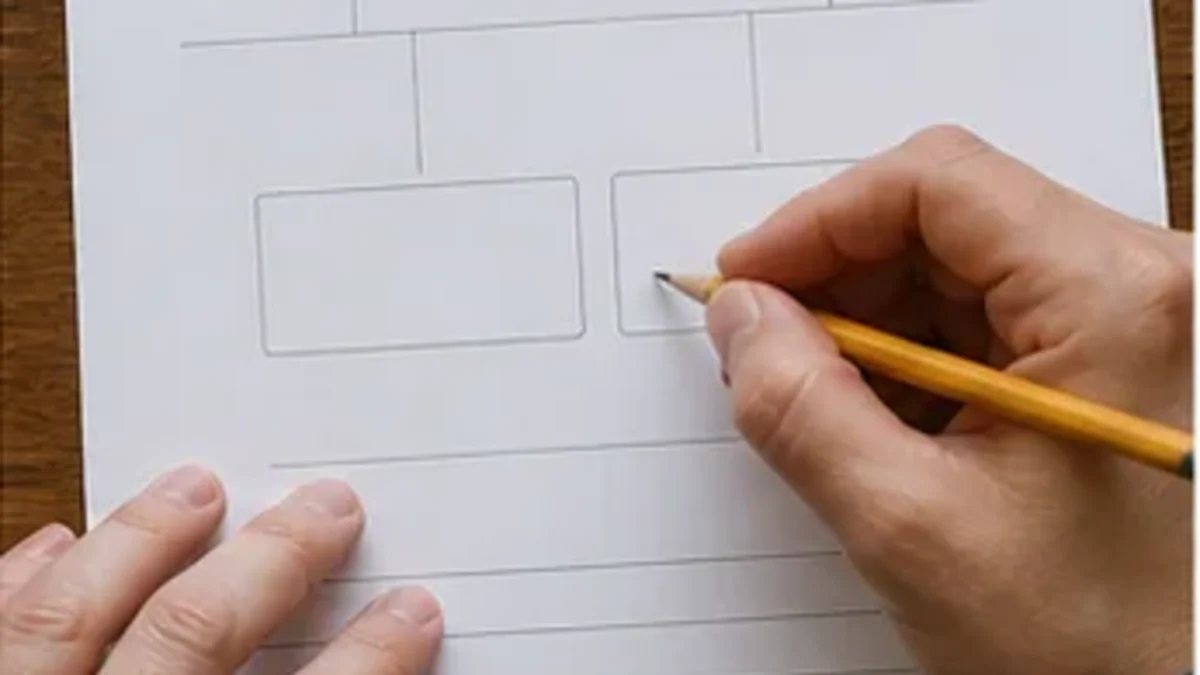
Use paper, a note app or a simple document. Do not spend the first hour choosing software. Create a row for each close relative and record only what you know or can source.
Useful fields include:
- full name, including maiden or earlier names;
- relationship to you;
- approximate or exact birth and death dates;
- places lived;
- spouse or partner;
- children, siblings or parents when known;
- language, religion, occupation or community affiliation when relevant;
- source of each detail;
- confidence: high, medium or low.
Leave blank spaces. A blank is more honest and more useful than an attractive guess.
Four labels that keep the first page trustworthy
- Fact
- A detail supported by a source you can identify, such as a certificate, census entry or labeled photograph. Sources can still contain errors.
- Clue
- Information that points toward a search but does not establish the answer, such as a surname spelling or a remembered town name.
- Memory
- A detail recalled by a person. Record who shared it and when, then look for corroborating evidence when the claim matters.
- Assumption
- An idea whose source is unclear or whose conclusion goes beyond the evidence. Keep it visible, but do not repeat it as fact.
Search the house before the internet
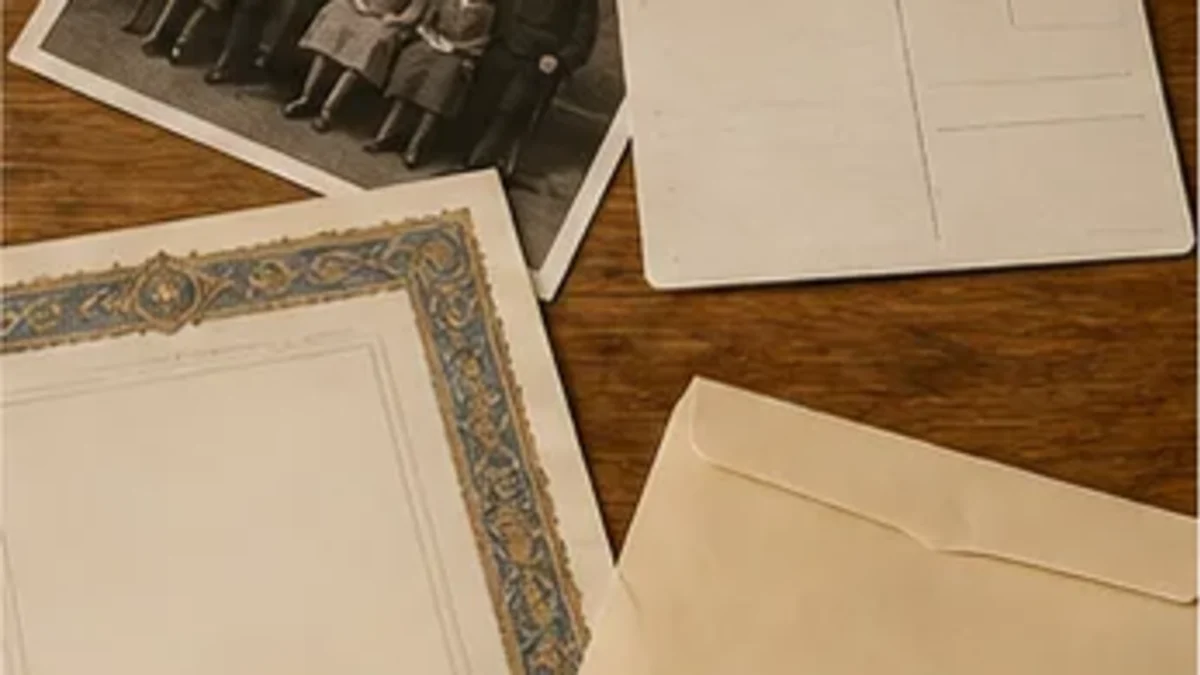
Home sources often supply the details that make later searches possible. Look for:
- birth, marriage and death certificates;
- obituaries and funeral cards;
- passports, naturalization papers or military documents;
- family Bibles, church certificates and confirmation records;
- photographs with names or studio locations;
- letters, envelopes and postcards;
- recipe cards and notebooks;
- address books, school records and club materials;
- keepsakes with a town, parish, company or association named on them.
Do not rearrange an older relative’s belongings without permission. Photograph or scan fragile material carefully, keep originals in their current order and record who owns them.
You do not need to buy equipment before looking. When a real collection of loose photographs needs preservation copies and safer storage, a flatbed scanner and correctly sized photo-safe enclosures can solve those two specific problems.
Browse Flatbed Photo Scanners
Search Amazon for flatbed scanners and compare scan area, optical resolution, software compatibility, file formats, seller, and returns.
Best for: Families scanning loose photographs, letters, and documents that fit safely on a flat bedBrowse Acid-Free Photo Storage
Search Walmart for photo-safe boxes and sleeves, then compare materials, dimensions, capacity, seller, and return terms.
Best for: Families organizing loose photographs after documenting their original orderA postcard sent from Hamburg does not prove the sender was born there. A recipe written in German does not identify a region by itself. The object gives you a clue; the surrounding names, dates and relationships determine how useful it becomes.
Ask one person one narrow question
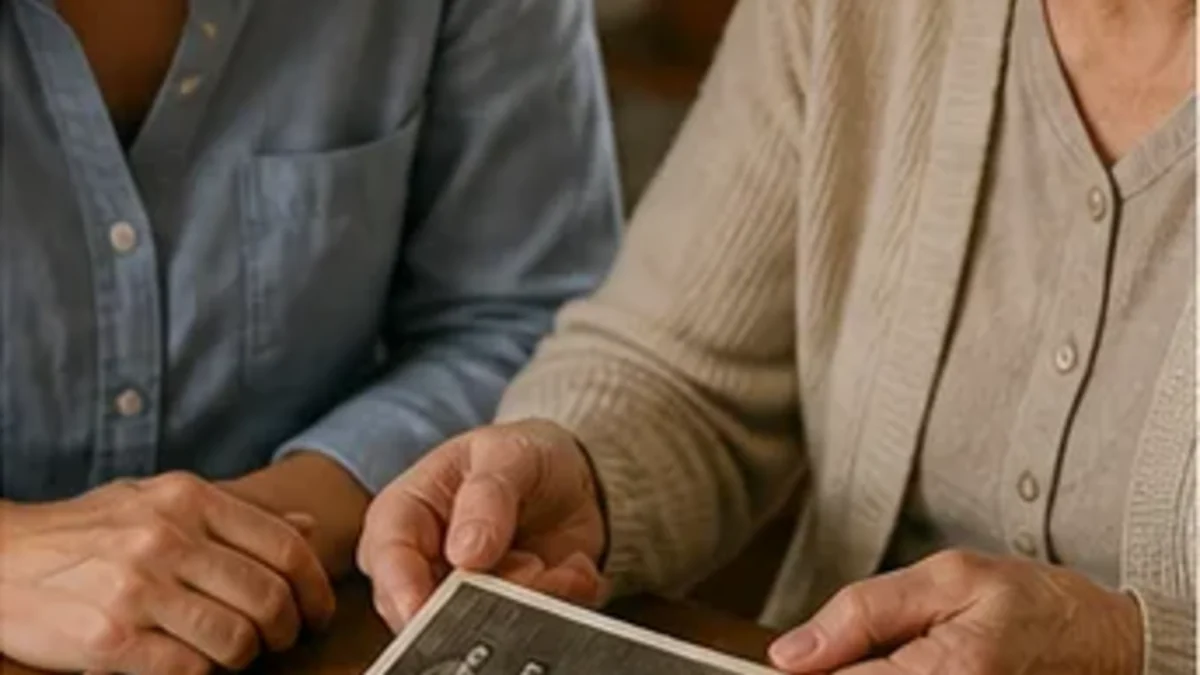
“Tell me everything about our German family” is hard to answer. A narrow prompt is easier:
- What was your grandmother’s full name before marriage?
- Which town did Opa say he came from?
- Who is standing beside Anna in this photograph?
- Was German spoken at home, church or school?
- Who wrote this recipe card?
- Did the family live anywhere before Wisconsin?
Write the answer in the person’s own words. Note the date and the speaker. Ask whether you may share or record it. Do not press for stories involving conflict, war, adoption, illness or estrangement.
A conversation is a source of memory, not an interrogation and not automatic permission to publish.
Choose one target person
Your target should be the earliest person in the German-connected line whose identity is reasonably stable.
Suppose you know your grandmother was Helen Bauer, born in Ohio around 1935, and that her father was called Karl. Helen is a stable starting person. Karl may be the next target, but only after records connect him to Helen. Searching every Karl Bauer in Germany would produce noise, not progress.
Choose a target with at least two or three identifying features:
- name or name variant;
- approximate age;
- place lived;
- spouse, child, parent or sibling;
- occupation, religion or another distinguishing detail.
The rarer the name, the more tempting it is to skip this step. Do not. Rare names can repeat within extended families, and spellings change across languages and records.
Keep names and places exactly as you found them
Beginners often “correct” a spelling too early. A record may show Müller, Mueller, Miller or another form, and each version can be useful. Copy the name as it appears, note the source and keep a separate field for possible variants. Do the same with place names. A clerk may have written a village phonetically, used a larger nearby city or named a historical state instead of the local parish.
Do not choose one spelling because it looks more German. The goal is to follow the same person across records. A change in spelling may reflect language, handwriting, indexing or the family’s own choice; it does not automatically prove that the person changed identity or concealed an origin.
When you search later, use variants deliberately and compare the surrounding relationships. A record with a less familiar spelling but the correct spouse, age and town is usually more useful than an exact-name match attached to the wrong family.
Pick one missing detail that changes the next search
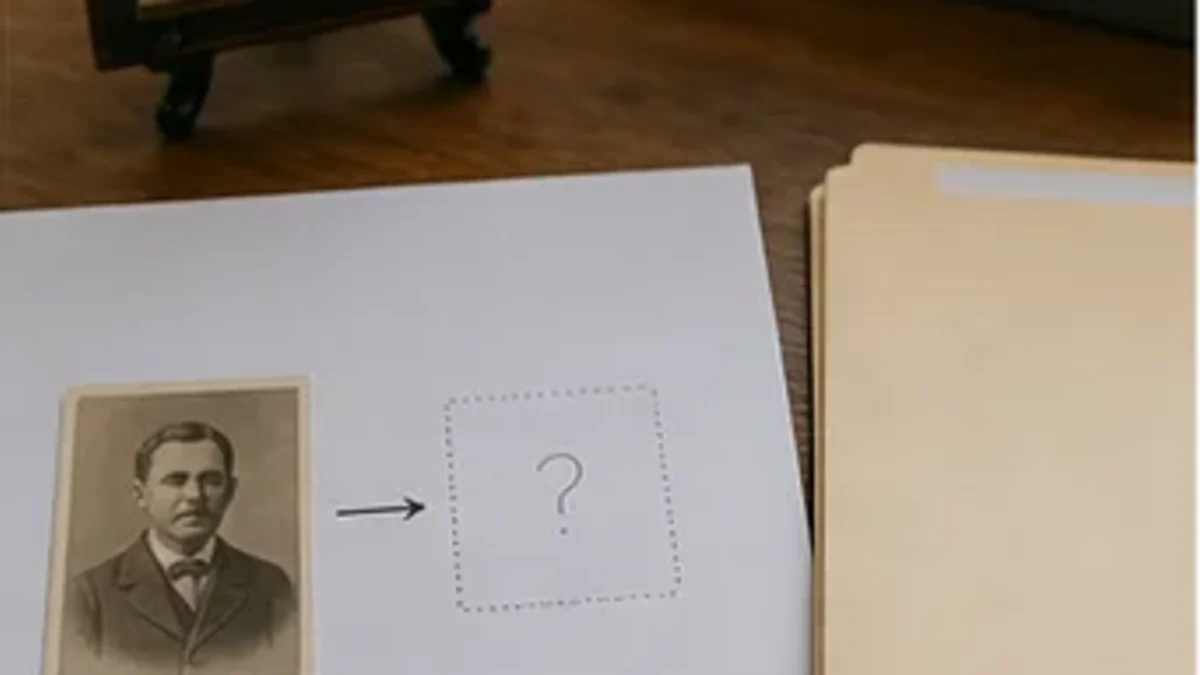
A useful question has a plausible source. Examples:
- What was Helen’s maiden name? A marriage record, obituary or child’s birth record may answer it.
- When did Karl become a U.S. citizen? A naturalization file may supply an arrival date or birthplace.
- Which town was listed for the immigrant? Passenger, naturalization, church or military records may preserve it.
- Were two people with the same name actually different men? Census households, ages, occupations and relatives may separate them.
“Where in Germany did my family come from?” is an important question, but it is often too broad for the first search. Break it into a detail that one record can answer.
Complete a first 60–90 minute workflow
Your first research session
Write the nearest three generations
Add yourself, parents and grandparents with relationships and known places. Leave gaps visible.
Gather three home sources
Choose records or photographs that can be handled safely and note where each came from.
Label every detail
Mark facts, memories, clues and assumptions rather than blending them together.
Choose one target person
Select the earliest German-connected relative whose identity can be distinguished from other people with the same name.
Write one missing-detail question
Make it narrow enough that a specific record or conversation could answer it.
Choose the next source category
Decide whether the next step belongs in a civil, census, church, immigration, naturalization, military or family source.
Stop after that. A completed first page is more valuable than fifty unsourced names copied into a tree.
Choose the right next lane
Once the first question is clear, choose where it belongs.
Family conversation
Use this when a living relative may identify a person, place, relationship or object. Ask permission and preserve the context of the answer.
U.S. or other destination-country records
Use these to identify the immigrant before moving into German records. Census, naturalization, church, obituary and military sources may reveal a precise birthplace, family relationship or arrival period.
German place research
Use this only after you have a town, parish or jurisdiction specific enough to distinguish it from places with similar names. Historical borders matter; a place once described as German may now be in another country.
Language and local history
Use these when the family connection is carried through a phrase, church, neighborhood, club or newspaper rather than a clear migration record. They can explain context even when a lineage question remains open.
DNA evidence
Use DNA only with a clear question and realistic expectations. An ethnicity estimate is not a family tree, and matching another person requires careful relationship research and privacy judgment.
Beginner mistakes worth avoiding
Accepting a coat of arms attached to a surname
Heraldry belongs to particular people and lines under particular systems. A commercial image attached to a surname does not establish that every person with that name shares one coat of arms.
Assuming “born in Germany” identifies a place
Modern Germany did not always have its present borders, and historical records were created by local civil and church jurisdictions. A country label may be only the beginning of the place problem.
Copying a public tree without reading its sources
A large tree can repeat one early error across thousands of profiles. Save useful leads, but verify the relationships that connect each generation.
Searching only the modern spelling
Clerks, families and indexers may have recorded names differently. Keep variants, but require the surrounding dates, places and relatives to match.
Trying to solve every family line at once
One person and one question create a chain of evidence. Ten lines create ten piles of uncertainty.
First-session completion checklist
You are ready for the next step when...
- The closest generations are written down
Names and relationships appear even where dates and places remain blank.
- Sources are attached to details
You can say where a date, place, name or story came from.
- Uncertainty is visible
Clues and assumptions are not presented as documented facts.
- One target person is identifiable
The person has enough context to separate them from another name match.
- One next question is narrow
A record or conversation could realistically answer it.
- The next lane is chosen
You know whether the next move is a family conversation, destination-country record, place study, language context or another evidence type.
After the first page
The first page does not have to feel dramatic. Its value is that it gives every later activity a center.
You can now decide whether you want to investigate records, learn a family phrase, understand a region or preserve a story. The full reconnection guide shows how to turn that first clue into a practice you can keep without treating heritage as a test.
Missing information is normal. It is a research condition, not a verdict about whether the connection matters. To separate documented descent from what a family has carried forward, read German Ancestry vs. German Heritage.
Frequently asked questions
Common questions
What if all I know is that my last name sounds German?
Treat the surname as a clue, not proof. Record its spelling, older variants and the earliest relative known to use it, then look for records connecting that person to a place and family relationship.
Should I copy information from an online family tree?
Use a public tree as a lead only. Save the claimed relationship and the sources it cites, then verify the identity with records. A matching name without matching dates, places and relatives is not enough.
Do I need a paid genealogy subscription to begin?
No. Begin with home sources, relatives, libraries, archives and free government guidance. A paid database may become useful later when you know which person, place and record type you need.
What is the best first German record to search?
Usually none. First identify the immigrant or German-connected ancestor in records from the country where the family later lived. Those records are more likely to supply the exact birthplace, parish or parents needed for research in German jurisdictions.