

On this pageGerman once supported a large public world in America
German disappeared from many German-American homes through two overlapping processes: a gradual shift toward English across generations and a severe wave of anti-German pressure during World War I. School, work, migration within the United States, intermarriage and public institutions all mattered. The wartime attack on German language and identity made the change faster and harder to reverse in many communities.
That history explains why a person can have German heritage without speaking German. This article goes one step further: it helps you identify which pressures may fit your own family timeline.
Terms that explain the change
- Heritage language
- A language connected to family or community origin that may be understood, used partly or remembered even when English becomes dominant.
- Language shift
- A change in which one language is used less across generations while another becomes the normal language of home, school, work or public life.
- Assimilation
- A broad process of adapting to the dominant society. It can involve language, institutions, names and public behavior without erasing every family connection.
- Anti-German repression
- Wartime hostility and policies that targeted German-language teaching, publishing, organizations and public expressions of German identity.
German once supported a large public world in America
For much of the nineteenth century, German in the United States was not confined to private kitchens. German-language newspapers circulated in major cities and smaller communities. Churches, schools, theaters, singing societies, clubs, publishing houses and political organizations allowed immigrants and their children to use the language in public life.
The Library of Congress describes German newspapers and cultural institutions across many American cities. Those institutions helped widely dispersed communities share news, literature, religious life and civic debate. They also created work for teachers, printers, ministers, editors, performers and business owners who could function in German.
This matters because a household language survives more easily when it is supported outside the household. A child who hears German at home, school, church, the theater and the newspaper stand has many reasons to keep using it. When those domains shrink, the family has to carry almost the entire burden alone.
English was gaining ground before World War I
World War I was a major rupture, but it was not the first reason German declined.
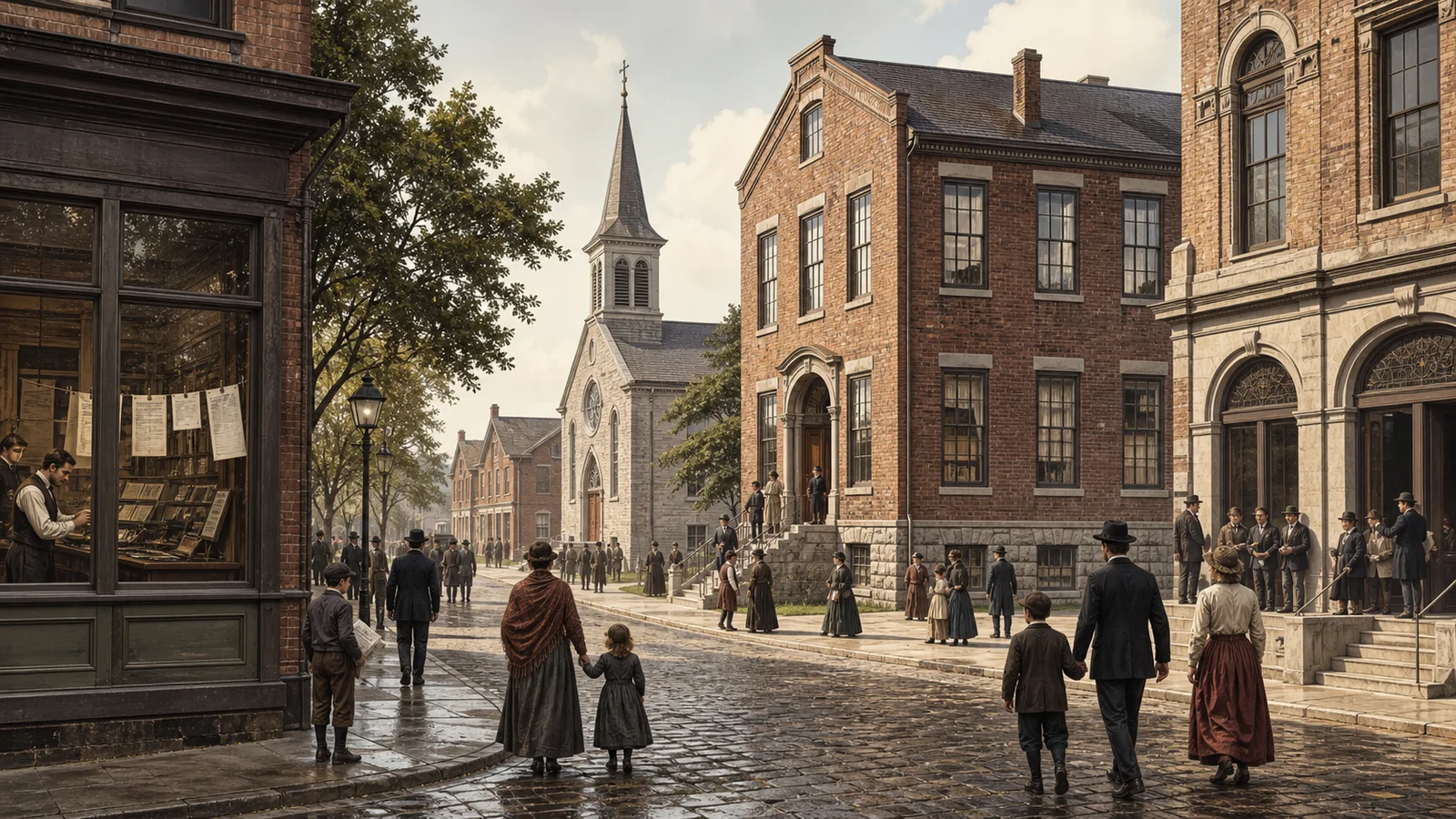
Later generations often attended schools where English dominated, worked in English-speaking businesses and lived in communities less linguistically isolated than those of their parents. Moving from a German-speaking neighborhood to a mixed suburb or farm district changed whom children played with, whom adults married and which language solved everyday problems.
The Library of Congress notes that German Americans increasingly spoke English as a first language even while German written culture remained active. That pattern is common in immigrant language shift: reading, worship, songs or a few family terms may persist after children begin answering parents in English.
Language was only one part of a wider retreat from public visibility. The companion history of why German-American culture became less visible places schools and newspapers beside renamed organizations, public suspicion and later assimilation.
Families made different choices. Some parents wanted children to keep German. Others believed strong English would protect them from disadvantage. Many probably did both—speaking one language with older relatives and another at school or work. It would be too simple to describe all change as either proud preservation or willing abandonment.

World War I turned language into a public liability
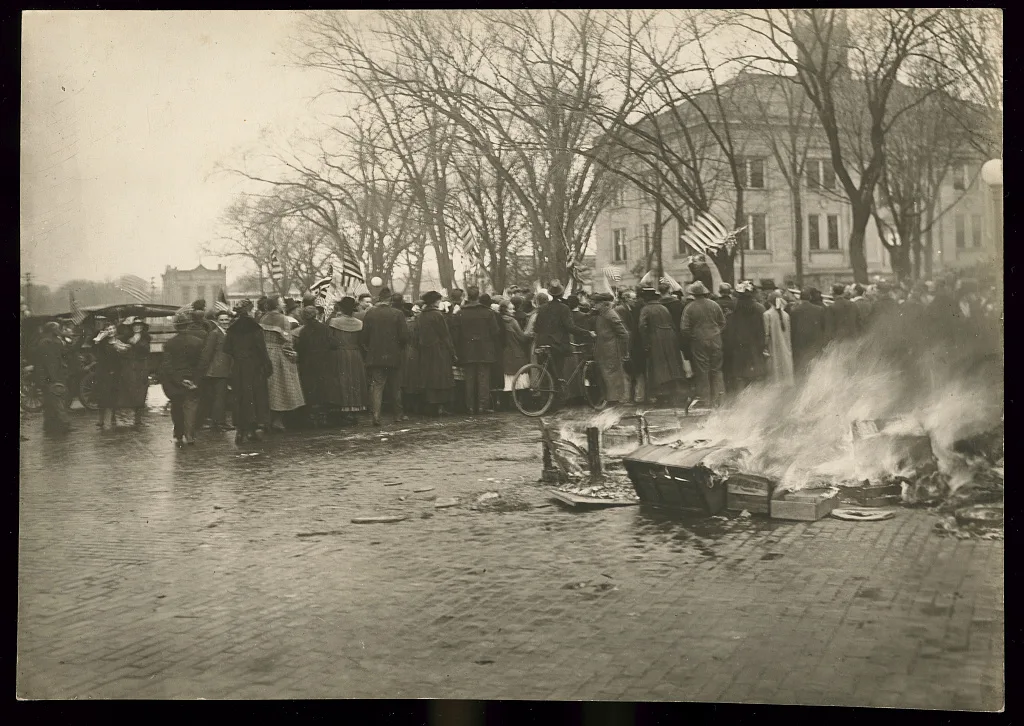
When the United States entered the war against Germany in 1917, anti-German sentiment rose sharply. German-language newspapers, schools, churches and associations faced suspicion and pressure. Public institutions renamed themselves, reduced German use or closed. Communities that had treated bilingual life as ordinary were pushed to demonstrate American loyalty through English.
The pressure was not identical everywhere. Local laws, school boards, employers and neighbors responded differently. Some families faced direct hostility; others anticipated it and reduced public German use before being forced. A language can disappear quickly when parents conclude that passing it on may expose children to ridicule, lost opportunity or accusations of disloyalty.
The effects reached beyond vocabulary. When a newspaper closes, a school drops instruction and a church changes language, the community loses places where children see adults using German for serious public purposes. Household transmission becomes more fragile at the same moment that public use becomes risky.
Language restrictions reached classrooms
Nebraska adopted a law that prohibited teaching young children in a language other than English. Robert Meyer, a teacher in a Lutheran school, was convicted after teaching a child to read German.
In 1923, the U.S. Supreme Court decided Meyer v. Nebraska. The Court held that the law violated liberty protected by the Fourteenth Amendment, including the ability of teachers to teach and parents to direct their children’s education.
The ruling is important, but it should not be turned into a tidy recovery story. A court decision could invalidate an excessive law. It could not automatically rebuild schools, restore newspapers, reverse family fears or make children fluent again. By 1923, several years of wartime and postwar pressure had already changed institutions and household choices.
Why German often did not return at home
Language transmission depends on repeated use between people. Once children and parents establish English as the easiest shared language, returning to German requires time, confidence and a reason that fits daily life.
Several conditions made a return difficult:
- older fluent speakers died or lived far away;
- children understood German but were more comfortable speaking English;
- parents associated German with danger, embarrassment or limited opportunity;
- churches and schools had changed their language;
- relatives married into families that did not speak German;
- regional dialects did not always match classroom Standard German;
- later generations inherited fragments without enough grammar or vocabulary for conversation.
None of these conditions proves that heritage stopped mattering. They show how a language can lose the network that kept it practical.
What can remain after fluency is gone
A family may stop speaking full sentences and still keep a smaller language layer:
- Opa and Oma;
- a table blessing or Christmas phrase;
- names for foods, tools or household objects;
- a song remembered by sound;
- a dialect pronunciation inside a surname;
- letters no one in the current generation can read;
- a habit of switching to German for humor, affection or privacy.
These fragments are evidence of contact, not a complete record of how the family once spoke. A word may have changed pronunciation. A phrase may be regional, old-fashioned or remembered imperfectly. Treating it carefully makes it more interesting, not less.
If the surviving clue is only a word, letter or remembered pronunciation, preserve who used it and when. The beginner workflow for starting with limited German family information shows how to turn that fragment into a research question without overstating it.
The same principle applies to identity. Fluency can be an important skill and a meaningful connection. It is not a blood test, a citizenship document or a moral score. Feeling like an impostor about German heritage often becomes easier when language ability is placed in the right category.

Reconnecting without blaming the family
A useful first question is not “Why didn’t they keep it?” but “Where, when and with whom did the language stop being useful or safe?”
Look for the settings around the change:
- Did the family move away from a German-speaking community?
- Did school records or church histories show an English transition?
- Were older relatives bilingual while children answered in English?
- Did the shift happen around World War I, or much earlier or later?
- Which words survived, and in what situations?
You may find a clear family explanation. You may also find no one left who knows. In that case, the larger history offers possibilities, not a verdict about one household.
Reconnecting with German heritage can include language without making fluency the first requirement. Learn a family word in context, identify the dialect or region when possible, preserve a letter before translating it, or take a structured beginner course because you genuinely want the language now.
That new effort does not need to pretend the chain was never broken. Naming the break honestly is part of carrying the story forward.
Frequently asked questions
Common questions
Did German disappear only because of World War I?
No. English was already gaining ground across generations as German Americans entered English-language schools, workplaces and mixed communities. World War I greatly accelerated and stigmatized a shift that was already underway in many places.
Was it illegal to teach German in the United States?
Some states restricted foreign-language instruction during and after World War I. Nebraska's law led to Meyer v. Nebraska, in which the U.S. Supreme Court ruled in 1923 that the restriction violated liberty protected by the Fourteenth Amendment.
Does not speaking German make someone less German-American?
Fluency describes language ability, not the whole family history. A family may retain ancestry, relationships, words, foodways, religious traditions or community ties after everyday German speech declines.
Can a family bring the language back?
Individuals and families can learn German or restore selected phrases and practices, but that is a new learning effort rather than proof of an unbroken household tradition. It helps to be honest about what was retained and what is being rebuilt.