
On this pageRoundup answer
Warm soft pretzels are one of the few Oktoberfest foods most hosts try to make rather than just buy, and that’s where a lot of home attempts go sideways — not because pretzels are hard to bake, but because the wrong product for your effort level makes an easy job feel fussy. The best pretzel-making kit for Oktoberfest isn’t a single winner. It’s whichever category matches how much baking you actually want to do: a complete mix if you want the least effort for a real result, from-scratch dough tools if you already bake and want the most authentic crust, or just the finishing touches — coarse pretzel salt and a good mustard — if you’re buying the pretzels themselves and want them to feel like more than a snack.
Roundup answer
If you want one answer before the reasoning: choose a complete soft pretzel mix if you’ve never made pretzels and want fewer ingredients to source. Choose from-scratch dough tools, especially a bench scraper, if you already bake bread and want more control over portioning and shaping. Check whether a mix includes coarse salt before buying it separately. Mustard is optional: useful for a dedicated pretzel station, unnecessary if one suitable mustard is already on the table.
None of these choices is wrong for the right host. A mix is not a lesser way to make pretzels; it’s a different tradeoff between effort and control. From-scratch dough is not automatically better; it’s more work for a baker who wants that work. The honest failure mode is picking the high-effort path without wanting to do the effort, or buying a mix and then serving it with fine table salt and no real mustard, which undersells what could have been a genuinely good table.
Selection method
Choose by effort and the problem to solve
Effort level
A mix and a from-scratch workflow ask for different time and skill commitments.
Functional job
Every purchase should solve mixing, portioning, sticking, seasoning or serving.
Included contents
Salt and alkaline-bath ingredients vary by kit and must be checked.
Reuse
Tools and baking surfaces should remain useful outside one party.
This roundup covers products that help a home host make or serve warm soft pretzels for an Oktoberfest gathering: a complete pretzel mix, finishing salt, a non-stick baking surface, dough-shaping tools, and the mustard pairing that goes with the finished pretzel. It does not cover general bread-baking equipment a household likely already owns — stand mixers, baking sheets, ovens — because those aren’t specific to pretzels and don’t change the outcome the way the items below do. It also doesn’t cover novelty or costume pretzel items; everything here has to do real work in the kitchen or on the table.
To make the shortlist, a product category had to solve a specific point of friction in pretzel-making or serving, not just exist adjacent to the topic. The ranking criteria were:
- Solves a real step, not a decorative one. Coarse salt changes whether the pretzel tastes like a bakery pretzel. A shaping tool changes whether the dough divides evenly. A mustard variety changes what’s actually on the table when the pretzels arrive.
- Matches a real effort level. A host who wants zero from-scratch baking and a host who already proofs dough weekly need different starting points, not the same product pushed at both.
- Honest about its limitation. Every category below has a real weak point — a mix that won’t taste identical to a lye-dipped bakery pretzel, tools that only matter if you’re already committed to from-scratch dough, a mustard that’s a serving choice rather than a cooking step.
The one step that makes a pretzel taste like a pretzel
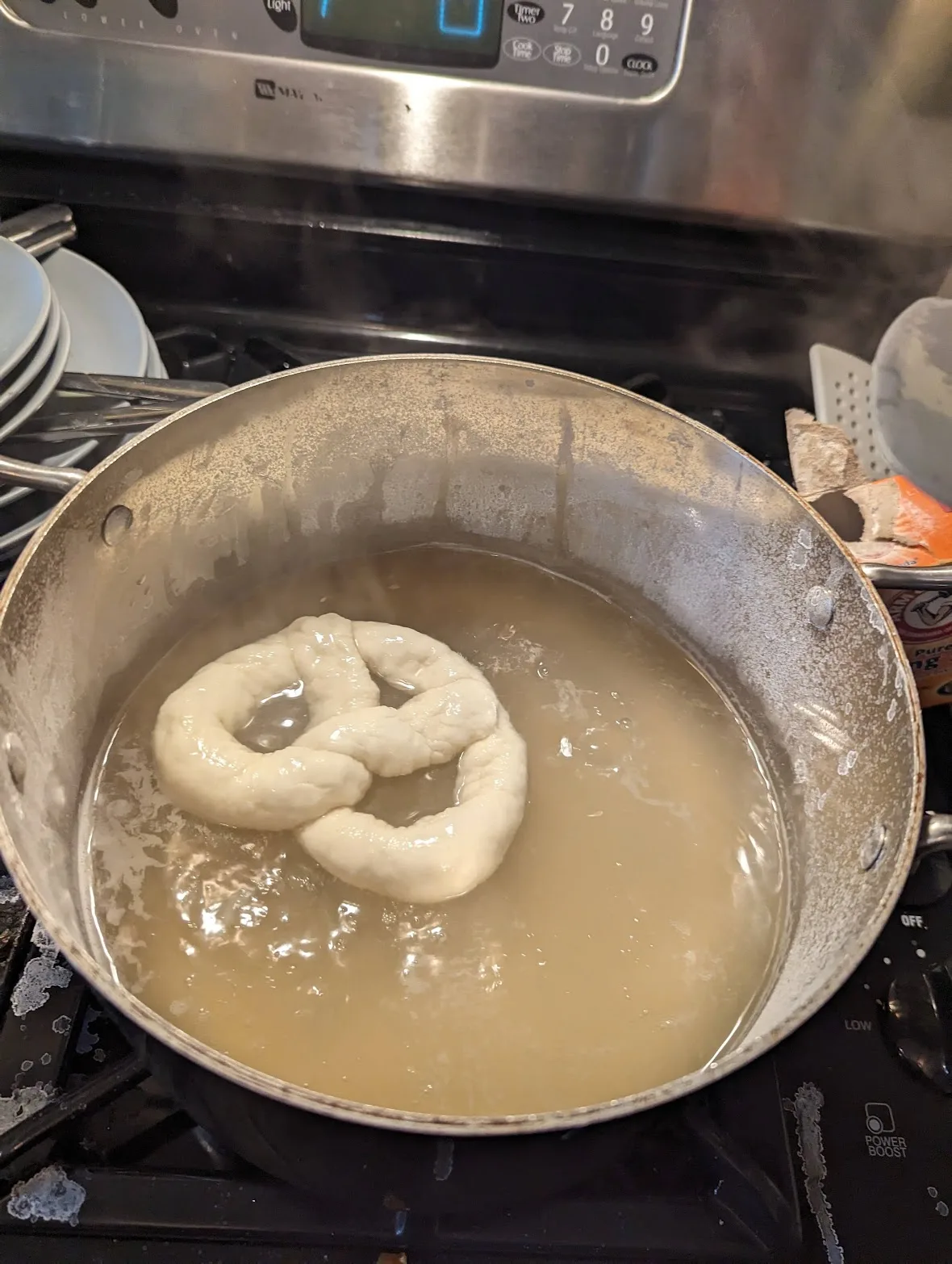
Before comparing products, it’s worth understanding the one technique that separates a soft pretzel from a plain bread roll shaped into a knot: the alkaline dip. Traditional bakeries dip shaped pretzel dough briefly in a food-grade lye solution before baking. Lye is a strong alkali — its high pH accelerates the Maillard reaction on the dough’s surface, which is the same browning chemistry that gives seared meat and toasted bread their flavor, and it also gels the starch on the surface. That combination is what produces a pretzel’s mahogany crust, glossy shine, chewy exterior, and faintly mineral flavor — not the dough recipe itself. Baking fully neutralizes the lye, so the finished product is safe to eat even though the raw dip is caustic and needs careful handling.
Many home recipes and boxed mixes use a baking-soda bath instead of food-grade lye. It is the more approachable home method and still promotes browning, but it generally produces a lighter crust and milder flavor than a properly handled lye dip. Lye requires exact food-safety instructions and protective handling, so this guide does not recommend improvising with it.
This matters for product selection because it tells you what a “complete” mix can and can’t promise. A mix that includes a baking-soda-bath packet is giving you the realistic home version of a pretzel, not a shortcut around the chemistry. Judge mixes on whether they include that step clearly, not on whether they claim to replicate a bakery lye dip at home.
Individual recommendations
Pick the route by how much baking you want
Complete soft pretzel mix
Reduces ingredient sourcing while preserving the main shaping and dipping steps.
From-scratch dough tools
A bench scraper helps divide dough when you already want the full process.
Coarse pretzel salt
Buy separately only after checking what the mix or prepared pretzels include.
Mustard variety
Useful when pretzels are a feature, optional when one suitable mustard is already available.
Complete soft pretzel mix — the lowest-effort real result
A complete mix bundles flour, yeast (or a leavener), and instructions for the dough plus, in better versions, a baking-soda-bath packet and a small amount of finishing salt. Compare current soft-pretzel mixes(paid link) by included steps and ingredients, then place them within the wider Oktoberfest food menu.
The limitation is that included contents vary. Some mixes provide a small salt packet or a different crystal size than you expect; others include enough for the stated batch. Check the box before buying extra. A baking-soda-based mix also produces a different crust from a bakery lye dip, so judge it as an approachable home method rather than a guaranteed replica.
From-scratch dough tools — for bakers who want more control
If you already keep a bench scraper and a kitchen scale on the counter, from-scratch pretzel dough isn’t a big leap, and the right shaping tools make the difference between neat, evenly sized pretzels and a tray of lopsided ones. Two tools do most of the work. A bench scraper — a stiff, flat blade — is how bakers divide a batch of dough into even portions without overworking it or warming it with bare hands; the flat edge also lifts sticky, tacky dough off the counter cleanly and doubles as a way to clear flour and stuck-on residue from the work surface between steps. Dedicated shaping tools help with the actual pretzel twist: rolling a strand, forming the classic upside-down U, then folding and pressing the ends onto the body so they hold through boiling or dipping and baking.
Worth setting expectations here: shaping a pretzel is simple to describe and genuinely takes practice to get neat. Even baking-focused guides that walk through the technique step by step are upfront that the first few will probably look uneven, even when the dough itself is fine. That’s not a sign anything went wrong — it’s a normal part of learning the shape, and it gets faster after a couple of batches.
Pretzel salt — the finishing touch worth buying separately
This is arguably the single most underrated purchase on this list, because it fixes a real and common problem: table salt is the wrong tool for topping a pretzel. Pretzel salt is a coarse, flat, long-grained salt without the anti-caking additives common in table salt. Its larger, flatter crystals sit visibly on the dough’s surface through baking instead of dissolving into it. Fine table salt, by contrast, is too fine for the job — it either dissolves into the alkaline bath before it can stick, or it melts into the crust during baking and disappears, leaving a pretzel that looks bare and tastes under-seasoned even if salt was technically added.
This is why it can be worth buying pretzel salt on its own rather than trusting a mix’s included packet. Inspect current pretzel salt options(paid link) for grain size and package quantity; coarse kosher salt can substitute when you do not need a separate bag.
Non-stick baking mat or liner — solves the cleanup problem nobody warns you about
Here’s what most first-time pretzel bakers don’t expect: after the alkaline dip, the dough’s surface starch gels, which is part of what gives the finished pretzel its shine — but it also makes the raw, dipped dough noticeably tackier than plain bread dough. Set it directly on a bare metal sheet and it can stick hard enough to tear the bottom crust when you try to lift it off after baking, and the baking soda or lye residue can be a genuine pain to scrub afterward.
A dedicated non-stick baking mat or liner solves both problems at once: it gives the dipped dough a surface it releases from cleanly, and it keeps the residue off the pan itself, which matters more for pretzels than for most other baked goods precisely because of that alkaline step. This is a small purchase, but it’s the kind of thing that turns “the pretzels stuck and half of them look torn” into a non-issue on the first attempt, which matters most for a host who only gets one shot before guests arrive.
German mustard variety pack — a serving decision, not a baking one
This one belongs in its own category because it isn’t solving a baking problem at all — it’s a serving decision that changes how finished the table feels. A single jar of yellow mustard next to a basket of pretzels reads as a snack. A small spread of two or three German-style mustards — a coarse, whole-grain style and a sharper, more traditional Bavarian-style mustard — reads as an actual pretzel course, and it costs almost nothing extra to set out.
Skip this if you’re already serving a full spread of sausages, roast chicken and sides. Add it back in if pretzels are a standalone snack station; then compare a current mustard variety(paid link) after using the party guide to settle the guest count.
Side-by-side comparison

The categories above aren’t really competing with each other — most hosts will combine two or three. But it helps to see the effort and result tradeoff side by side before deciding where to start.
| Approach | Effort | Skill needed | Realistic result |
|---|---|---|---|
| Complete mix + separate pretzel salt | Low | None required | Genuinely good homemade pretzel; milder color and flavor than a bakery lye dip |
| From-scratch dough + shaping/dividing tools | Moderate to high | Some, improves quickly with practice | Most control over size, texture and shape; still typically uses a baking-soda bath, not lye |
| Store-bought pretzels + pretzel salt + mustard spread | Lowest | None | No baking at all; upgrades presentation and flavor of pretzels you didn’t make |
Methodology

Current pretzel-making options
Browse Soft Pretzel Baking Mixes
Search Amazon for current soft pretzel mixes and compare ingredients, yield, equipment, seller, and delivery.
Browse Coarse Pretzel Salt
Search Amazon for coarse pretzel salt and compare grain size, quantity, and seller.
Browse Non-Stick Baking Mats
Search Walmart for non-stick baking mats and compare size, material, and heat rating.
Browse Dough Scraper and Shaping Tool Sets
Search Amazon for dough scraper and shaping tool sets and compare material, included pieces, and seller.
Browse German Mustard Variety Packs
Search Walmart for German-style mustard variety packs and compare spice level, jar count, and seller.
Editor’s spotlight
Beginner spotlight: complete soft pretzel mix
Use a mix to reduce ingredient sourcing, then verify whether the current package includes salt and an alkaline-bath step.
Browse Soft Pretzel Baking Mixes
Search Amazon for current soft pretzel mixes and compare ingredients, yield, equipment, seller, and delivery.
Compare the three practical routes
| Criteria | Effort | Control | Likely purchase |
|---|---|---|---|
| Complete mix | Lower | Moderate | Mix; add only missing contents |
| From scratch | Higher | Highest | Tools only if they solve a real step |
| Prepared pretzels | Lowest | Serving only | Salt or mustard only when needed |
A complete mix is useful when
Best for
- This is your first pretzel batch
- You want fewer ingredients to source
- The package clearly explains the dipping step
Not for
- You already bake bread and want full formula control
- The included contents are unclear
- You do not want to shape or dip dough
These recommendations are category-level judgments, not a ranked test of specific purchased products. The reasoning behind each pick rests on three things: what food-science and baking-technique sources say about the alkaline dip, salt crystal size, and dough-handling tools; what each product category is actually built to do; and where home hosts most commonly run into friction — sticking dough, under-salted crusts, uneven shaping, a plain-looking table.
No hands-on baking of a specific purchased kit or mix was performed for this article, and no specific brand, price, rating or stock status is claimed here. That follows both FTC guidance on making accurate, substantiated claims when recommending products and MottoFox’s own commerce policy of keeping recommendations reader-first and clearly scoped to what’s actually been verified. Before buying, check the current listing for a specific mix’s included ingredients — some include a real baking-soda-bath packet and enough salt, others don’t — and confirm current price, stock and seller details on the merchant page itself.
How the pretzel options were evaluated
Process fit
40%Products were mapped to beginner, from-scratch and no-bake serving routes.
Food science
35%Published baking guidance informed the alkaline-bath and salt explanations.
Tool function
25%Tools were included only when they solve a concrete dough-handling or cleanup problem.
Limitations
- No kit or mix was purchased and baked by MottoFox.
- Included ingredients vary by listing.
- Food-grade lye requires exact safety instructions and is not a casual substitute.
- Current seller, contents and availability require live verification.
Verdict
Verdict
Start with the work you actually want to do
A complete mix is the approachable route, dough tools suit people who already bake, coarse salt is a conditional finishing purchase, and mustard belongs to the serving decision rather than the dough.
Check the kit contents first, then buy only the missing ingredient or tool that removes friction from your chosen route.
- A baking-soda method will not exactly reproduce a professional lye-dipped crust.
- Specialized tools are unnecessary if you do not want a from-scratch workflow.
Start with the effort level you actually want, not the one that sounds more impressive. A first-time host who wants a real homemade pretzel without learning dough chemistry should buy a complete mix and a separate bag of coarse pretzel salt — that combination alone fixes the two most common disappointments (bland flavor, bare-looking crust) without adding real difficulty. A host who already bakes and wants a more authentic result should invest in a bench scraper and shaping tools and expect the first batch to be a practice round, not a finished showpiece. Anyone using a baking mat or liner will have an easier cleanup regardless of which path they take, because the sticking problem comes from the alkaline dip itself, not from the recipe.
And regardless of who’s baking — or whether anyone bakes at all — the mustard pack is the cheapest, lowest-effort upgrade on this list. If you only make one change to a plain bag of store-bought pretzels this Oktoberfest, make it that one.
Frequently asked questions
What is the best pretzel making kit for Oktoberfest? There isn’t one universal best kit—it depends on your effort level. A complete mix reduces the number of ingredients a first-time baker must source. A host who already bakes bread may get more value from a bench scraper and a from-scratch recipe. Check the included salt and alkaline-bath instructions before adding either item separately.
What’s the difference between a soft pretzel mix and making dough from scratch? A mix bundles the flour, leavener and often a baking-soda-bath packet so you’re not sourcing ingredients separately, which makes it the lower-effort, more dependable option for a first attempt. From-scratch dough gives you more control over size, texture and shaping, but it takes more time, more equipment, and a bit of practice to shape neatly — even experienced home bakers report the first few pretzels come out uneven.
Can I make homemade pretzels for Oktoberfest without special equipment? Yes. A basic home kitchen — a mixing bowl, a baking sheet, and a pot for the alkaline dip — is enough to make pretzels from a mix or from scratch. A bench scraper and a non-stick baking mat aren’t required, but they solve two specific problems (uneven dough portions and dough sticking to the pan) that otherwise show up on a first attempt.
Do I really need pretzel salt, or can I use table salt? Table salt is too fine for the job. Its small crystals either dissolve into the alkaline bath before they can stick or melt into the crust during baking, leaving the pretzel looking bare. Coarse pretzel salt’s larger, flatter crystals sit visibly on the surface and survive the bake, which is most of what makes a pretzel look and taste like a bakery pretzel rather than a plain roll. Coarse kosher salt or sea salt can substitute if you don’t have pretzel salt on hand.
How do you make soft pretzels taste like the ones at Oktoberfest? The characteristic crust comes from an alkaline dip before baking. Professional recipes may use food-grade lye, while many home methods use a more approachable baking-soda bath that produces a lighter, milder result. Coarse salt improves the finish, but it does not erase the difference between the two alkaline methods.
Frequently asked questions
Common questions
Do I need a complete pretzel kit?
No. A mix reduces ingredient sourcing, but a basic kitchen can make pretzels without specialized equipment.
Can I use baking soda instead of lye?
Many home methods use a baking-soda bath for a more approachable process. It usually produces a lighter and milder crust than a properly handled food-grade lye dip.
Do I need pretzel salt?
Check what the mix includes first. Coarse pretzel salt produces a visible topping, while other coarse salts may work with a different crystal shape.