

On this pageThe identity joins two histories without making them identical
German-American generally describes an American whose family story includes German ancestry, migration or cultural connection. The identity may be recent and visible, or it may survive quietly through a surname, an ancestral town, a grandparent called Oma or a record kept in a family box. It does not require German citizenship, fluent German or a fixed checklist of customs.
The label becomes more useful when it leads to a specific story. A person whose parents moved from Hamburg has a different experience from a fifth-generation family in Wisconsin or a Texas German family whose language changed over time. Those differences do not invalidate the broad identity. They explain why it has many forms.
Four parts of the identity that should stay distinct
- German ancestry
- Family descent connected to Germany, a historical German state or a German-speaking community.
- German-American
- An American heritage or cultural identity that connects a U.S. life with German family roots.
- German citizenship
- A legal status governed by German nationality law; ancestry alone does not establish it.
- Cultural practice
- Language, food, faith, music, customs, relationships and community activities a person or family actually carries or learns.
The identity joins two histories without making them identical
“German-American” does not mean a person is half of one finished culture and half of another. It describes a relationship: German family origins developed within American places, institutions and generations.
Migration changes family life. Recipes adapt to available ingredients. Names acquire new spellings or pronunciations. Children use the language of school and work more often than the language their parents brought. Churches, clubs and neighborhoods create traditions that belong specifically to German-American communities rather than to Germany as a whole.
That is why German-American history should not be treated as a frozen copy of modern Germany. A family custom in Pennsylvania, Missouri, Wisconsin or Texas may reflect a particular migration period, religion, dialect region and American setting. It can be meaningful without representing every German family or contemporary German life.
Why German-American identity has so many regional forms
German-speaking immigrants arrived in different eras and settled in different parts of the United States. The Library of Congress overview of German immigration describes communities developing through religious migration, farming, skilled trades, political exile and later mass migration. Each route placed families among different neighbors and institutions.
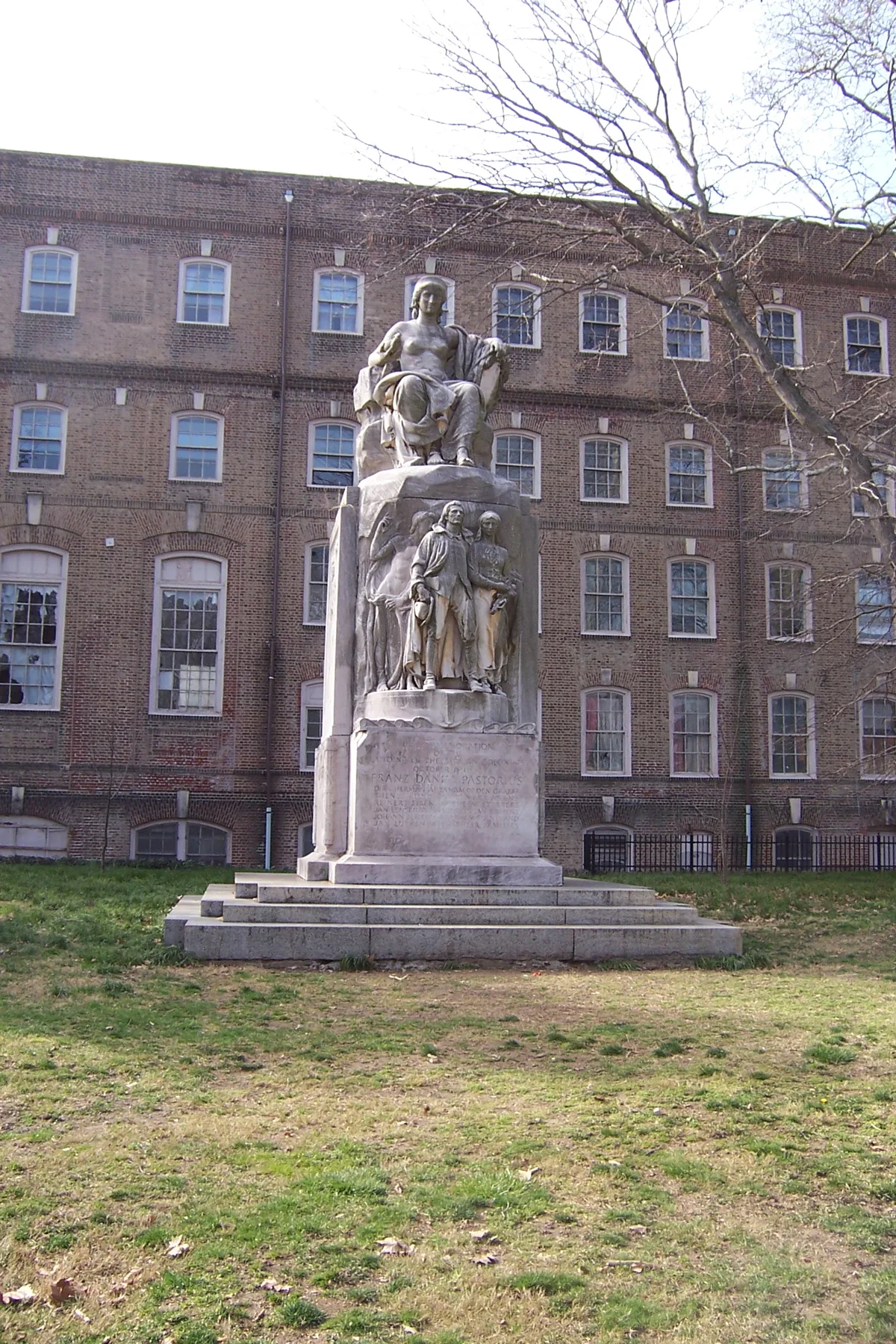
Germantown, founded near Philadelphia in 1683, became an early organized German settlement. Later migrations helped shape communities across the Midwest and elsewhere. Political refugees after the failed revolutions of 1848 added another strand, bringing journalists, professionals and organizers whose public work became part of American civic life.
A family’s location therefore matters. Pennsylvania German history is not interchangeable with later Midwestern urban history. Texas German communities developed in another environment. Recent immigrants may retain direct family relationships and knowledge of present-day Germany that older diaspora families do not have.

Public German culture became quieter, but it did not simply vanish
Many German-speaking communities once supported newspapers, schools, churches, clubs, publishing and public events. English-language schooling, mobility, intermarriage and generational change already encouraged language shift. World War I then introduced a more forceful rupture.
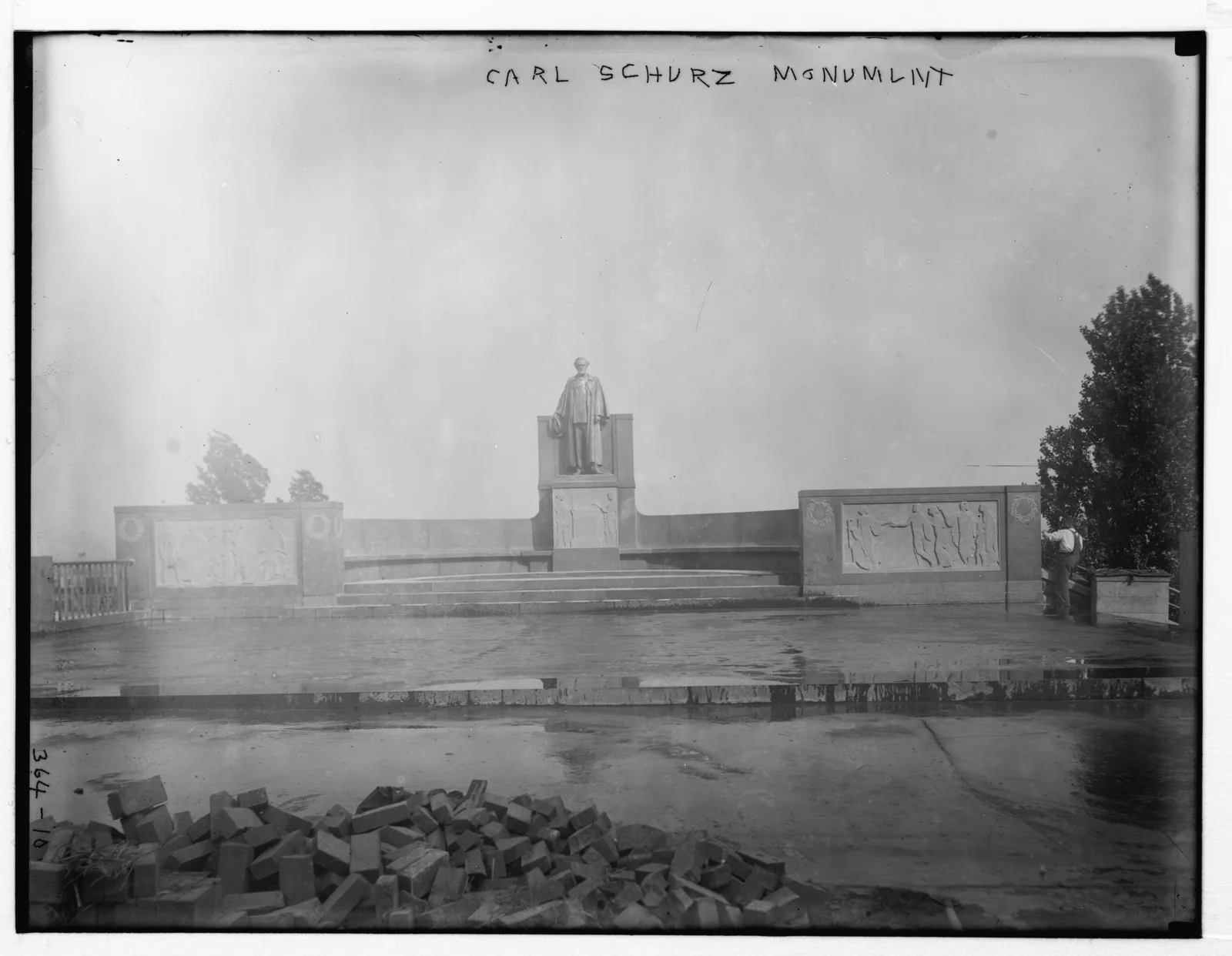
The Library of Congress documents wartime hostility toward German language and public culture. Communities faced suspicion; German-language institutions and publications came under pressure; families often had practical reasons to make their background less visible. The effect was not identical in every state or household, and ordinary language shift continued alongside it.
That history explains why some descendants inherit evidence of German ancestry but little language or public tradition. It does not prove that every lost word resulted from persecution, and it should not be used to turn one national history into a single family explanation. It does show why quiet heritage is historically plausible rather than evidence that a family did not care.
For the focused history of language transmission, continue with the separate article about why German-American families lost German. This page owns the identity definition; it does not reduce the identity to that single cause.
What German-American identity does not require
No one food, holiday, outfit or festival determines whether the label fits. Oktoberfest may be enjoyable, but its Munich and Bavarian origins cannot summarize the history of German-speaking migration or the experiences of every German-American family.
Fluency is not a universal requirement either. Language can open records, relationships and contemporary culture, but descendants inherit the consequences of decisions and pressures that occurred before they were born. A person can acknowledge that loss without pretending to speak for those who retained the language.
The same boundary applies to ancestry evidence. A census record, birthplace or family tree can support descent. It cannot automatically establish cultural knowledge. German ancestry and German heritage overlap, but they answer different questions.
The identity is not a performance score
A real German-American must speak German and maintain a complete set of traditions.
Families retained different parts of their background, and many experienced language shift across generations.
Language learning and cultural practice can deepen a connection. They should not be used to erase a documented family history or manufacture authority over modern German life.German ancestry makes someone culturally identical to a person raised in Germany.
Ancestry connects a person to family origins; upbringing and present-day national experience are separate parts of identity.
German-American is often the clearer label because it names the American setting as well as the German family connection.A useful way to describe your own connection
Begin with the broad label, then add one detail that gives it meaning. For example:
- “I am German-American; my grandparents came from near Bremen.”
- “My family has German ancestry and settled in central Texas.”
- “German-American history is part of my background, although the language was not passed down.”
- “I am researching the Württemberg town named in my great-grandmother’s records.”
These sentences do not ask a listener to guess whether “German” means citizenship, ancestry or culture. They also leave room for mixed backgrounds. German roots do not cancel another parent’s or grandparent’s history, and a person does not need to rank family connections before describing them.
If your evidence is still thin, what German heritage means gives the wider terminology. If you want a practical starting point, use the guide to reconnect with German heritage through one named clue and one manageable research lane.

Expressing the identity without using it as proof
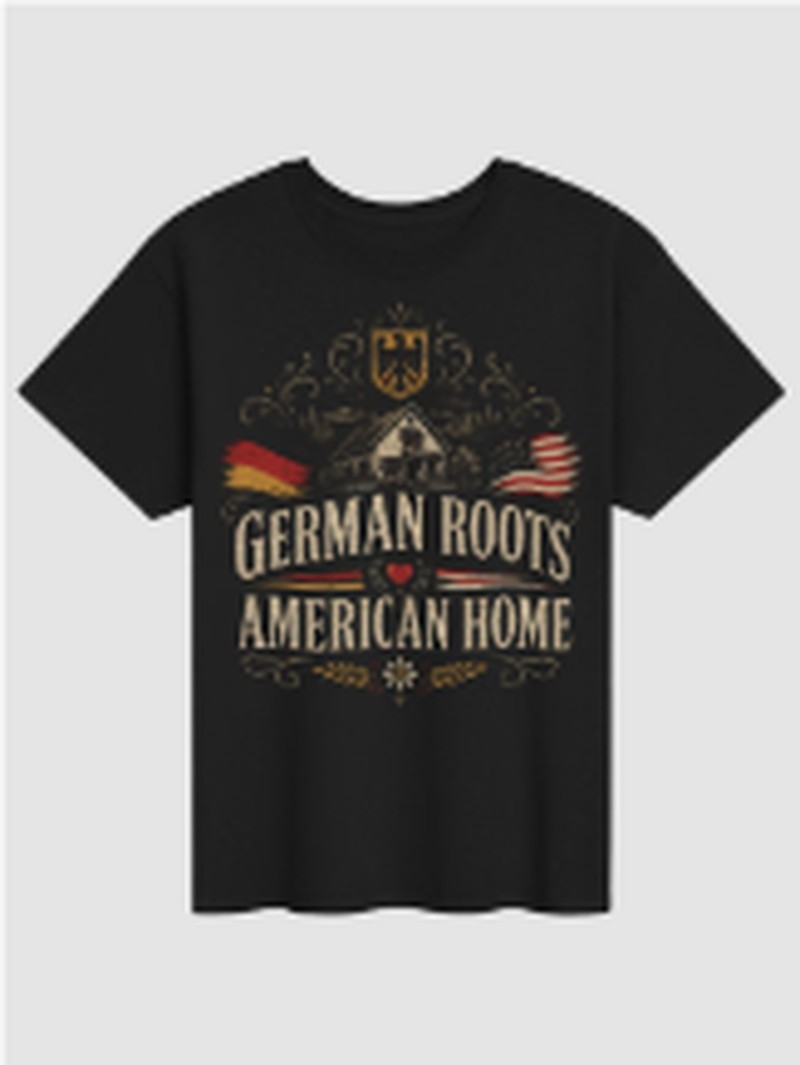
A shirt, keepsake or family display can express a connection after the meaning is clear. “German Roots, American Home” fits this article because it names both parts of the story rather than suggesting a legal status or a standard of authenticity.
The product below is optional. The article’s useful work is already complete: identify what German-American means in your family, name the source of that knowledge and distinguish ancestry from citizenship and cultural expertise.
German-American identity is not one recipe, accent or migration story. It is an American family identity shaped by German roots and by everything that happened after arrival. The clearest version is neither loud nor vague. It names the people, places and practices that make the connection real—and remains honest about what they do not prove.
An optional expression
German roots, American home
This design names the two-part family story directly. It expresses a connection; it does not certify citizenship or cultural expertise.
Frequently asked questions
Common questions
Do German-Americans have to speak German?
No. Some families retained German or a regional variety, while many shifted to English. Language can deepen the connection, but it is not a universal membership test.
Is German-American a nationality?
In ordinary U.S. use, German-American is usually a heritage or cultural identity. German citizenship and U.S. citizenship are separate legal statuses.
Can someone be German-American many generations after immigration?
Yes. The label can describe a family connection several generations after migration, provided the person does not use ancestry as a substitute for present-day German nationality or lived experience.
What if my family kept almost no German traditions?
The ancestry and migration story can still be real. Begin with a named person, place, record or memory and describe what survived without inventing an unbroken tradition.