
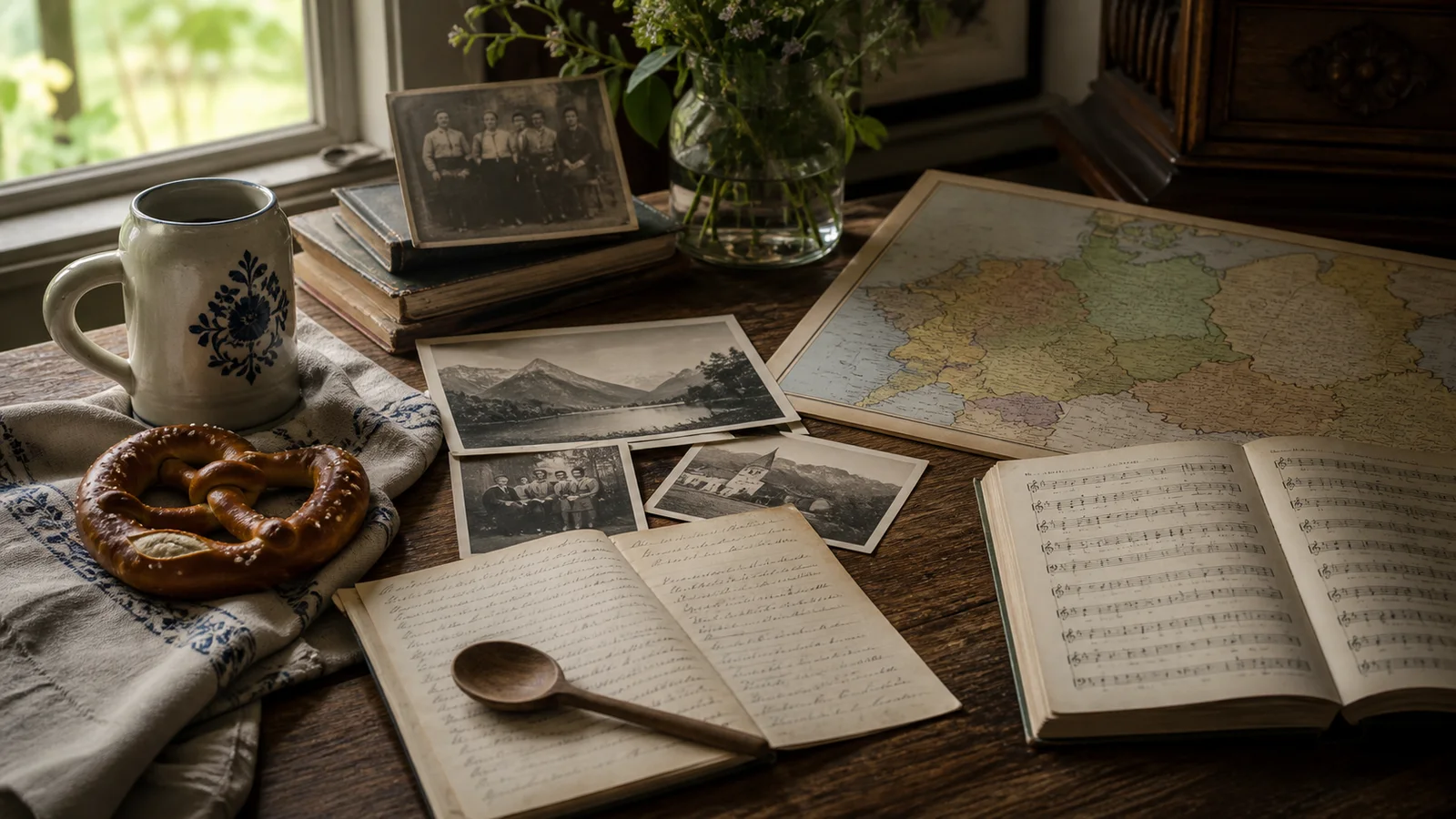
On this pageOktoberfest matters—and still has a boundary
Oktoberfest is a real and important Munich tradition. It is not a complete definition of German heritage. The wider story includes families from many regions, German-speaking institutions built in America, language carried or lost, religious and civic communities, migration records, household customs and identities that may be expressed quietly all year.
Keep these scopes separate
- Oktoberfest
- A festival that began in Munich in 1810 and developed into the city's annual Wiesn. Its history and imagery are rooted in Bavaria.
- German heritage
- Family and cultural connections to German-speaking people, places and histories. It can include ancestry, language, records, traditions and personal meaning.
- German-American culture
- Practices and institutions formed by German-speaking immigrants and their descendants in the United States, often changing across regions and generations.
- Regional tradition
- A practice associated with a particular place, community or historical region rather than with every German family.
Oktoberfest matters—and still has a boundary
The first Oktoberfest grew from festivities held for the 1810 wedding of Crown Prince Ludwig of Bavaria and Therese of Saxe-Hildburghausen. The official Munich history places the event at the Theresienwiese, whose shortened local name, the Wiesn, remains closely associated with the festival.
That is a specific origin. Oktoberfest celebrations now take place far beyond Munich, including in German-American communities. They can create real community, support music and dance groups, introduce regional food and give families an enjoyable public gathering.
But a successful symbol often becomes a shortcut. Beer tents, steins, pretzels, dirndls and lederhosen are visually recognizable. They are easy to reproduce in advertising and easy to identify from a distance. A church record, regional dialect or family migration route is not.
Visibility is not the same as completeness.
For the festival’s history, clothing, food and practical guides, the dedicated Oktoberfest pillar remains the right destination. This article has a different job: to show what disappears when the festival is asked to represent everything.
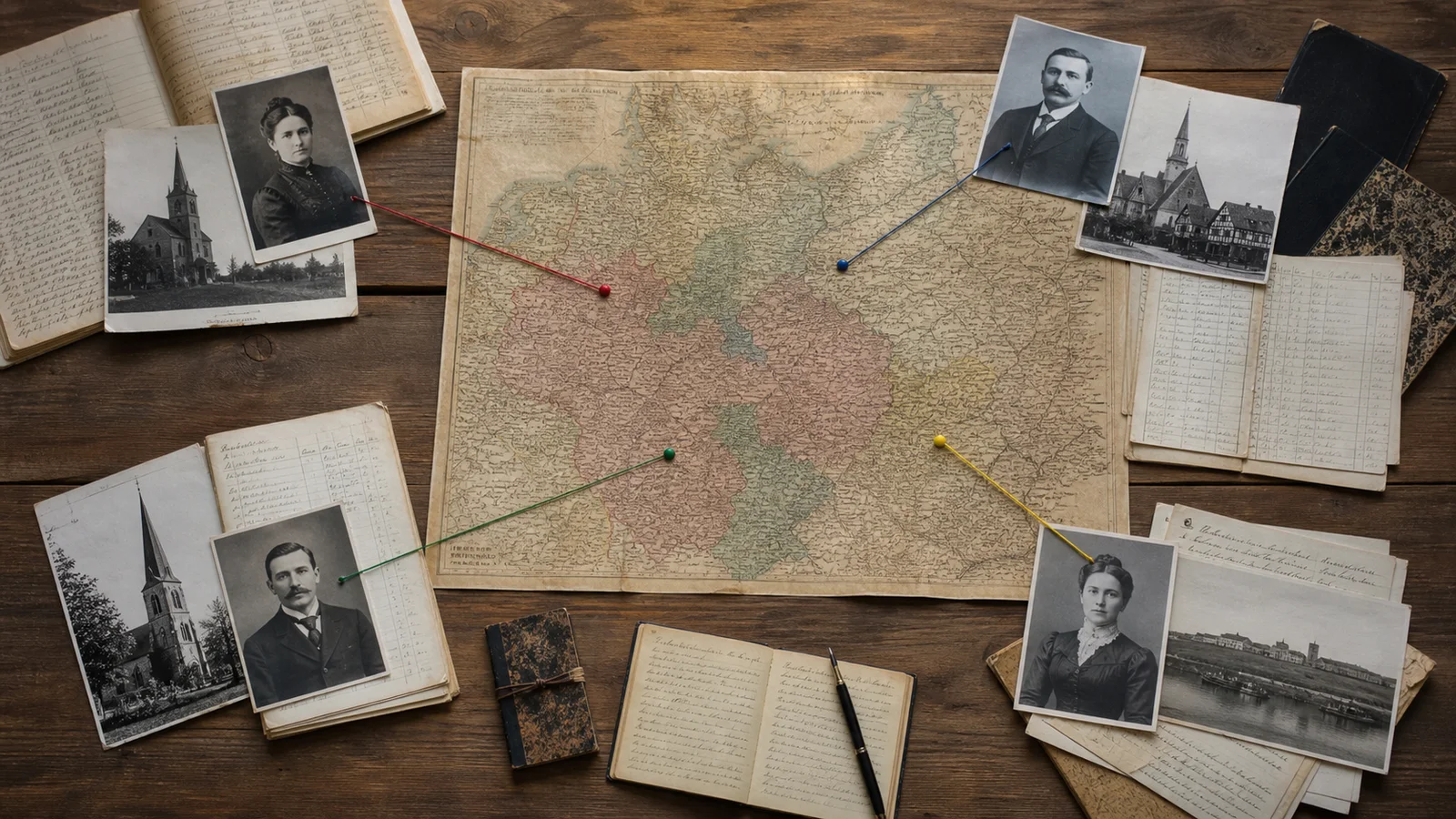
German heritage begins with people and places
A family connection may lead to Bavaria. It may also lead to Württemberg, the Rhineland, Prussia, Saxony, Hesse, Pomerania, a German-speaking community outside today’s German borders or a place whose political identity changed repeatedly.
Those origins affected dialect, religion, food, migration timing and destination. A nineteenth-century immigrant from the Palatinate and a twentieth-century refugee from Silesia did not carry identical histories simply because both could later be described as German.
The American side also became regional. German-speaking settlers built communities in Pennsylvania, the Midwest, Texas, Missouri and many other places. Local economies, churches, neighboring groups and migration periods shaped what families kept. German-American heritage in Fredericksburg does not have to look like German-American heritage in Milwaukee.
A broad label can hold these stories together. It should not flatten them.
Public institutions carried more than festival culture
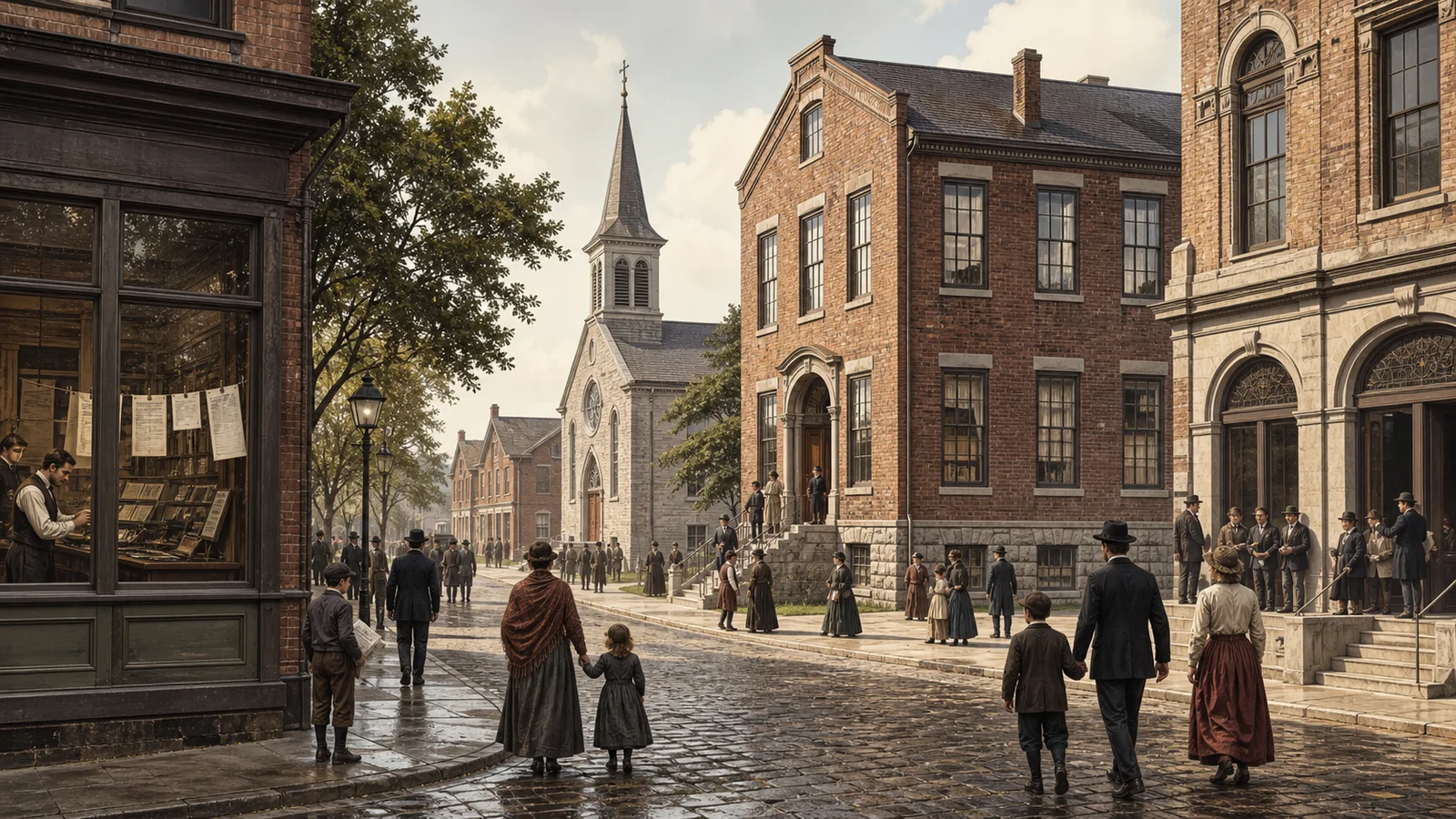
German-speaking life in the United States once included newspapers, schools, churches, theaters, libraries, political organizations, singing societies and mutual-aid associations. The Library of Congress documents German-language newspapers across American cities and the influence of German immigrants on education and other institutions.
These places gave heritage an everyday structure. A newspaper carried news and argument. A school taught children. A church joined worship with community support. A club organized music, sport, relief or political life. A family could use German in a public world rather than saving it for a ceremonial toast.
When those institutions declined or changed language, heritage often became less visible even if ancestry remained widespread. That helps explain why a festival may now appear more prominent than the quieter structures that once sustained community life.
Language can survive, change or disappear
Language is one of the clearest connections to heritage, but it is not a simple dividing line.
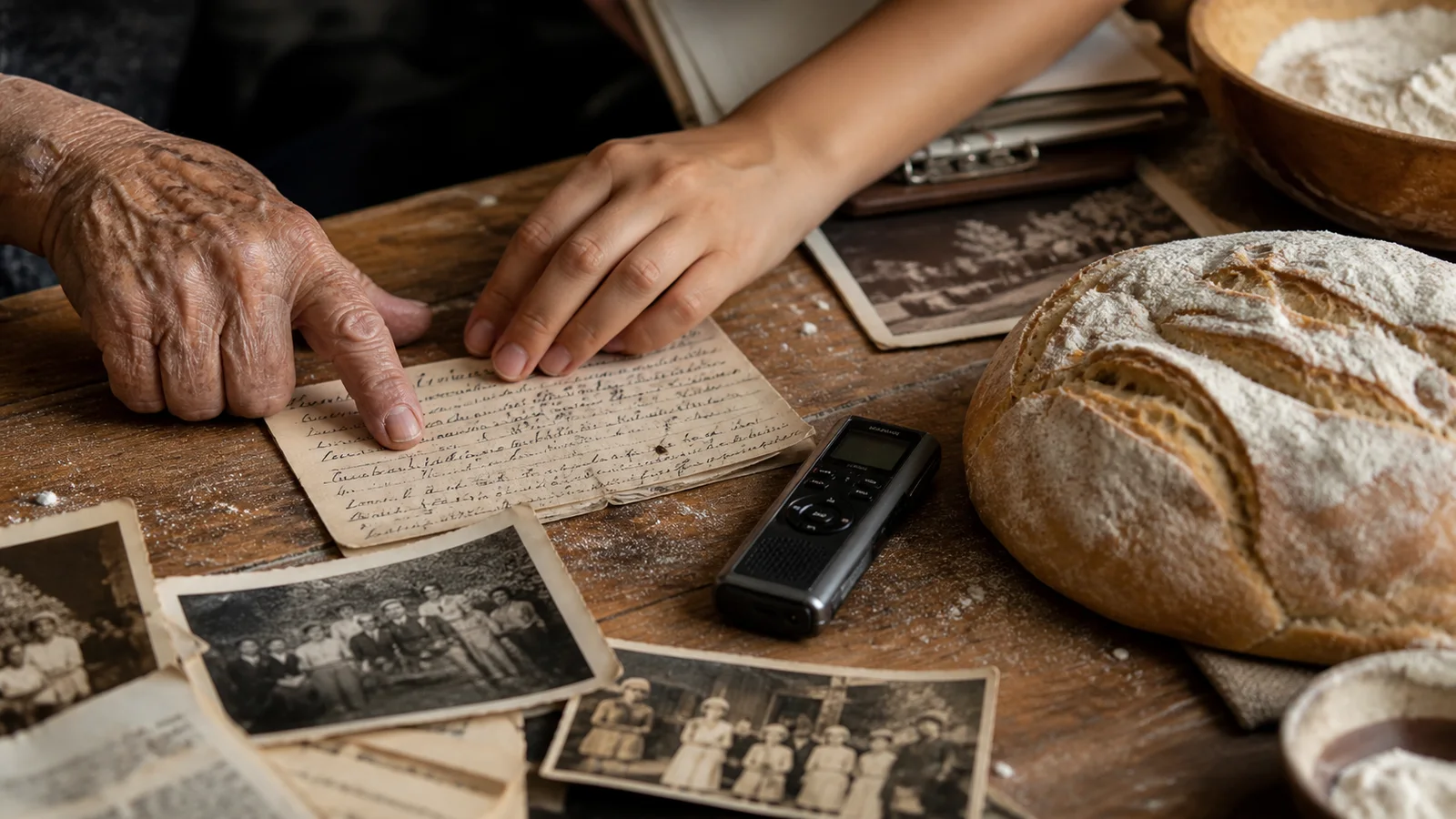
Some families retained German for several generations. Others shifted to English early. Some preserved a regional dialect, while later learners studied Standard German. Many kept only family words, food names, prayers or songs.
English-language schooling and work encouraged gradual shift. Anti-German pressure during World War I made public German use dangerous or suspect in many communities. Why German-American culture became less visible belongs in the larger heritage picture because silence can have a history. Lack of fluency is not always lack of interest.
At the same time, ancestry does not make someone automatically fluent or culturally expert. Language is a skill and practice. It can be learned with humility without pretending it was never lost.
Food is regional, practical and personal
Beer, sausage and pretzels are not inventions of a stereotype. They have real histories and settings. The distortion comes from treating them as the entire German table.
German-speaking regions developed many breads, cakes, dumplings, soups, preserved foods and seasonal dishes. Immigrants adapted recipes to American ingredients, available equipment, religious communities and family budgets. A dish described as German-American may be an old regional recipe, a local adaptation or a household version that changed over generations.
The most useful question is often not “Is this authentically German?” but “Whose version is this, where did it come from and what changed?” A handwritten recipe with a named cook and date can reveal more about one family than a generic list of national foods.
Heritage also lives in ordinary choices
Not every connection appears at a public event. It may live in:
- what grandparents were called;
- which photographs were saved;
- a cemetery, church or neighborhood the family returned to;
- a story about why a surname changed;
- a habit of baking for Advent;
- a song learned phonetically;
- the decision to preserve a letter no one can yet translate;
- an interest in the town named on a naturalization record;
- a family association with a trade, farm, newspaper or club.
These details do not need to be dramatic. Their value comes from being attached to real people and contexts.
Why the stereotype remains attractive
A stereotype offers three conveniences.
First, it is immediately legible. No explanation is needed for a beer stein.
Second, it is social. A festival gives people a place to gather even when family knowledge is thin.
Third, it is low-risk. Wearing a familiar symbol can feel easier than asking why a family stopped speaking German or whether an old story is supported by records.
Those conveniences are not shameful. They simply have limits. A public symbol can open the door, but it cannot answer the family questions behind it.
Familiar symbols are not the same as the whole culture
If a symbol is widely recognized, it represents German heritage as a whole.
Recognition measures visibility, not cultural scope.
A stein or pretzel may point to a real festival tradition while saying little about a family's region, language, migration or community history.Correcting the stereotype means rejecting Oktoberfest.
The festival can be enjoyed without asking it to represent every German or German-American experience.
Accurate framing makes room for both the Munich tradition and the wider heritage story.Enjoy the festival without asking it to do everything
A more complete approach does not require rejecting Oktoberfest. It asks for accurate framing.
You can enjoy a local celebration and still say that it is inspired by a Munich/Bavarian festival. You can wear festival clothing without describing it as what all Germans wear. You can appreciate beer traditions while making space for family members who do not drink. You can use the gathering as a reason to learn about migration, music, language or a particular region.
The festival then becomes one part of heritage rather than a costume standing in for the whole.
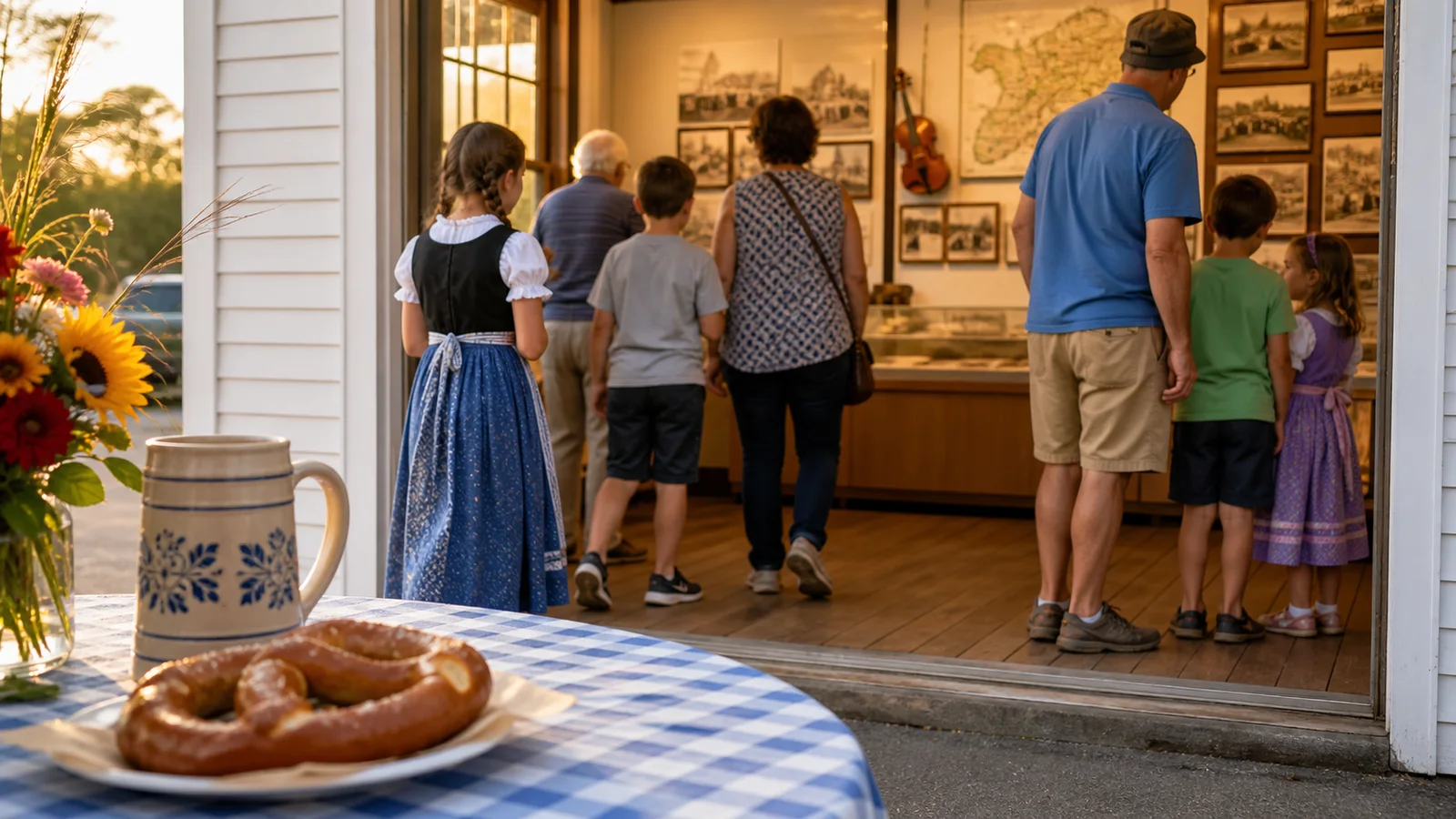
Choose a broader next step
A family record, regional map, language lesson, church history, recipe card or community archive can deepen what a public celebration begins. None has to replace joy with homework.
Meaningful ways to celebrate German roots offers practical options that include family, language, place, history and creative expression. The best choice is not the most impressive one. It is the one tied to a real relationship and repeated with enough care to become part of present life.
Two scopes of expression
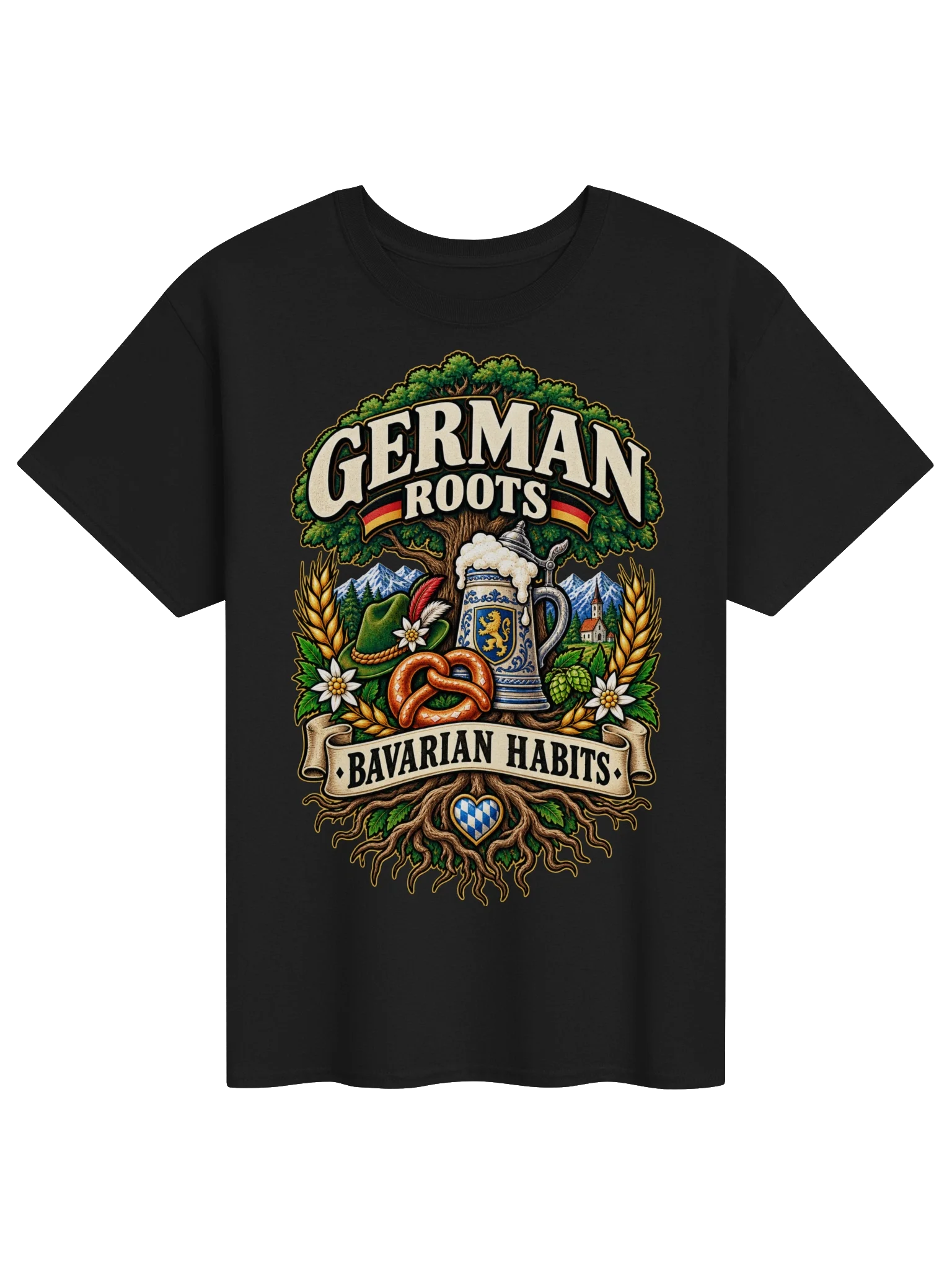
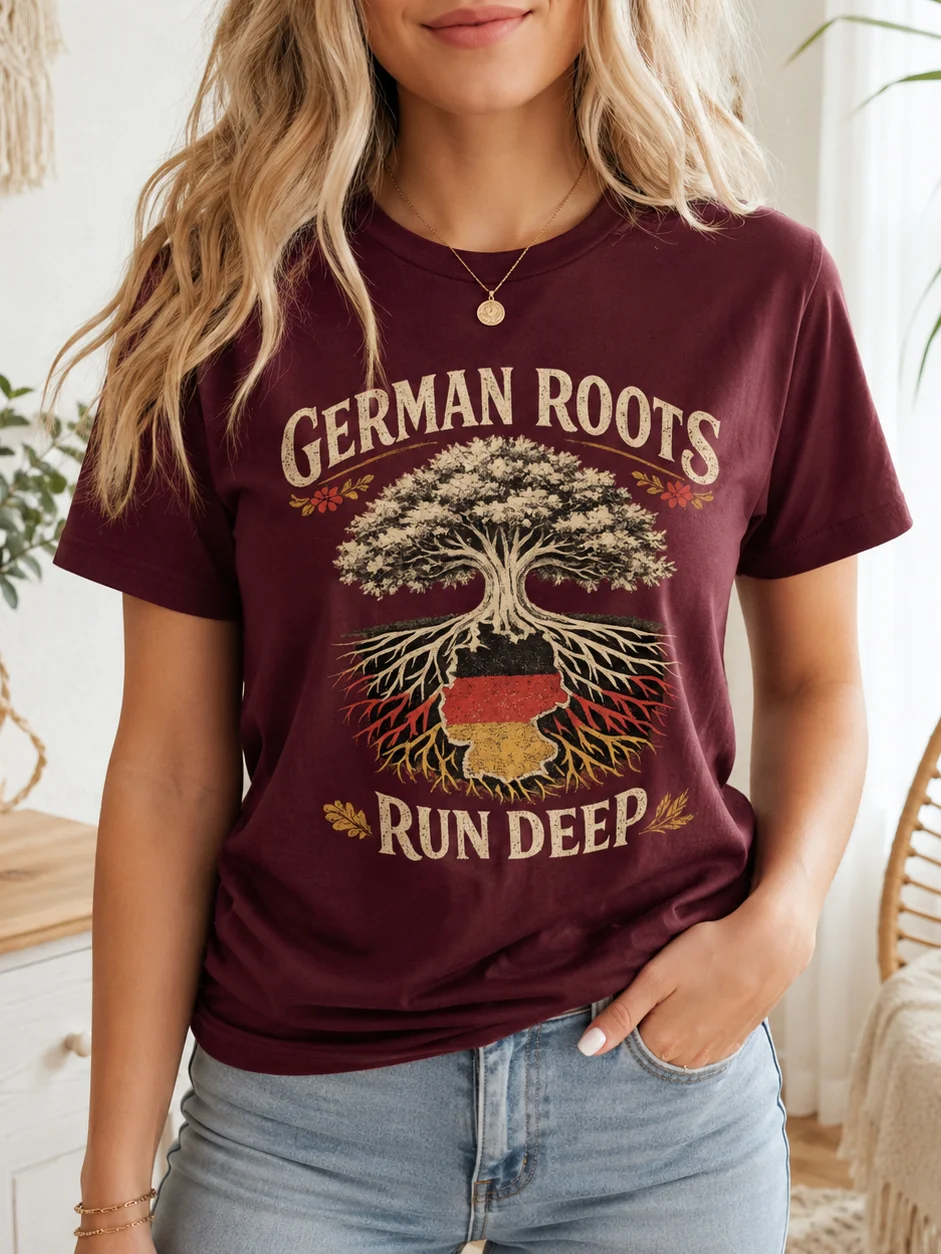
A festival reference and a year-round roots design
One design names Bavarian festival habits; the other keeps the focus on family roots. Clothing can express a connection, but it does not define or prove one.
Frequently asked questions
Common questions
Is Oktoberfest German or Bavarian?
It is a Munich festival with Bavarian roots. It is part of German culture, but it does not represent every German region or every German-American family.
Is it wrong for German Americans to celebrate Oktoberfest?
No. Festivals can be joyful and meaningful. The problem begins only when one festival is treated as the complete definition of German heritage or as proof of authenticity.
What are other parts of German-American heritage?
Family migration, regional origins, language, churches, schools, newspapers, associations, music, food, work, local communities and household traditions can all be part of the story.
Are beer and pretzels just stereotypes?
They are real parts of particular food and festival traditions. They become stereotypes when they are used as a shortcut for an entire country, diaspora or family history.