
On this pageStart with what is specific to your family
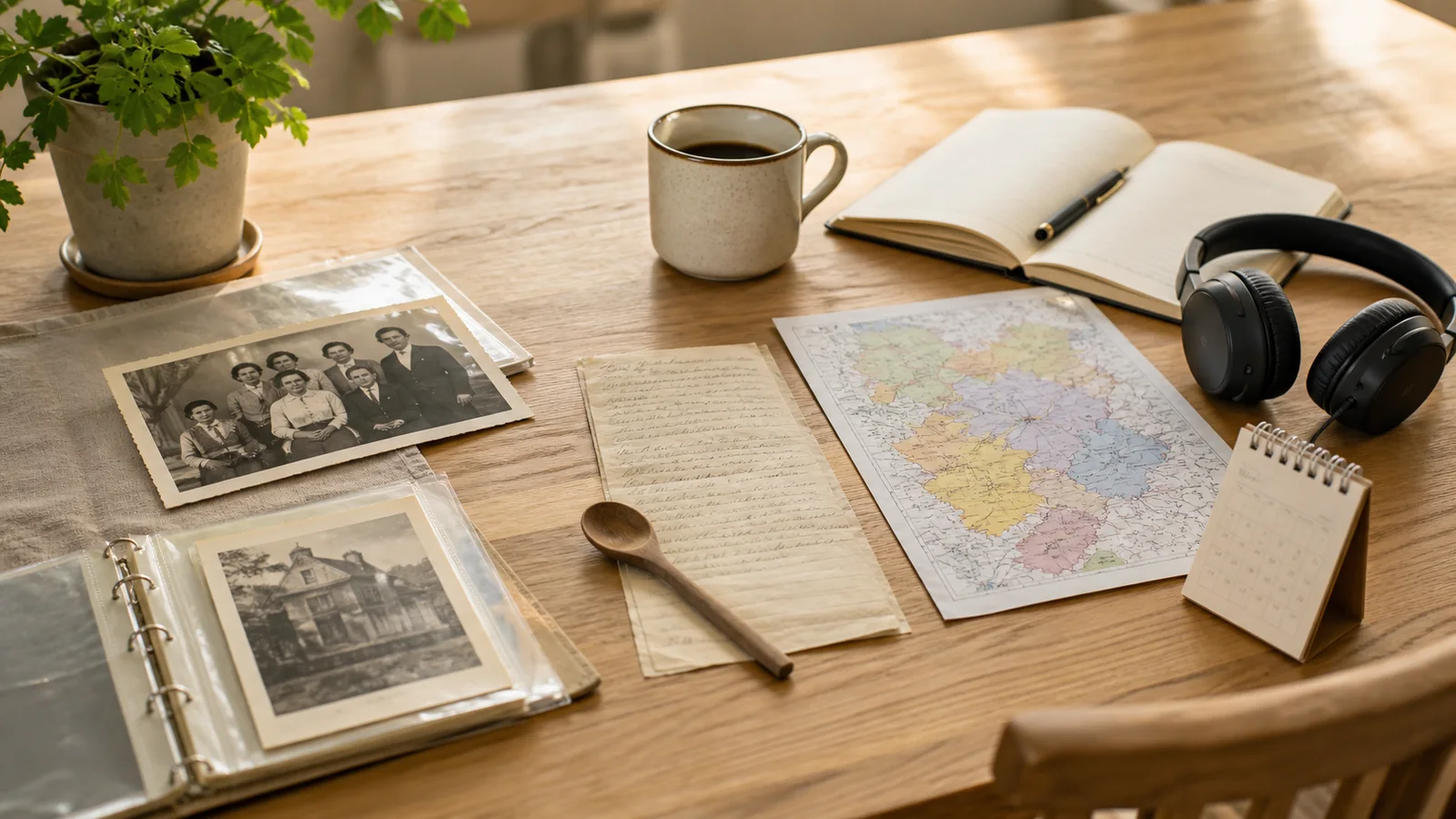
A meaningful celebration does not have to be large, public or expensive. Choose one practice connected to a real person, place or story, and make it small enough to repeat. Labeling a photograph carefully can carry more family value than a themed event no one understands.
Four ways heritage can be expressed
- Celebration
- An activity that creates enjoyment or connection, such as a meal, gathering, concert or festival.
- Commemoration
- An act that marks a person, event or date and usually includes some explanation of why it matters.
- Practice
- A repeated action—using a phrase, preserving records, cooking a recipe or attending a community event—that becomes part of present life.
- Symbol
- A visible expression such as a flag, design or object. A symbol can carry meaning, but it cannot supply the history by itself.
Start with what is specific to your family
“German roots” can feel too broad to act on. Narrow the connection:
- one person;
- one place;
- one object;
- one word;
- one recipe;
- one institution;
- one unanswered question.
If you have none of these yet, use the beginner starting guide to make a family snapshot. A celebration becomes more personal when you know whose story it touches.
Preserve one family clue
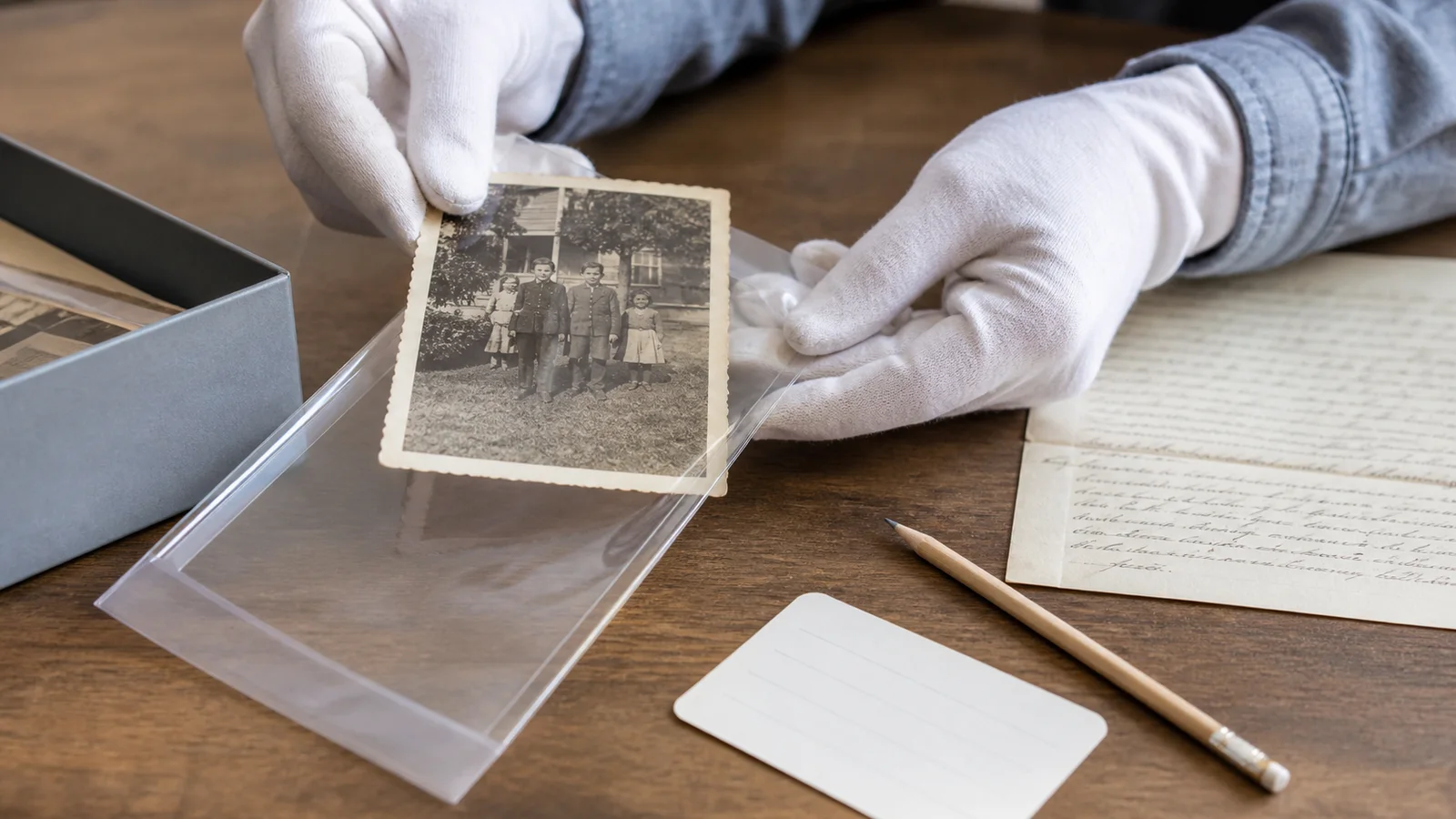
Choose a photograph, letter, certificate, recipe card or keepsake and give it enough context to survive another generation.
For a photograph, record:
- the people you can identify;
- approximate date and place;
- who supplied the identification;
- where the original is stored;
- what remains uncertain.
For a letter, preserve the original order, photograph or scan it safely and record the sender, recipient and date before attempting a translation. For a recipe, name the cook, occasion and version rather than calling it simply “an old German recipe.”
This is celebration through care. It turns an object into something another person can understand.
Bring back one word or phrase in context
A family does not need to restore an entire language before a word matters.
Choose a phrase connected to real use: a greeting, a grandparent name, a birthday wish, a table expression or a line from a song. Check spelling, pronunciation, register and regional variation. Then use it in the situation where it belongs.
Avoid filling a wall or product with a phrase copied from an unverified list. Literal translations can sound unnatural, and an expression common in one region may be unfamiliar elsewhere.
If German disappeared from the family, the loss may have involved more than neglect. English-language schooling, generational change and anti-German pressure all shaped household choices. Learning now can be a respectful new practice without pretending the break never happened.
Cook or bake with the story attached
Food can connect generations because it is repeatable and shared. It can also become generic quickly when the dish is separated from its source.
Try one of these approaches:
- prepare a family recipe and record who taught it;
- compare a handwritten version with a clearly sourced regional recipe;
- note substitutions made after immigration;
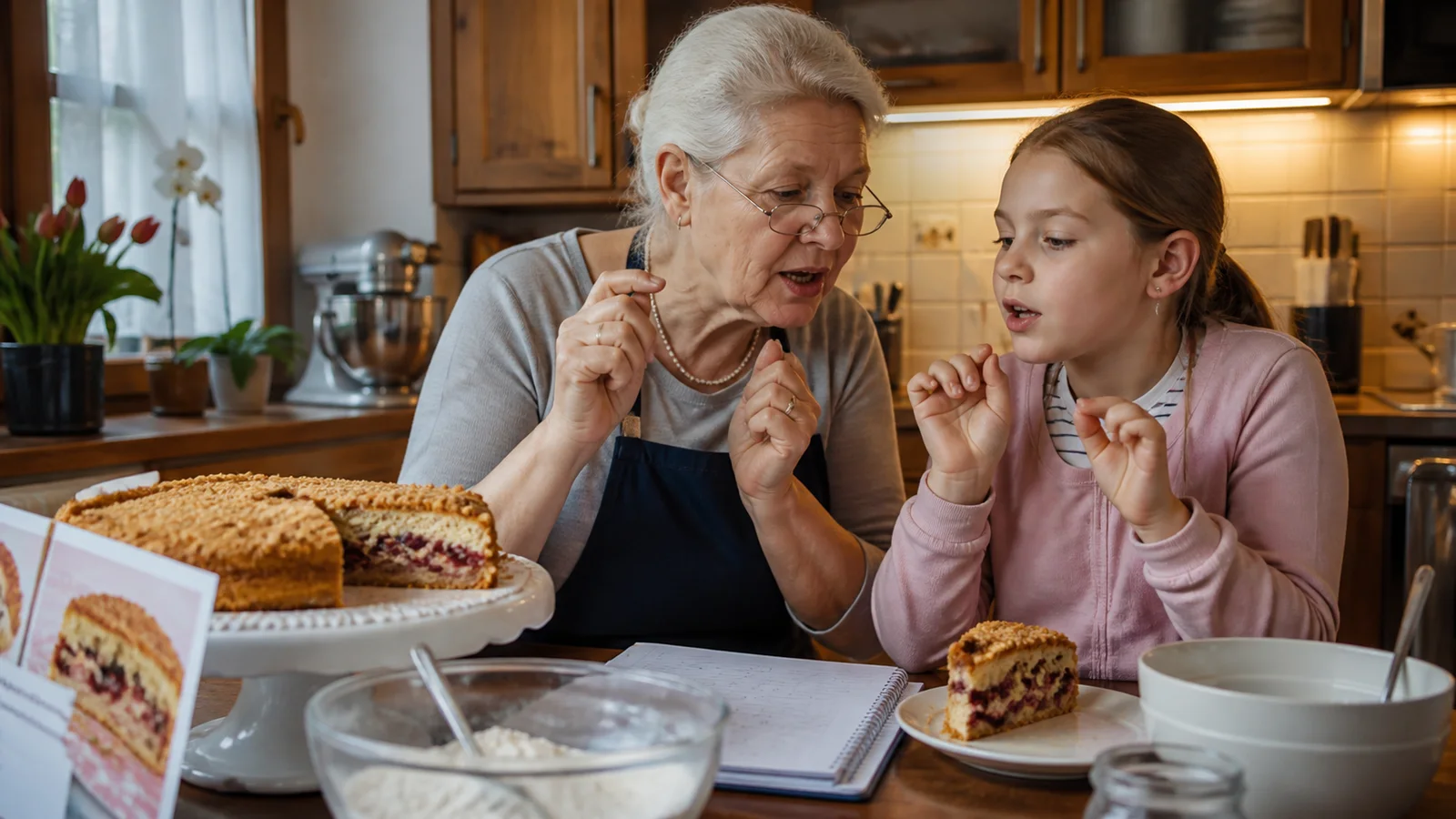
- invite a relative to explain texture, timing or serving tradition;
- preserve the tested version with date, yield and changes;
- name the dish’s region when reliable rather than calling every version simply German.
Do not invent an “Oma’s recipe” story for a dish that came from a modern website. A new recipe can still be enjoyable. It just deserves an honest label.
Learn the place behind the family line
A place can make an ancestry claim concrete.
Locate the town on a modern map. Then ask whether its state, country, parish or district was different when the ancestor lived there. Read a local-history overview, identify the nearest church or civil registry and note what languages or dialects were used in the region.
You do not need to plan a trip. A careful map, historical gazetteer and town history can change “from Germany” into a much more precise understanding.
If the place is still uncertain, work through destination-country records first. A family line should not be attached to a picturesque town because the surname appears there.

Visit a local institution
German-American history may be close to home even when the family arrived generations ago.
Look for:
- a local museum or archive;
- a historical society;
- a former German-language church or school;
- a cemetery with documented community history;
- a music, language or cultural association;
- an immigration museum;
- a neighborhood walking tour;
- a public lecture or digitization project.
Go with one question. Read labels, take source notes and distinguish the institution’s documented history from your own family story. Volunteering, donating copies with permission or helping index public records can turn attendance into contribution.
Mark a date without making it compulsory
A family may choose an immigration anniversary, birthday, wedding date, naturalization date or annual gathering. German-American Day and local festivals can also provide public occasions.
A date becomes meaningful when the family knows what it marks. Add a short explanation, a photograph, a reading or a dish connected to the person or event. Keep participation optional. Not everyone experiences the same history with pride, and some dates may touch separation, war or loss.
The existing heritage-month and festival guides own official observance details. For an evergreen family practice, the important decision is why this date belongs on your calendar.
Use Oktoberfest as one door, not the whole house
A local Oktoberfest can offer music, food, community and an easy reason to gather. It is also a festival with Munich and Bavarian roots, not a national summary.
Enjoy it accurately. Learn what the event is, avoid treating festival clothing as everyday German dress and make room for non-drinkers and families. Then let the interest lead somewhere else: a regional history, a family record, a language question or a local institution.
German heritage is more than beer and Oktoberfest explains why the distinction matters without dismissing the festival itself.
Meaning does not require a performance
A celebration counts only if it is public, elaborate or visibly German.
A private, well-documented practice can carry more family meaning than a large themed event.
The useful test is whether the activity connects to a person, place or story and can be continued honestly.Restarting a lost practice means pretending it was never interrupted.
A family can name the gap and begin a new practice with accurate context.
Honesty about what was inherited, researched or newly learned protects the story from false claims.Express heritage creatively
Creative work can carry a connection when it names its source.
You might:
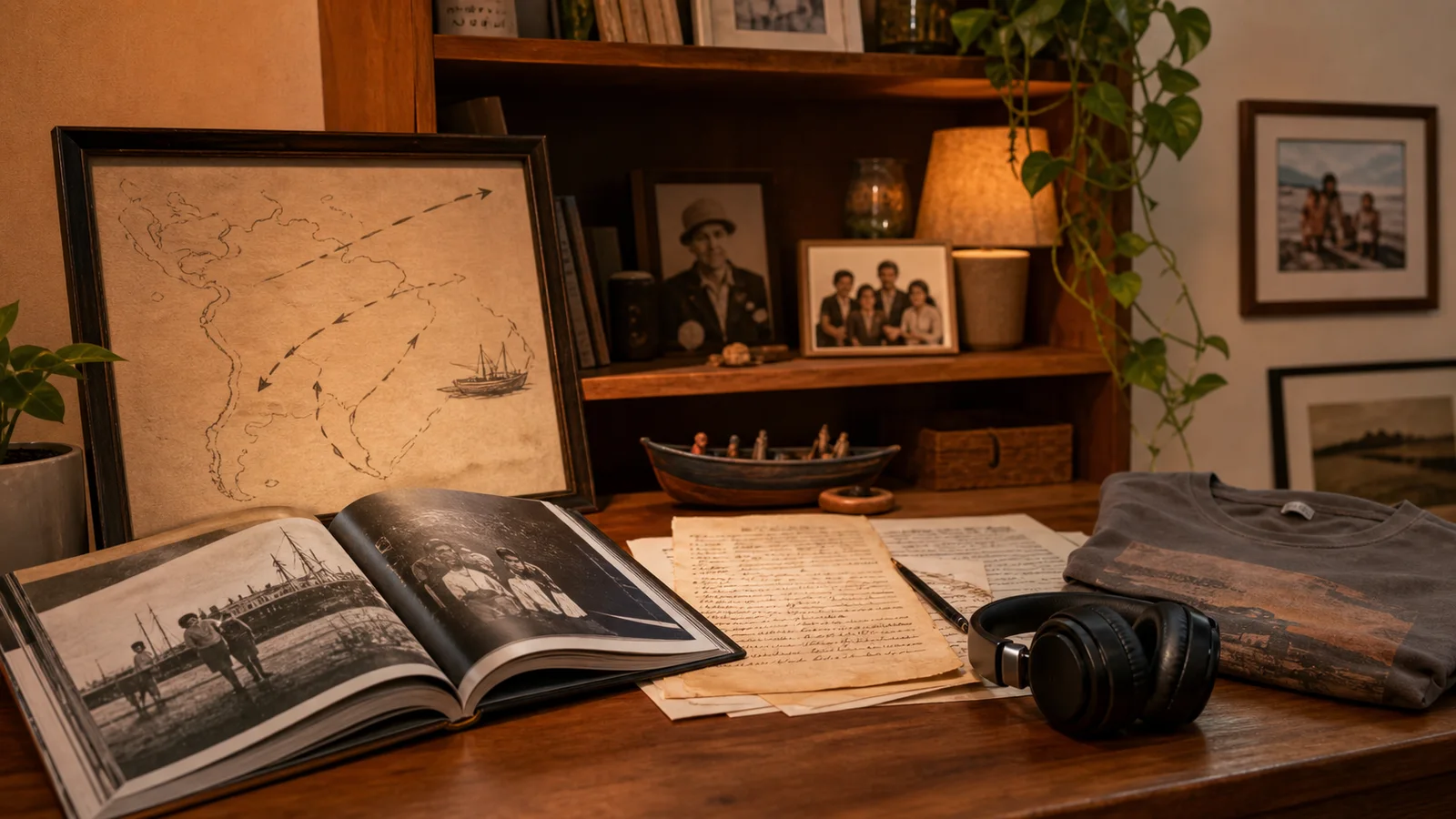
- make a small photo book with captions and uncertainty notes;
- draw a map of one migration route;
- digitize a family recipe and include the handwritten original;
- create a playlist with translations and regional context;
- write a short profile of one relative using records and attributed memory;
- frame a document copy with an explanation rather than only a surname;
- wear a phrase or design whose meaning you understand.
A symbol works best when it points toward a story, not when it claims to prove one.
Choose by time, energy and privacy
The right choice is the one you can complete without crossing another person’s boundary.
Protect the people inside the story
Family heritage is not automatically public material. Before sharing photographs, recordings, letters or stories, ask:
- Is the person living?
- Did they consent to this use?
- Does the material reveal an address, medical history, adoption, conflict or other sensitive information?
- Is the speaker’s memory being presented as memory rather than documented fact?
- Does a child or grandchild want to participate?
- Can the original remain safe while a copy is used?
Respect can mean preserving something privately.
Turn one activity into continuity
A single activity can be pleasant. Repetition gives it a place in family life.
Choose one practice, record what you did and decide when it will happen again. That might be monthly research, an annual recipe, a recurring museum visit or a habit of labeling photographs as they are scanned.
The complete reconnection guide can help turn the activity into a 30-day rhythm. The aim is not to perform heritage constantly. It is to keep one meaningful connection from becoming another unlabeled box that no one understands.
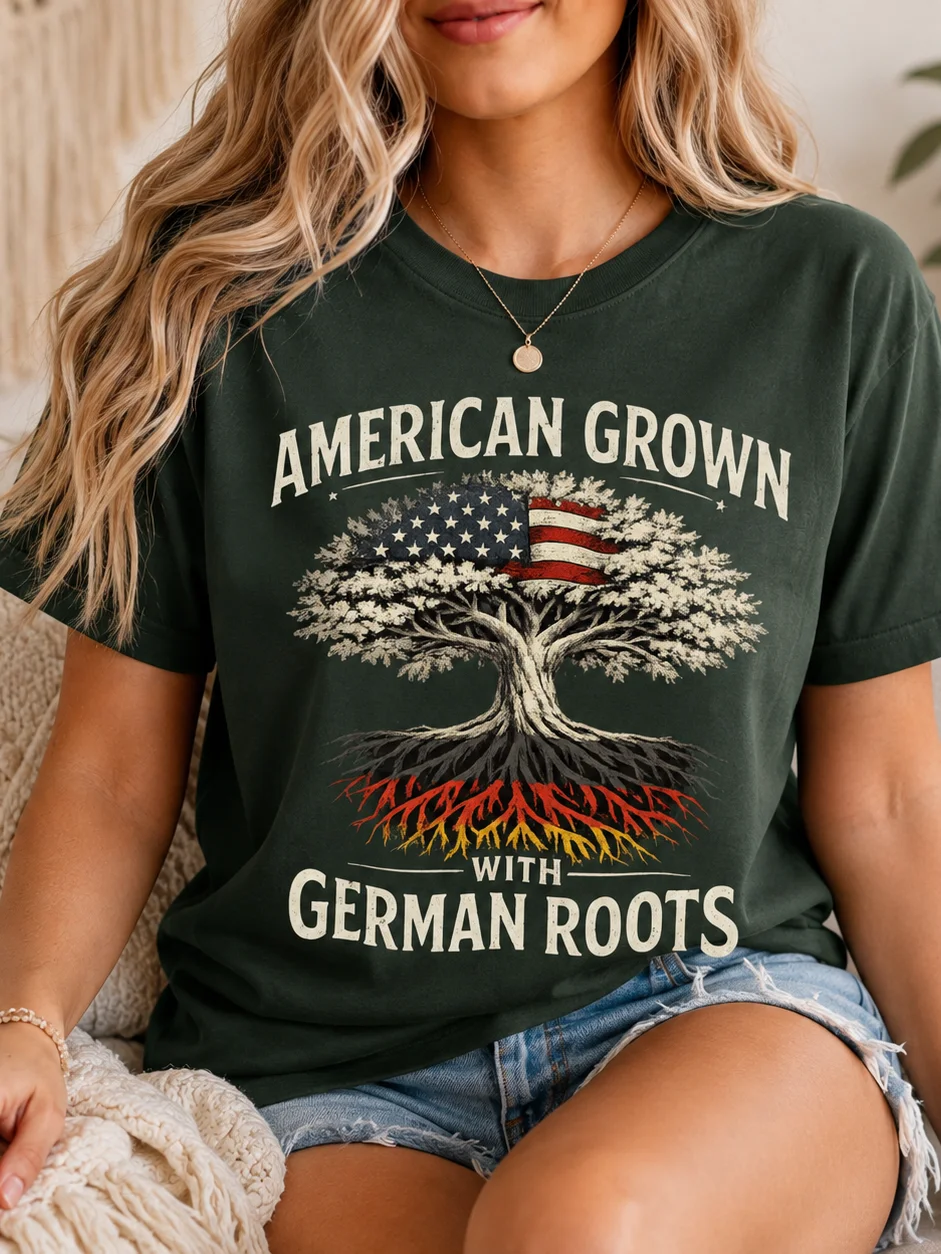
If clothing fits your way of celebrating
Two German-American expressions for everyday wear
These designs name roots and home without pretending that a shirt proves ancestry or cultural knowledge. Choose one only if its wording fits your own story.
Frequently asked questions
Common questions
Can I celebrate German heritage if my family no longer has traditions?
Yes. Begin with a documented person, place, object or community history, then choose a practice you are openly learning or restarting. You do not need to pretend it was continuously observed.
Does celebrating German roots have to involve Oktoberfest?
No. Oktoberfest can be one enjoyable Bavarian festival connection, but family records, language, regional history, recipes, museums, music, photographs and community service can be just as meaningful.
How can I include children without making heritage feel like homework?
Keep the activity short and concrete. Let a child choose a photograph to label, a recipe step, a map location, a word or a museum object. Interest should be invited, not tested.
What if relatives do not want to participate?
Respect the boundary. You can work with public records, your own materials, local history and personal learning. Do not pressure relatives to discuss private or painful events.