

On this pageWhy the phrase feels meaningful
“German by blood, American by birth” usually means: my family roots are German, while my birthplace, upbringing or civic home is American. It is a compact heritage slogan, not a legal definition and not a scientific measurement.
The phrase appeals to people because it holds two affiliations in one line. It can honor grandparents, an immigrant story or a family name without denying an American life. Its weak point is the word “blood.” Used generously, “blood” is a metaphor for descent. Taken literally, it can make culture sound biological, fixed or pure—none of which is necessary to express German-American pride.
What each part of the phrase is trying to say
- German by blood
- A rhetorical way to say that German ancestry appears in a person’s family line; it is not a literal blood test.
- American by birth
- A claim about birthplace or an American life; legal citizenship should still be stated with precise terms when it matters.
- Ancestry
- Family descent or ethnic origin, which can be documented, remembered, mixed and self-reported in different ways.
- Identity
- How a person understands and communicates ancestry, culture, citizenship, upbringing and belonging.
Why the phrase feels meaningful
For many German-American families, the immigrant generation is no longer close. A reader may know an ancestor’s village, remember an Oma’s recipe or recognize a German surname while living an entirely American daily life.
A short line can make that combination visible:
- the family story did not begin in the United States;
- the person’s own life is rooted in America;
- neither side has to cancel the other.
That is the warmest interpretation of the phrase. It is about continuity and home, not a competition between countries.
The line also fits a familiar American way of speaking. People often describe themselves as Irish, Italian, Polish or German when they mean ancestry. The U.S. Census Bureau likewise collects ancestry as ethnic origin or descent and notes that it is not the same as birthplace. Most people of German ancestry in the United States were not born in Germany.
The phrase therefore makes sense as family shorthand. Problems begin only when shorthand is treated as proof.
“Blood” is metaphor, not a cultural measurement

Blood does not carry a nationality label. Modern genomics distinguishes genetic ancestry from ethnicity, nationality and social identity. The National Human Genome Research Institute warns that one population descriptor cannot fully describe a person and that race, ethnicity and genetic ancestry should not be used as interchangeable categories.
Even genetic ancestry is not the same as a complete family tree. People inherit uneven portions of DNA from earlier generations, while genealogical ancestry records all lines of descent whether or not a particular segment remains detectable. Commercial estimates also depend on comparison groups and methods.
More importantly, culture is not inherited like an eye color. A person learns language, recipes, history and customs through relationships and practice. A family line may create a reason to care; it does not automatically create knowledge.
So “German by blood” should be read as poetic shorthand for “German ancestry” or “German family roots.” It should not be used to argue that someone has a pure, fixed or superior identity.
The phrase does not establish citizenship

“American by birth” may refer to U.S. birth and upbringing. Under the Fourteenth Amendment, people born or naturalized in the United States and subject to its jurisdiction are U.S. citizens. In an official setting, however, use the actual citizenship term rather than a slogan.
“German by blood” does not establish German citizenship. German nationality often passes through a German parent, but date-specific rules, prior losses, registration requirements and the legal status of each generation can matter. The German Federal Foreign Office specifically cautions that an old emigrant ancestor does not automatically create a present claim.
A person can therefore have German ancestry without German citizenship. Another person may hold both U.S. and German citizenship. A third may have a strong cultural connection but no recent German ancestor. The slogan cannot sort those cases.
That is not a defect if the line stays in its proper role: family-pride language.
When the phrase works well
The phrase usually works best in a casual, personal setting where no one is likely to mistake it for a legal or scientific claim.
It can communicate:
- pride in an immigrant family story;
- affection for grandparents or great-grandparents;
- a dual sense of roots and home;
- interest in genealogy or traditions;
- a refusal to treat American belonging as the erasure of ancestry.
A person does not need to provide a footnote every time they wear or say a heritage line. Good-faith listeners often understand the intended warmth.
Still, the person using it should know what they mean. “Blood” should not stand in for a vague claim that one is culturally knowledgeable, legally German or entitled to speak over people who live in Germany.
When clearer wording is better

Some settings demand more precision, and some audiences hear biological identity language more sharply.
In a citizenship discussion
Say “I am a U.S. citizen,” “I am a German citizen,” or “I hold both citizenships,” as applicable. If you are researching eligibility, say that. Do not use ancestry language as a legal conclusion.
In genealogy
Use names, places, dates and relationships. “My maternal grandfather was born in Bavaria” is more useful than “German blood.” Evidence advances the research; intensity of wording does not.
In a mixed family
Many people have several ancestries. “German roots” can honor one branch without implying that the rest of the family tree is less real.
In a sensitive public setting
Because “blood” has been used historically in exclusionary and racialized ways, some readers will hear more than family affection. You do not have to agree with every reaction to understand it. Clearer words can preserve the pride while removing an unnecessary barrier.
When speaking about contemporary Germany
Ancestry creates a relationship to family history, not automatic expertise about present-day German society. Use curiosity before authority.
Alternatives that keep the same warmth

A phrase does not have to be biologically framed to feel proud.
Consider:
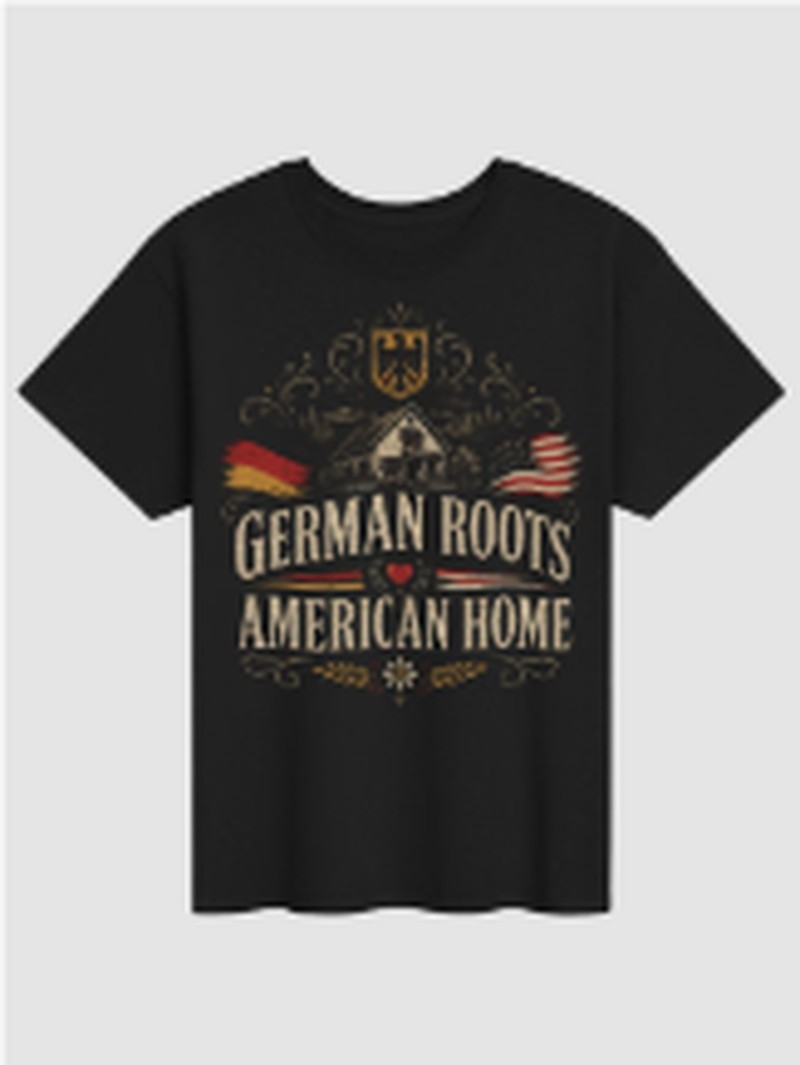
- German roots, American home.
- German ancestry, American story.
- Born in America, connected to German roots.
- German heritage, American life.
- My family began in Germany; my life grew in America.
These alternatives are not universally “better.” They simply make the intended meaning more explicit.
“German roots, American home” emphasizes belonging rather than biology. “German ancestry, American story” works well when the family line is known but cultural practice varies. “My family began in Germany” is useful when the connection is historical and personal rather than legal.
The strongest wording is the one you can explain honestly.
Mixed ancestry does not weaken the story
The phrase can sound as though a person has one clean line of descent. Real family trees are often more complicated. German ancestry may be one branch among Czech, Irish, Mexican, Norwegian, African American, Indigenous or many other histories.
Honoring one branch does not require denying the rest. Nor does mixed ancestry make German roots less worthy of research. It simply means a slogan should not be mistaken for a complete inventory.
The Census ancestry question allows people to report more than one origin. Family identity also changes across generations. One sibling may feel closely connected to German heritage while another does not. A rediscovered record may deepen a connection. A DNA estimate may raise questions but should not become a purity score.
Heritage is not strengthened by pretending the tree is simpler than it is.
Pride works better without a test
The best use of “German by blood, American by birth” is expressive: it says that family origin and American belonging can coexist. The poor use is gatekeeping: it treats descent as a credential, a percentage or a reason to exclude someone else.
A warm heritage identity can make several statements at once:
- I value where my family came from.
- I am honest about what I know and what I do not.
- I do not need a purity claim to care.
- My American identity does not require forgetting my ancestry.
- My ancestry does not make me the owner of every German experience.
With those boundaries, the phrase can remain what most people intend it to be: a short expression of roots and home.
For the broader wording question, read Can You Call Yourself German If You Were Born in America?. For the role of language in identity, read Can You Be German-American Without Speaking German?.
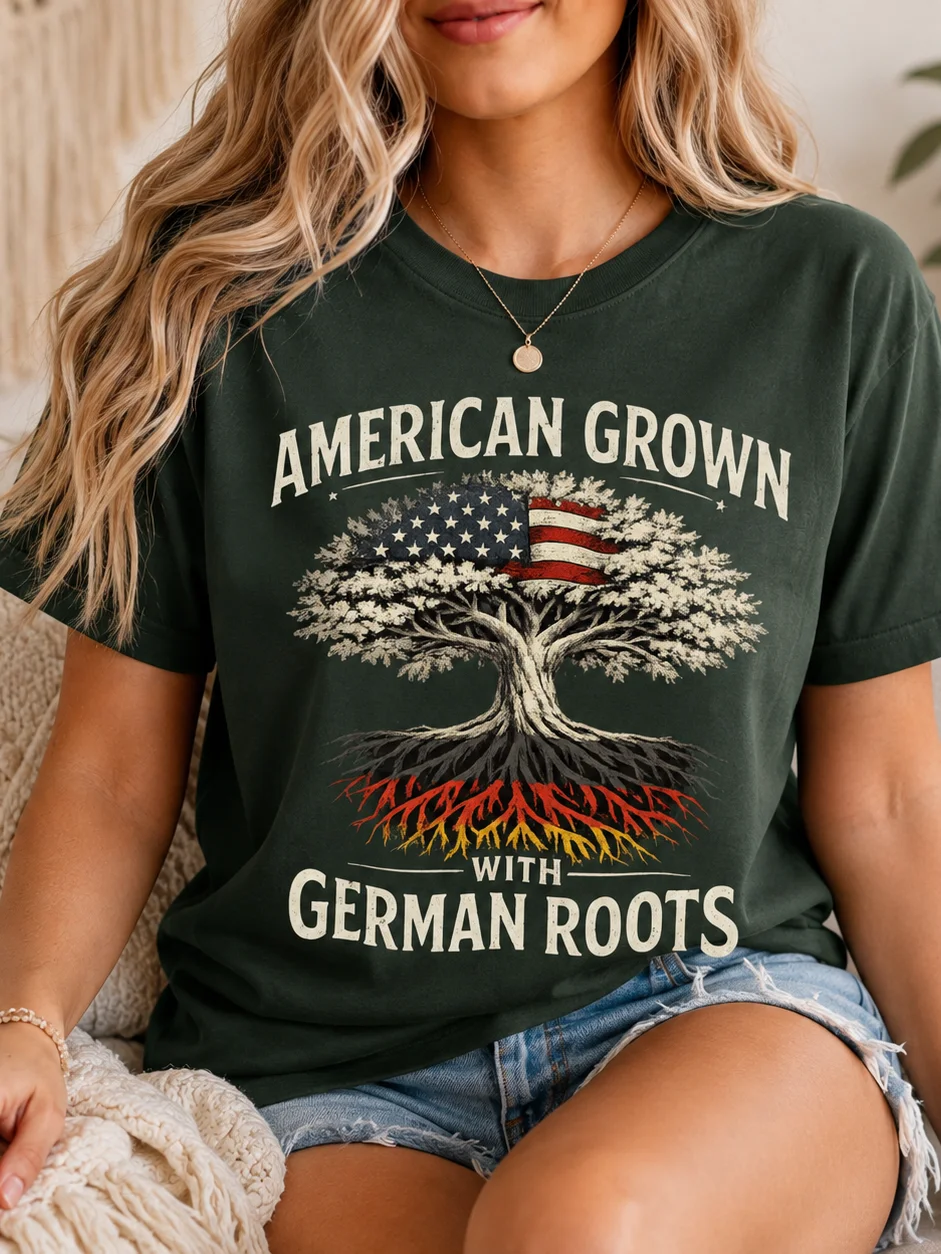
Optional wording without a purity claim
German roots and American home
These designs express family origin and present belonging; they do not claim citizenship, cultural authority or biological purity.
Frequently asked questions
Common questions
Does “German by blood” mean German citizenship?
No. Citizenship is a legal status governed by German law. Family ancestry may be relevant to some citizenship cases, but a slogan cannot establish that status.
Is “blood” an accurate scientific description of ancestry?
No. Blood is being used metaphorically. Genetic ancestry, genealogical ancestry, ethnicity, nationality and cultural identity describe different things and should not be collapsed into one biological label.
Is the phrase offensive?
Intent and context matter. Many people use it as simple family pride, while others hear biological or exclusionary overtones. “German roots, American home” or “German ancestry, American story” can express the same pride more clearly.
Can someone use the phrase with mixed ancestry?
People often honor more than one family line. The phrase does not need to imply unmixed descent, but wording such as “German roots” makes that openness clearer.