
On this pageSelection method
The best Oktoberfest shoes depend on what you’re optimizing for, not your gender or which store you shop at. If you want all-day comfort in the beer tents, a well-cushioned walking or comfort shoe with real arch support beats anything else. If you want to look right with lederhosen or a dirndl, a traditional leather Haferlschuh or a round-toe flat is the answer, comfort features aside. And if wet, muddy ground is a real risk on your dates, leather construction and a grippy sole matter more than either of those.
That’s the actual decision most shoe roundups skip. Plenty of guides split footwear by “men’s” and “women’s” and call it done, but the real fork in the road is what you need the shoe to do: survive eight-plus hours on your feet, look authentic with traditional dress, or hold up if the festival grounds turn to mud. This guide walks through each of those needs on its own terms, tells you which shoe category answers it, and is honest about where the categories overlap and where they don’t.
Selection method
This roundup covers shoe categories, not a single “best overall” shoe, because no one shoe wins on comfort, tradition, and weather resistance at the same time. Before naming any recommendations, here’s what MottoFox used to sort footwear into these categories and rank options within them.
Scope. We’re covering footwear realistic for a US-based Oktoberfest attendee — whether that’s a local Oktoberfest celebration or a trip to Munich — who needs shoes for a full day (or several days) of standing, walking on uneven ground, and possibly dancing on a bench. We’re not covering formal dress shoes, athletic performance shoes, or costume novelty footwear (beer-stein slippers and the like), since those don’t hold up to a real day at the festival.
What separates the shoe categories
Fit for the job
Judge a walking shoe on support and fit, a traditional shoe on documented construction, and a wet-weather option on its stated protection and sole.
- Look for
- Features that serve your main use case
- Avoid
- Expecting one pair to win every category
Individual comfort
Toe room, cushioning and stable support matter, but no category label replaces trying on the actual pair.
- Look for
- A familiar fit with no pressure points
- Avoid
- Buying a new pair immediately before the event
Ground and forecast
Uneven or wet ground changes the value of a stable tread and closed upper.
- Look for
- Stated water resistance and a stable sole when rain is likely
- Avoid
- Treating leather alone as proof of weather performance
Outfit fit
Traditional appearance matters only after the shoe can handle the day you have planned.
- Look for
- A shape that works with the garment and venue
- Avoid
- Sacrificing safe, tolerable fit for a costume-perfect silhouette
None of this is based on hands-on testing of a specific pair MottoFox purchased and wore. It’s category-level guidance built from podiatric health guidance, documented Bavarian footwear tradition, and general reporting on festival ground and weather conditions — more on that in the methodology section below.
Individual recommendations
Pick the shoe by your first priority
A familiar supportive walking shoe
The practical choice when hours of standing and walking matter more than a traditional silhouette.
A broken-in Haferlschuh
A traditional option when construction and outfit fit matter and you have time to test the pair.
A stable round-toe flat
A middle ground that can suit the silhouette without committing to a heel.
A closed weather-ready shoe
Choose stated water resistance and stable tread rather than relying on material assumptions.
All-day comfort walking shoe (men)
What it’s for: standing in a beer tent for hours, walking between tents and transit, and still being able to walk comfortably the next day.
A general comfort or walking shoe — not a dress shoe, not a running shoe built for a specific gait cycle — is the right call here. The American Podiatric Medical Association’s Seal of Acceptance program, which has podiatrists review footwear for foot health, points to a specific, checkable set of features: real arch support, cushioned soles, shock absorption, and enough room in the toe box that your foot isn’t compressed after hour six. Those features matter more at Oktoberfest than they do on an ordinary day, because you’re not walking a normal amount and then sitting down — you’re standing in place on a hard or gravel surface for long stretches, which is genuinely harder on your feet than steady walking.
Look for a shoe with a cushioned midsole, a wider toe box than a typical dress or fashion sneaker, and if possible the APMA Seal of Acceptance itself. Use this current men’s walking-shoe search(paid link) as a comparison set, not as a substitute for trying the pair.
The honest limitation: this category is not going to look traditional. It’s the right choice when comfort is the priority and the outfit is casual, not when you’re wearing full Tracht and want the look to read as authentic.
All-day comfort walking shoe (women)
What it’s for: the same demands as above — hours of standing and walking — with the added reality that a lot of women’s festival footwear defaults to a heel, which is the wrong call for comfort.
The same podiatric guidance applies regardless of gender: arch support, cushioning, shock absorption, and toe room are what reduce foot strain over a long day. Compare current women’s walking-shoe listings(paid link) against the outfit route in the dirndl buying guide.
If you want a heel, a low block heel gives you a broader base than a stiletto on uneven ground. A familiar flat remains the lower-risk choice for a long day, but comfort depends on fit and the individual shoe; this guide does not assign a universal hour limit or claim that every flat outperforms every low heel.
Traditional buckle shoe — Haferlschuhe (men, with lederhosen)
What it’s for: completing a lederhosen outfit with the shoe that’s actually traditional, not a general dark leather shoe that happens to look formal.
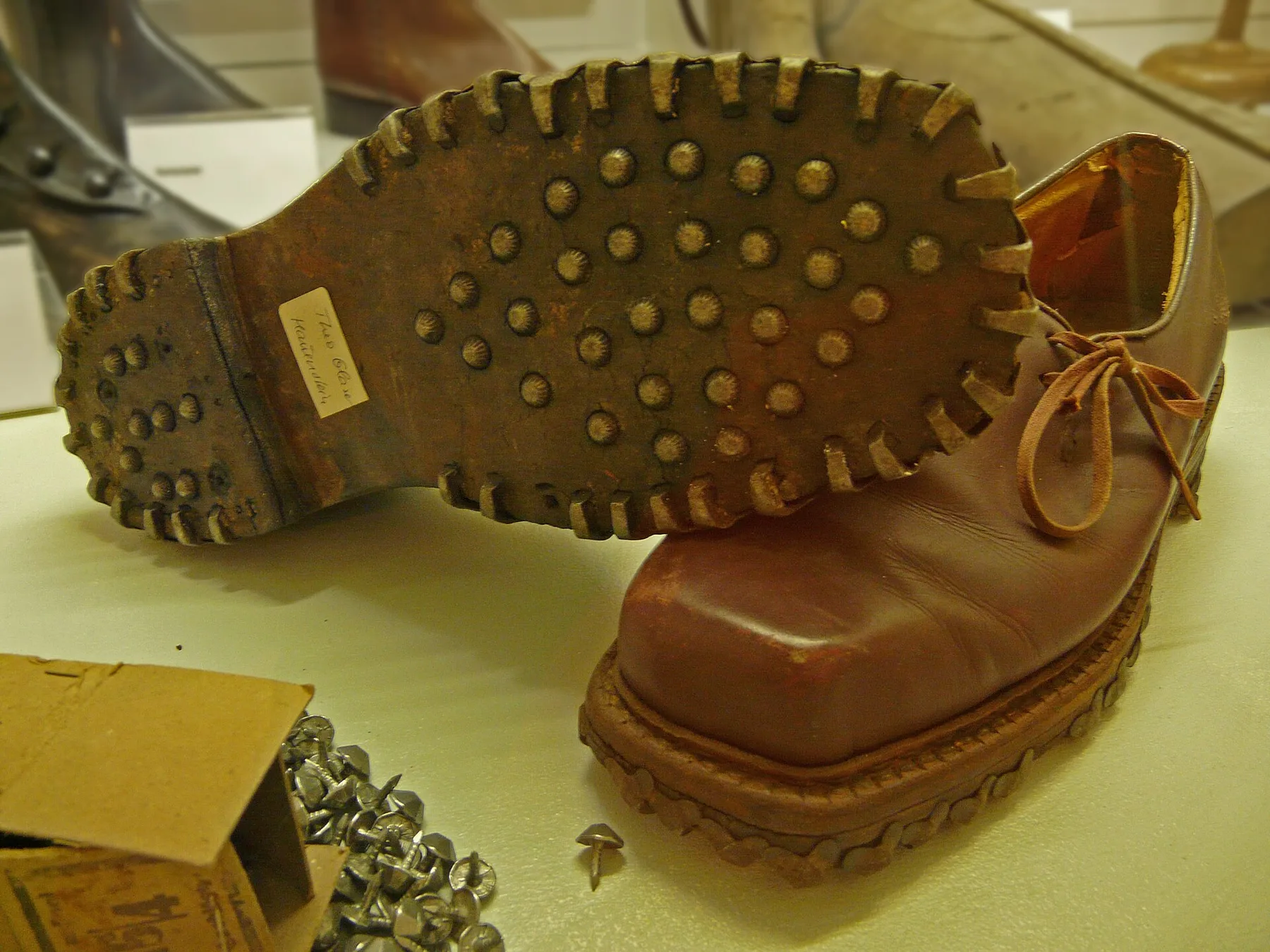
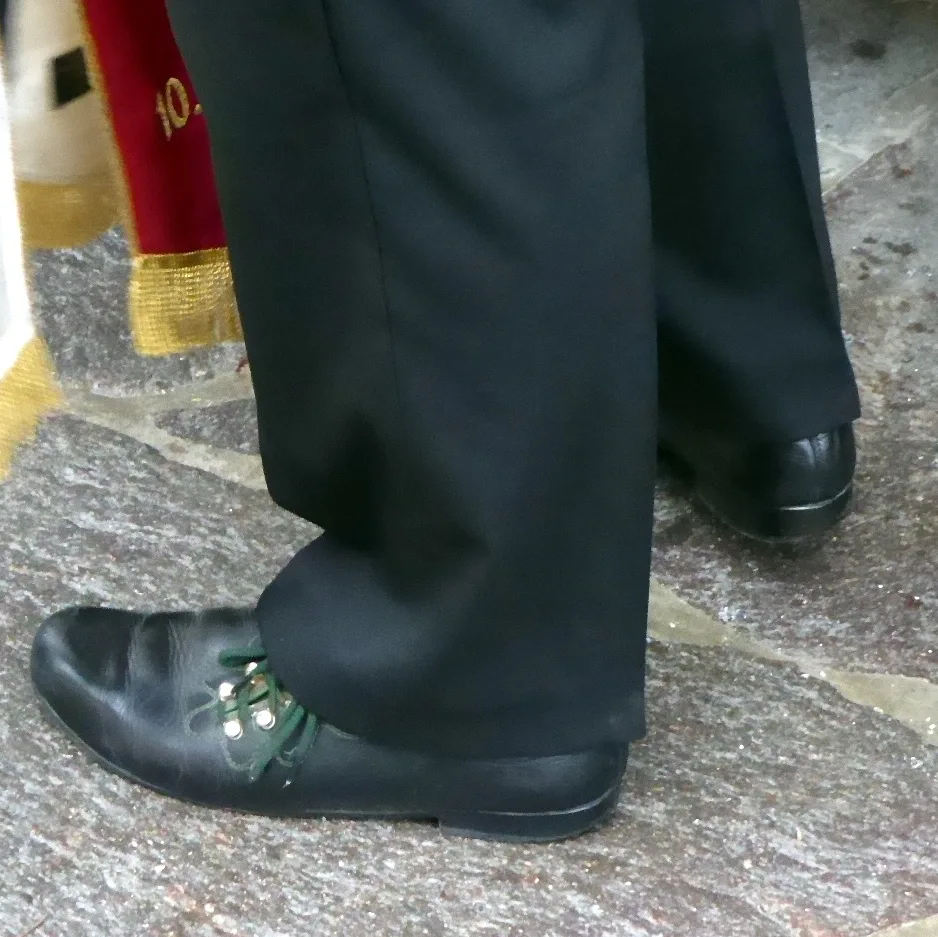
The Haferlschuh is the traditional Bavarian-Austrian Alpine shoe, originally a work shoe built for alpine terrain, that became part of formal Bavarian Tracht by around 1900. Its defining feature is side lacing pulled toward the front rather than a standard top-lacing pattern — that’s the detail that separates a real Haferlschuh from a shoe that’s just brown leather and vaguely traditional-looking. Genuine pairs are typically cowhide or deerskin leather with a leather or profiled rubber sole, and they’re still worn as an everyday shoe in parts of Bavaria today, not only pulled out for festival occasions.
This is the shoe to choose when authenticity with a lederhosen outfit matters more than all-day comfort out of the box. Inspect current buckle-strap shoe listings(paid link) alongside the lederhosen buying guide, then leave time to test the actual pair. Leather uppers need a break-in period.
The honest limitation: out of the box, a Haferlschuh is not going to compete with a dedicated comfort walking shoe for hour-eight foot fatigue. It’s the right pick when the outfit’s authenticity is the priority and you’re willing to break the shoe in ahead of time — not the right pick if you’re deciding the week of the event and comfort is non-negotiable.
Traditional round-toe flat (women, with a dirndl)
What it’s for: completing a dirndl outfit with a shoe that reads as traditional rather than a modern flat that happens to be plain.
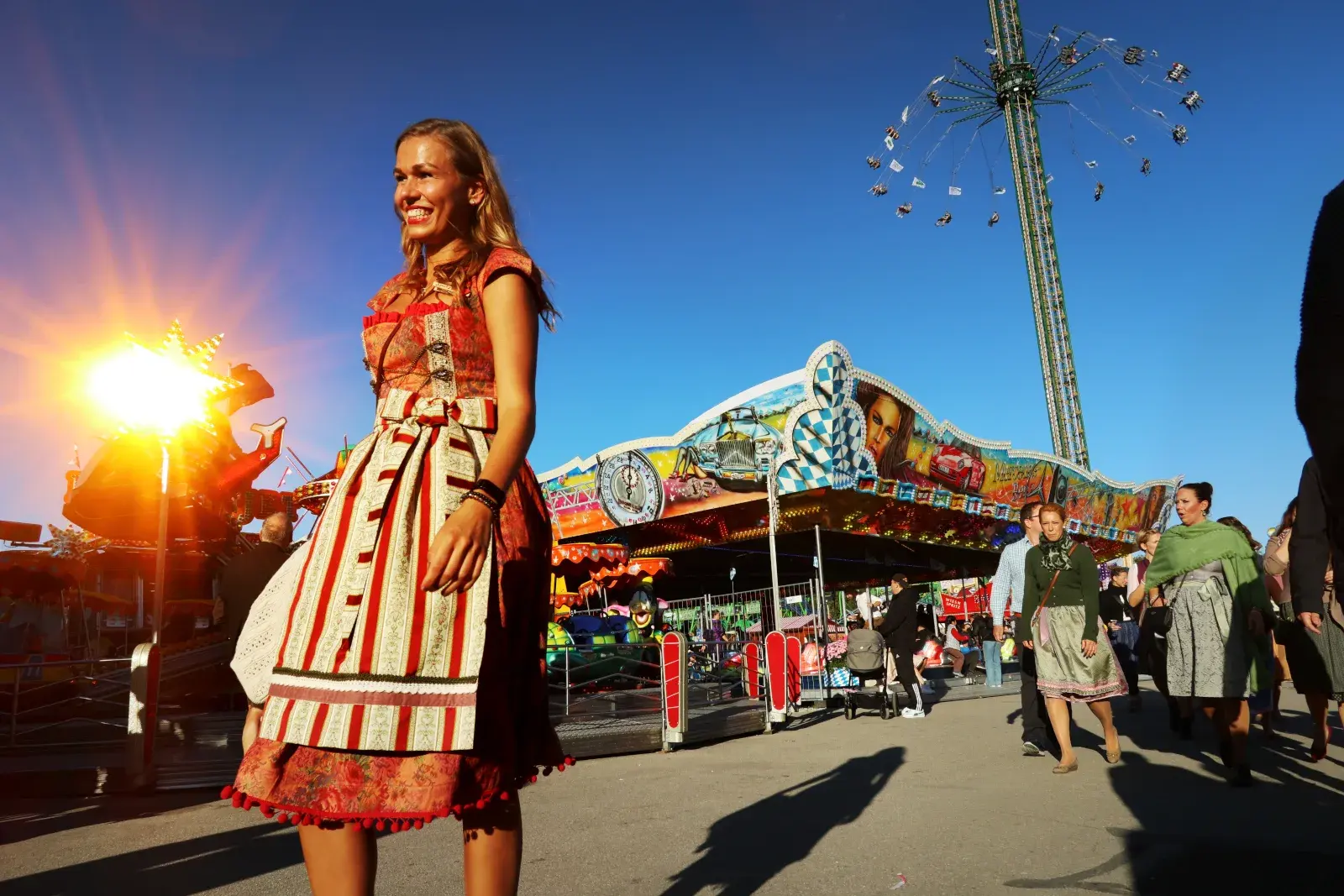
Style guidance for dirndl footwear converges on a short list of shapes that work: a round-toe leather ballet flat, a Mary Jane, a low block or kitten heel, or — for readers who want to go fully traditional rather than “traditional-adjacent” — a women’s version of the Tracht shoe worn with Haferlschuhe-style construction. A round-toe flat in genuine leather or suede is the most versatile of these: it’s traditional enough to look intentional with a dirndl, comfortable enough for a full day compared to any heel, and less specialized (and usually less expensive) than a true Trachten shoe.
Whichever shape you choose, inspect the actual construction instead of treating a material label as a quality guarantee. A padded insole, enough toe room and a stable sole matter more to a long day than whether the upper is leather, suede or synthetic. If rain is possible, look for stated water resistance and care instructions for that pair.
The honest limitation: a flat is a compromise between authenticity and comfort, not a pure win on either axis compared to a dedicated comfort shoe or a true Trachten shoe. It’s the right call for most dirndl outfits precisely because it’s a reasonable middle ground, not because it’s the best possible choice on any single criterion.
Best for wet grass and gravel
What it’s for: the days when the forecast (or the general risk, since you’re booking months out) includes rain, and the gravel grounds at Theresienwiese-style venues turn to mud.
This isn’t a fifth shoe category; it is a filter applied after you choose the style. If rain is forecast, prioritize a closed upper and a stable, treaded sole. Material labels alone do not prove weather performance: treated leather can handle light moisture, but some purpose-built synthetic uppers may perform just as well or better. Check the maker’s care and water-resistance guidance for the actual shoe.
It also means ruling out the shoes that look fine in good weather and become a real liability in bad weather: sandals and flip-flops (spill exposure and no protection if the ground is wet or someone steps on your foot), and stiletto or thin heels, which are a stability risk on wet gravel independent of comfort. A stark white sneaker isn’t a safety issue, but it’s worth flagging here too — it stands out for the wrong reasons in the tents and shows every grass stain and mud splash by the second hour.
Prioritize wet-weather construction when
Best for
- Rain is in the forecast
- The event uses grass, gravel or other uneven outdoor ground
- The listing states water resistance and shows a stable tread
Not for
- The upper material is the only evidence of weather performance
- The sole is smooth or unfamiliar
- The pair has not been worn before the event
Side-by-side comparison
The categories above trade off against each other in predictable ways. Here’s how they compare on the three criteria that actually matter for this decision — not on brand or price, which vary too much by specific listing to compare fairly at the category level.
How the common shoe categories compare
| Criteria | Long-day comfort | Traditional outfit fit | Wet-ground check | Preparation |
|---|---|---|---|---|
| Walking or comfort shoe | Strongest default when the pair fits you | Modern rather than traditional | Varies; check the specific upper and sole | Wear before the event |
| Haferlschuh | Varies by fit and construction | Strong with lederhosen | Treatment and tread matter more than leather alone | Allow break-in time |
| Round-toe flat | A practical middle ground for many wearers | Works naturally with a dirndl | Check water resistance and sole stability | Test for rubbing and toe pressure |
| Low block heel | More demanding than a familiar flat for many wearers | Dressier silhouette | Less stable than a broad flat sole on soft ground | Practice on comparable surfaces |
No category wins across every column, which is the point: choosing “the best Oktoberfest shoes” really means choosing which column matters most for your specific outfit and your specific dates, then picking the strongest option in that column.
Current offers
These existing catalog entries are starting points for comparing current listings. Confirm the live size chart, seller, construction, water-resistance claim, delivery estimate and return terms before buying.
Editor’s spotlight
Traditional spotlight: Haferlschuh-style buckle shoes
This is the most specialized option in the roundup. Consider it when completing lederhosen, but verify the current construction, size chart and sole, then allow time to wear the pair before the event.
Browse Men's Traditional Buckle-Strap Shoes
Search Amazon for traditional buckle-strap shoes and compare leather quality, sizing, sole comfort, and seller.
Current shoe categories to compare
Browse Men's Comfortable Walking Shoes
Search Amazon for supportive men's walking shoes and slip-ons suitable for long festival days.
Browse Men's Walking Shoes at Walmart
Search Walmart for supportive men's walking shoes suitable for long festival days.
Browse Women's Comfortable Walking Shoes
Search Amazon for supportive women's walking shoes and slip-ons for long festival days.
Browse Women's Walking Shoes at Walmart
Search Walmart for supportive women's walking shoes suitable for long festival days.
Browse Men's Traditional Buckle-Strap Shoes
Search Amazon for traditional buckle-strap shoes and compare leather quality, sizing, sole comfort, and seller.
Browse Women's Traditional Dirndl Shoes
Search Walmart for traditional round-toe flats and low heels suited to a dirndl and compare comfort, width, and sizing.
How these categories were evaluated
Use-case fit
40%Each category was judged on the job it is meant to perform rather than forced into one universal ranking.
Foot-health guidance
30%Support, cushioning, shock absorption and toe room were drawn from published podiatric guidance, not seller comfort slogans.
Traditional and practical context
30%Documented Haferlschuh construction, consumer style guidance and Munich-focused ground conditions informed the outfit and weather tradeoffs.
Evidence used
- American Podiatric Medical Association footwear guidance
- Reference and specialty guidance on Haferlschuhe
- Munich-focused visitor guidance on ground and weather conditions
- Official Oktoberfest Tracht context
Limitations
- MottoFox did not purchase or wear the specific shoes in the offer block.
- Fit, foot shape and comfort tolerance vary by person.
- Weather cannot be predicted from category guidance.
- Live sizing, seller, delivery and return terms require verification on the merchant page.
Verdict

If you had to pick one thing to optimize, optimize for what you’ll actually be doing most: standing and walking for most of the day. That makes a genuine comfort walking shoe — for either men or women — the strongest default pick for most readers, traditional look or not.
Choose differently when another priority overrides comfort. A Haferlschuh can complete a lederhosen outfit, but wear it enough beforehand to discover pressure points. With a dirndl, a familiar round-toe flat offers a practical middle ground. If rain is forecast, prioritize stated water resistance and a stable tread over appearance; leather by itself is not a weather rating.
Verdict
Choose for the hours on your feet first
Best choice: The pair you have already worn without pressure, slipping or rubbing
A familiar supportive walking shoe is the strongest default because fit and long-day tolerance affect every attendee. Traditional shoes make sense when the outfit matters enough to justify testing and break-in, while rain shifts the decision toward stated water resistance and stable tread.
Start with comfort, then let the garment and forecast override that default only when the specific pair still fits and performs safely.
- No category guarantees comfort for every foot shape.
- Leather alone does not prove water resistance.
- Verify current sizing, seller, delivery and return information before ordering.
For the rest of the outfit these shoes complete, see MottoFox’s guides on choosing lederhosen and on what to wear to Oktoberfest more broadly.
Frequently asked questions
Common questions
What shoes are best if I will be on my feet all day?
Start with a familiar walking or comfort shoe that provides enough toe room, cushioning and stable support. Individual fit matters more than a category label, so wear the pair before the event.
Do I have to wear Haferlschuhe with lederhosen?
No. Haferlschuhe are a traditional option, but a stable dark shoe can be a practical substitute. If you buy a new traditional pair, wear it beforehand to find pressure points.
Can I wear sneakers to Oktoberfest?
Yes, especially at casual local events. A neutral walking sneaker prioritizes comfort but will look less traditional with full Tracht; choose according to the venue and your own tolerance for standing.
What shoes work with a dirndl?
A familiar round-toe flat, Mary Jane or low block heel can work. Favor stable soles and enough toe room, and avoid assuming leather or suede alone guarantees comfort or weather resistance.
What should I choose if rain is forecast?
Look for a closed upper, stated water resistance and a stable tread, then follow the maker's care guidance. Leather by itself is not a weather rating.