

On this pageThe three practical tiers
A good pair of lederhosen and a bad one can look nearly identical in a thumbnail photo. The difference shows up in three places: what the leather actually is, how the sizing works, and which price tier matches how often you’ll wear it.
What actually separates a good lederhosen listing
Material
Genuine leather (deerskin, goatskin, or cowhide) behaves and ages differently than faux leather, PU leather, or polyester blends.
- Look for
- A specific leather type named in the listing
- Avoid
- Vague wording like "leather-look" or "synthetic" with no material named
Sizing method
Lederhosen use European numeric sizing tied to body measurement, not your regular pants size.
- Look for
- A size chart based on waist and thigh circumference in centimeters or inches
- Avoid
- Sizing labeled only S/M/L with no measurement chart
Construction
Stitching, embroidery, and hardware quality vary widely between costume-grade and traditional listings.
- Look for
- Hand-stitched embroidery detail and metal buttons or buckles
- Avoid
- Printed-on embroidery patterns and plastic snap closures
Price tier
Price roughly tracks material and construction quality, though exact pricing changes by listing and season.
- Look for
- A price that matches the stated material
- Avoid
- Genuine-leather claims at costume-tier prices
The three practical tiers
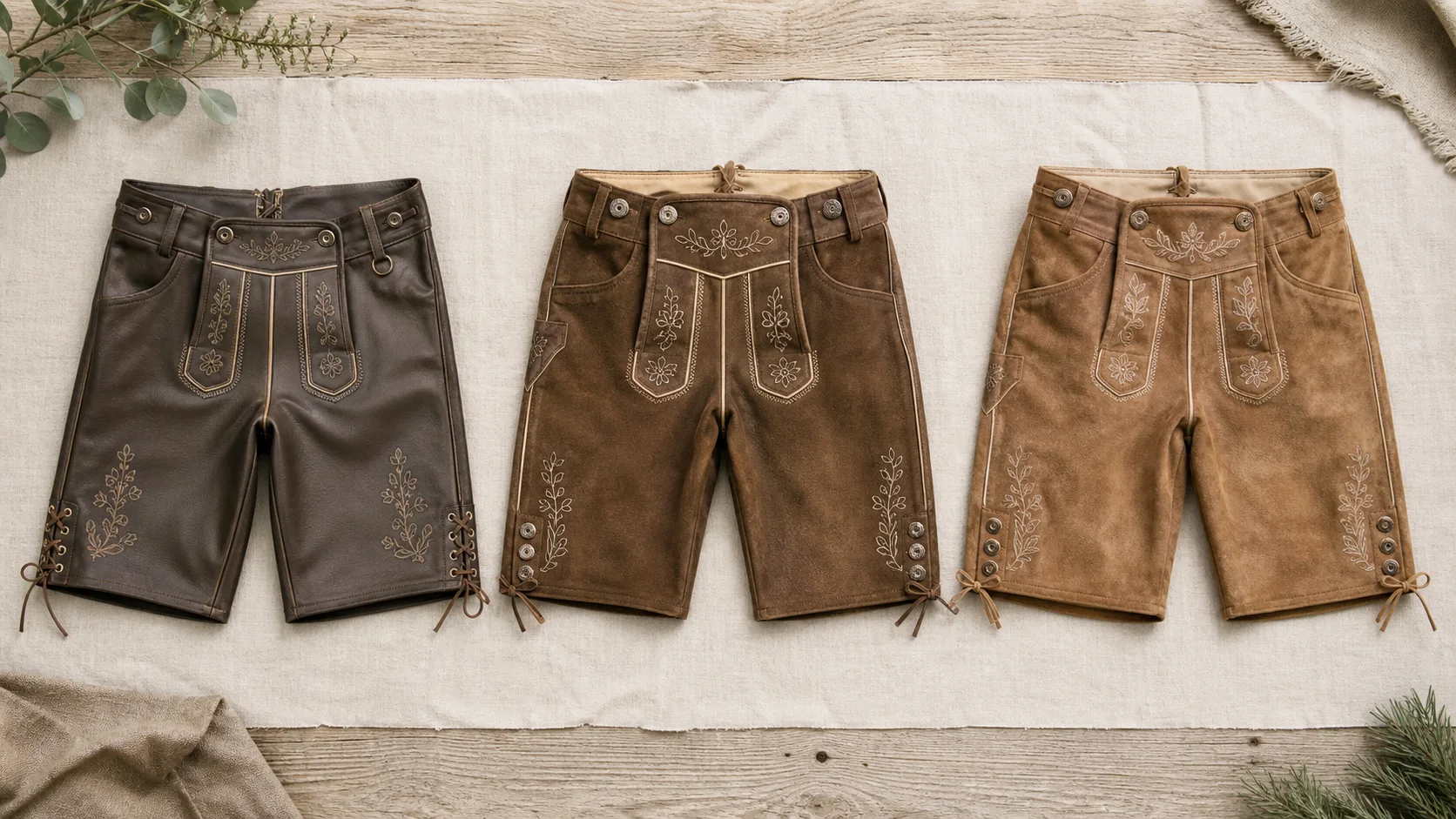
Lederhosen listings mostly sort into three groups: a budget faux-leather option for occasional wear, a balanced faux-leather pick that looks convincing without requiring leather-grade research, and genuine leather for readers who plan to wear the outfit for years.
Pick the tier by how often you'll wear it
Budget faux-leather shorts
The cheapest way to try a traditional outfit without a large investment.
Balanced faux-leather shorts
Looks convincingly traditional without researching leather grades or hunting for the lowest price.
Genuine leather shorts
Deerskin, goatskin, or cowhide — more durable, breathable, and better-looking over years of wear.
Budget: one event, low commitment
A faux-leather pair is the right call when you’re not sure you’ll wear lederhosen again, or when the budget for the whole outfit is tight. Browse current budget lederhosen listings(paid link) while checking exactly which pieces and materials are named. Expect thinner material, printed rather than embroidered detail, and simpler hardware.
Balanced: the middle ground most readers want
This is the tier for someone who wants a more structured festival garment without becoming an expert in leather grades first. Compare current mid-tier lederhosen listings(paid link) with the practical outfit routes in the men’s Oktoberfest outfit guide. Clear material disclosure, reinforced seams and usable measurements make a listing easier to judge; they do not prove traditional construction or years of durability.
Genuine leather: built to be worn for years
Real leather — commonly deerskin, goatskin, or cowhide — is more durable and breathable than synthetic alternatives, and it develops a molded fit the more it’s worn. Inspect current genuine-leather listings(paid link) only after confirming that the seller names the hide and provides measurements. The material also costs noticeably more up front and needs a short break-in period.
Where the tiers come from
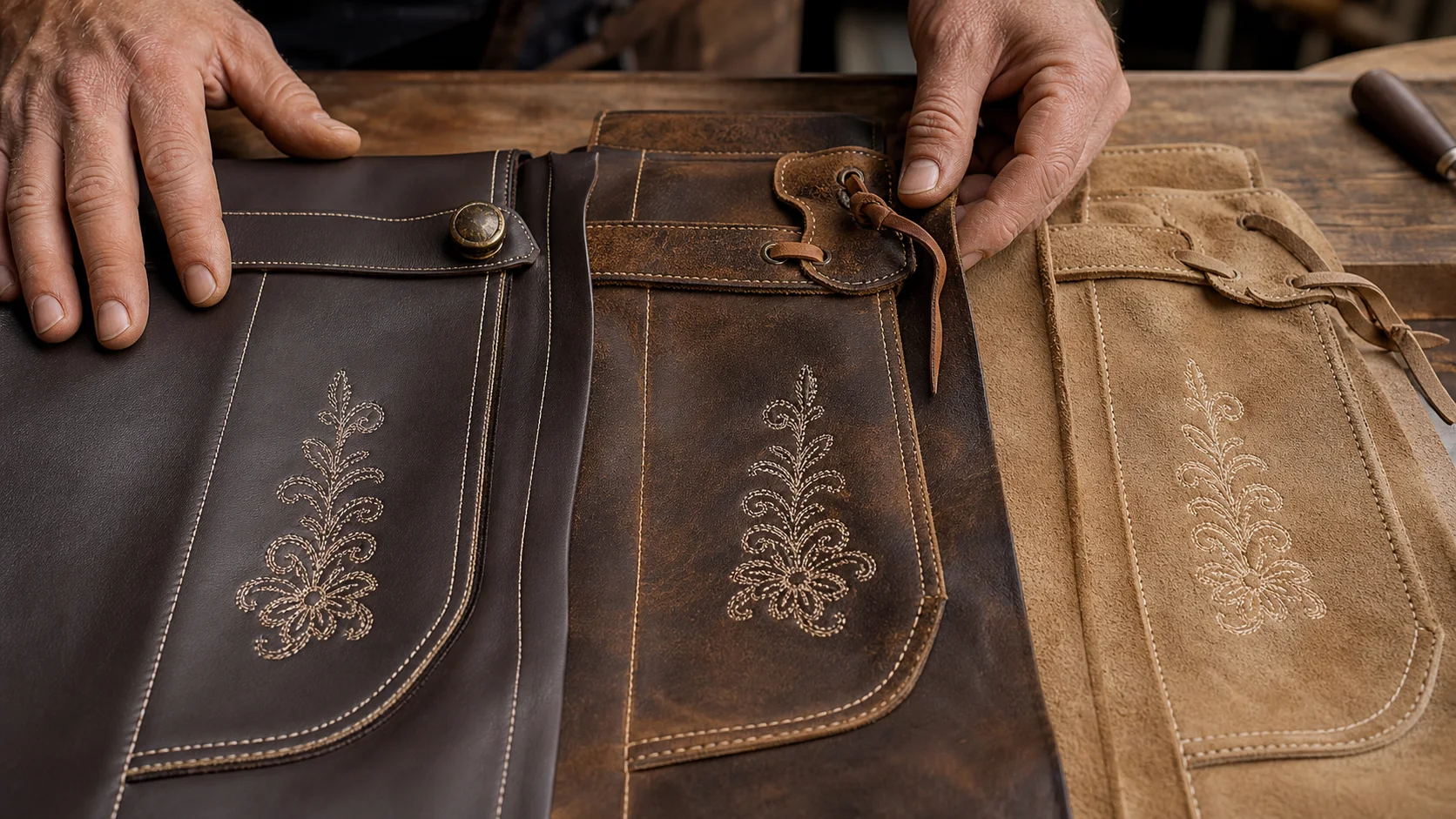
Lederhosen didn’t start as festival wear. Leather breeches were common working garments across Alpine Europe because leather held up better than woven fabric for outdoor labor — the material choice was practical long before it became festive. Traditional construction still reflects that history: many listings include anywhere from three to nine decorative seams along the front and sides, and the cuffs are secured by either tying or buttoning at the ankle rather than a stretch hem.
Two regional cuts show up most often when you’re comparing photos against a listing. The short, above-the-knee cut associated with Bavaria and Austria is built for ease of movement and is the version most visitors picture at Munich’s Oktoberfest. A longer, knee-length cut — traditionally black or yellow — comes from Swabian tradition and is usually paired with a white linen shirt and a colorful vest rather than the shorter Bavarian silhouette. Most listings marketed for Oktoberfest use the shorter Bavarian-style cut, but it’s worth knowing the longer style exists if a photo you’re comparing looks different from what you expected.
This history is also why the material distinction carries more weight than it might seem from a product photo. Leather was chosen originally because it survives wear that fabric can’t, and that’s still the practical argument for paying more for a genuine-leather pair if you expect to wear it more than once.
Genuine leather is worth the extra cost when
Best for
- You expect to wear the outfit more than once or twice
- You want the material to look better with age, not worse
- You're comfortable with a longer break-in period
Not for
- This is a one-time costume for a single event
- The budget is fixed and tight
- You need the fit to be comfortable immediately with no break-in
Sizing works differently than regular pants
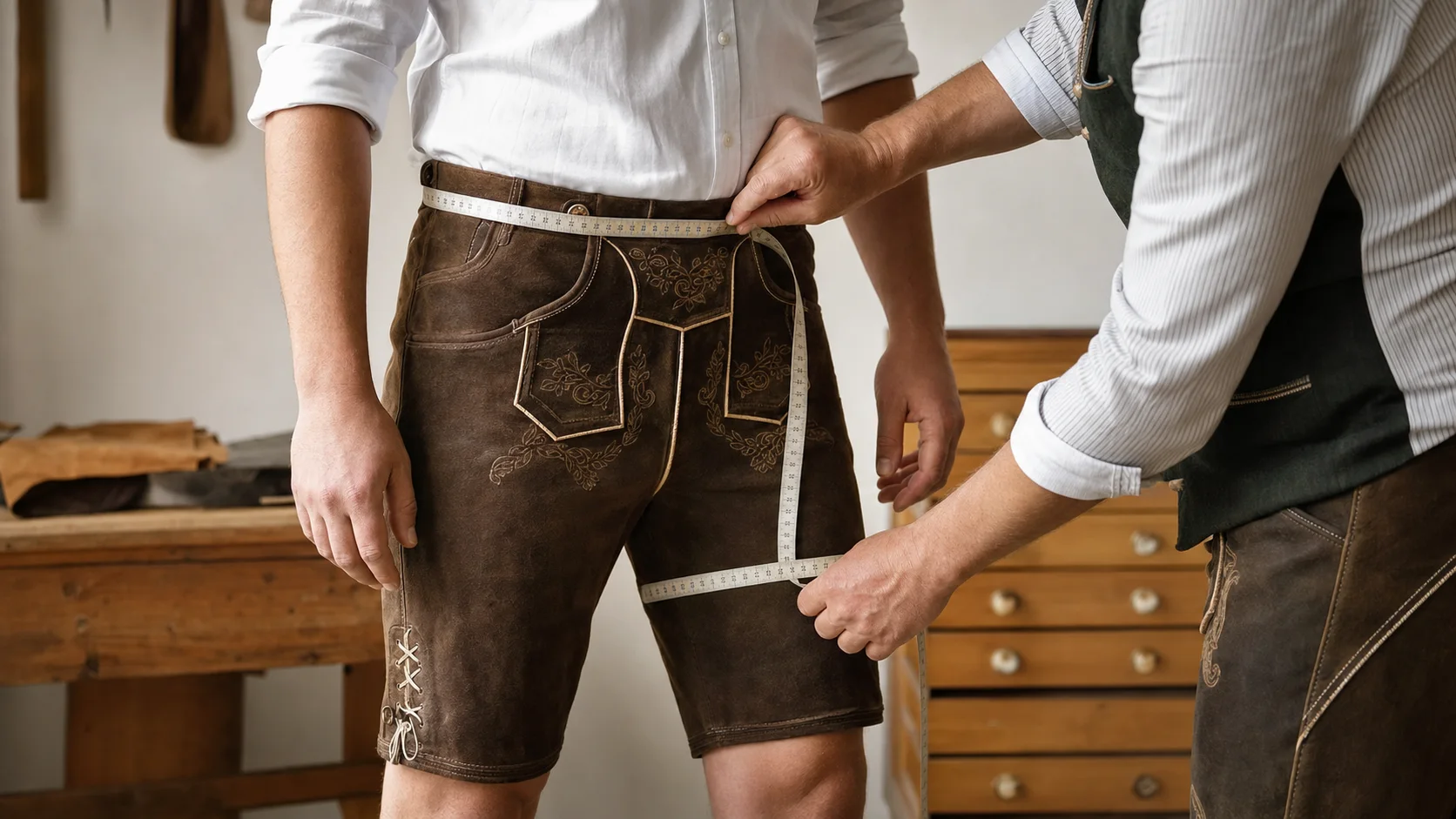
Lederhosen sizing is tied to body measurement rather than your usual pants size, and it commonly uses European numeric sizes rather than S/M/L. Measure your natural waistline — not where your jeans currently sit — since lederhosen typically sit higher, and your lederhosen waist measurement often runs a size or two smaller than your jeans waist.
If your measurements fall between two sizes, prioritize the thigh over the waist. A waist that’s slightly loose can still be tightened with back lacing on most styles. Thigh room can’t be added after the fact.
Genuine leather has limited stretch. It’s commonly reported to expand roughly half an inch to an inch after a few wears, which is why buying guidance favors ordering a size that feels snug rather than loose on the first try — the leather will relax slightly as you wear it in. A simple fit check: with the waistband fastened, you should be able to slide two fingers underneath comfortably. If your whole hand fits, size down; if you can’t get one finger under it, size up.
Listings commonly use a European numeric scale, roughly 44 through 52, rather than US waist inches. If a size chart isn’t included at all, that’s worth treating as a yellow flag rather than assuming your normal size will translate directly.
Leather also needs different care than a washable cotton shirt. Spot cleaning and proper storage matter more than machine washing, and the specific care instructions depend on the exact leather type and finish. Check the listing’s care guidance — or ask the seller directly — before assuming you can treat lederhosen like ordinary fabric clothing.
What to buy
Browse Budget Lederhosen Shorts
Search Walmart for affordable faux-leather lederhosen and compare material, stitching, sizing, and seller.
Browse Men's Lederhosen-Style Shorts
Search Amazon for lederhosen-style shorts and compare material, fit, embroidery, seller, and sizing.
Browse Genuine Leather Lederhosen
Search Amazon for genuine leather lederhosen and compare hide type, construction, embroidery, seller, and price.
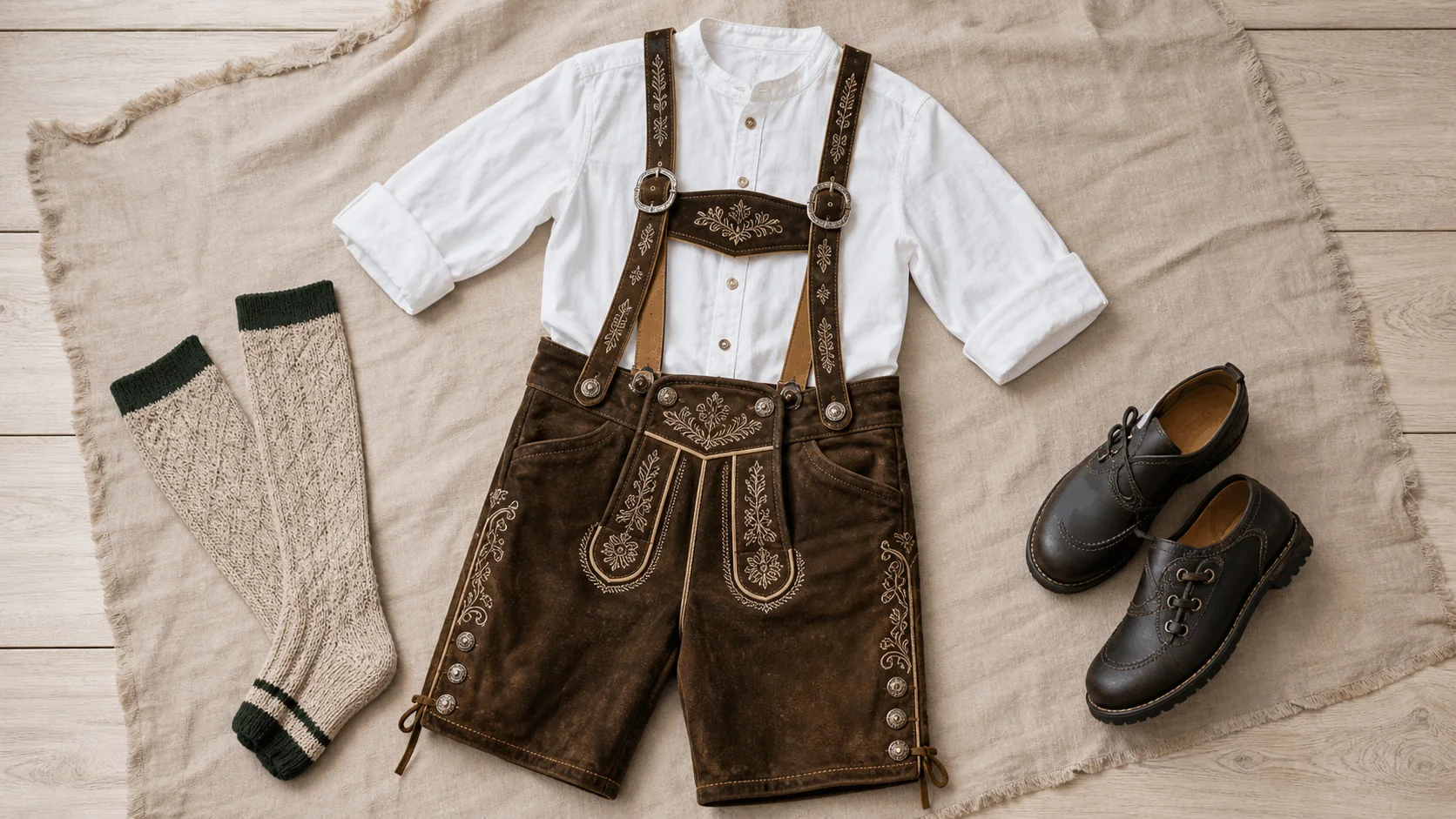
Lederhosen are traditionally worn with suspenders, knee-high socks, and either sturdy walking shoes or a traditional buckle-strap shoe. The Oktoberfest shoe guide explains when comfort should override the traditional silhouette, while the accessories guide helps choose one finishing piece without piling them on. None of these are required to complete a casual outfit.
Browse Blue-and-White Oktoberfest Suspenders
Search Walmart for blue-and-white diamond-pattern suspenders suitable for casual and traditional-looking outfits.
Best for: Men and women who want a stronger visual than socks but less commitment than a costumeBrowse Traditional Knee-High Socks
Search Walmart for traditional knee-high socks suited to a lederhosen outfit and compare pattern, cuff style, and material.
Best for: Anyone wearing lederhosen-style shorts who wants a finished traditional lookBrowse Men's Traditional Buckle-Strap Shoes
Search Amazon for traditional buckle-strap shoes and compare leather quality, sizing, sole comfort, and seller.
Best for: Men wearing lederhosen who want footwear that matches the traditional look, not just a comfortable sneakerHow the three tiers compare
| Criteria | Durability | Relative cost | Best for |
|---|---|---|---|
| Budget faux leather | Lowest — expect wear after a season or two | Lowest | A single event on a tight budget |
| Balanced faux leather | Moderate for occasional wear | Middle | Most first-time buyers |
| Genuine leather | Highest — holds up across many seasons | Highest | Repeat wear over several years |
How these tiers were built
Material and construction
50%We compared how genuine leather and faux-leather materials are reported to perform over time, and what construction details (stitching, hardware) typically separate traditional and costume-grade listings.
Sizing and fit guidance
30%We drew on published sizing guidance for European lederhosen sizing, waist-versus-thigh priority, and leather break-in behavior.
Cultural and historical context
20%We checked lederhosen's traditional construction and regional variation against Oktoberfest's official cultural information and a general reference source.
Evidence used
- Official Oktoberfest cultural guidance on Tracht
- General reference material on lederhosen construction and history
- Published Trachten retailer buying and sizing guidance, treated as category-level guidance rather than an independent test
Limitations
- This is category-level editorial guidance, not hands-on testing of a specific purchased garment.
- Exact material, stitching quality, current price, and stock must be confirmed on the current merchant listing.
- Price-tier reasoning draws on reference figures from one specialty retailer and is not a claim about current prices.
Verdict
Match the tier to how often you'll actually wear it
Best choice: The tier that matches your realistic number of future wears, not the cheapest or most expensive option by default
Material, sizing method, and price tier are the three things that separate a good lederhosen listing from a bad one — not the thumbnail photo.
Choose budget faux leather for a single casual event, compare well-documented mid-tier construction for occasional repeat wear, and consider genuine leather only when the hide, measurements and care requirements are clearly stated.
- Leather needs a short break-in period and isn't immediately as comfortable as broken-in denim.
- Confirm the exact material, sizing chart, seller, and return policy on the current listing before ordering.
None of this requires guessing. Check the material, measure before you buy instead of estimating, and pick the tier that matches how many times you’ll actually wear it — not just the event in front of you. A listing that names its leather type, includes a real measurement chart, and shows close-up photos of the stitching has already told you most of what you need to know before you compare price.
For the rest of the outfit — shirts, hats, and casual alternatives to full Tracht — see our Oktoberfest Outfit Ideas for Men guide. If you’re still deciding between traditional and casual, What to Wear to Oktoberfest covers that choice first.
Frequently asked questions
Common questions
Is genuine leather worth the extra cost?
Only if you expect to wear the outfit more than once or twice. Genuine leather holds up across many seasons and molds to your body over time. If this is a one-time costume, a budget faux-leather pair does the job for far less money.
What size lederhosen should I order?
Measure your natural waistline, not where your jeans currently sit — lederhosen sizing runs on European numbers tied to body measurement, and the waist typically sits higher than a normal pair of pants. If you're between sizes, prioritize thigh room over waist room, since the waist can still be adjusted with back lacing.
Do I need suspenders and knee socks too?
Suspenders are how lederhosen are traditionally held up, and knee socks fill the visible gap between the shorts and your shoes. Neither is strictly required, but skipping both makes the outfit read as incomplete rather than casual.