
On this pageThe Midwest offered a route, not just a destination
The Midwest was not one simple promise of cheap farmland. For many German migrants, it was a connected system: ports and rivers that made inland travel possible, farms and towns looking for labor, cities with expanding trades and factories, and people who already spoke the same language or came from the same region of Europe.
Four forces behind the Midwestern pattern
- Transport
- Atlantic ports connected to canals, the Great Lakes and river routes leading toward inland towns and cities.
- Opportunity
- Land, farm work, skilled trades, small business and industrial employment existed within the same broad region.
- Chain migration
- Earlier migrants sent information and practical help to relatives, neighbors and people from the same hometown or region.
- Receiving network
- Churches, newspapers, employers, boarding houses, clubs and established families helped newcomers find a first foothold.
The Midwest offered a route, not just a destination
A place could look promising on paper and still be unreachable in practice. The growth of canals, Great Lakes shipping, river traffic and railroads changed that calculation during the nineteenth century.
New arrivals could travel from eastern ports toward Buffalo and the Great Lakes, move through the Ohio and Mississippi river systems, or continue from river cities such as Cincinnati and St. Louis into smaller settlements. Chicago and Milwaukee became both destinations and gateways. A migrant did not have to decide between “city” and “farm” at the moment of arrival; cities supplied work, information, tools and markets for the countryside around them.
This is one reason the German settlement belt became so broad. It followed more than soil. It followed transportation corridors that connected farms, market towns and urban neighborhoods.
How the Midwestern pull strengthened
Inland routes improve
Canals, river traffic and Great Lakes connections make interior destinations more reachable from Atlantic ports.
Migration accelerates
Large numbers of German-speaking migrants arrive as Midwestern towns, farms and cities are expanding.
Networks deepen
Letters, newspapers, churches, employers and established settlements give later migrants more specific destinations.
Homestead Act becomes law
A new federal route to surveyed public land opens for qualifying citizens and intended citizens who meet residence and improvement rules.
Settlement extends westward
German-speaking communities develop farther into the Plains while older Great Lakes and river-city centers continue to grow.
The dates overlap. They are not five separate migrations. They show why the same region became easier to enter over time: transport improved, contacts multiplied, and the area’s economy became more varied.
Letters and familiar names reduced uncertainty
Most migrants did not choose a state by comparing a neat national list. They worked from partial information: a letter from a brother, a newspaper report, a church connection, a shipping agent’s route, or the knowledge that people from a familiar district had already settled near one town.
That process is called chain migration, but the phrase can sound more automatic than it was. A contact could recommend a destination without guaranteeing a job, good land or a comfortable arrival. Even so, a known person and a known place were valuable. They could answer practical questions that a broad advertisement could not: where to stay, which employer was hiring, whether land was actually available, which church held services in German, and how far the nearest market was.
Once a settlement reached a certain size, it became more visible in German-language newspapers and correspondence. Newcomers then reinforced the network that had helped them. This is how particular counties, towns and city neighborhoods could become strongly associated with migrants from certain parts of German-speaking Europe without any central plan directing everyone there.
The result was not cultural sameness. Catholics, Lutherans, Reformed Protestants, Jews, freethinkers and political refugees did not automatically form one united “German” group. Regional speech, class and politics still mattered. The network made migration more practical; it did not erase differences.
Farms and cities were part of the same decision
It is easy to picture German migration to the Midwest as a movement straight from a European village to an American farm. That happened, but it was not the only route.
Some immigrants wanted land. Others had trades, commercial experience or industrial skills that fit growing cities. Some worked in town before buying or renting a farm. Farm families depended on urban markets, mills, banks, rail connections and merchants. Urban workers depended on food and raw materials from the surrounding countryside.
That interdependence helps explain why German communities appeared in both rural Wisconsin and Milwaukee, in farm regions around St. Louis and in dense parts of Cincinnati and Chicago. The attraction was a regional economy with several entry points.
The agricultural and urban sides still need to be distinguished. Mixed farming, market change and German-speaking farm settlements created one set of experiences; wage work, neighborhoods and public institutions created another. What Life Was Like for German Immigrants brings those household experiences together without treating them as one story.
Wisconsin became a particularly strong center
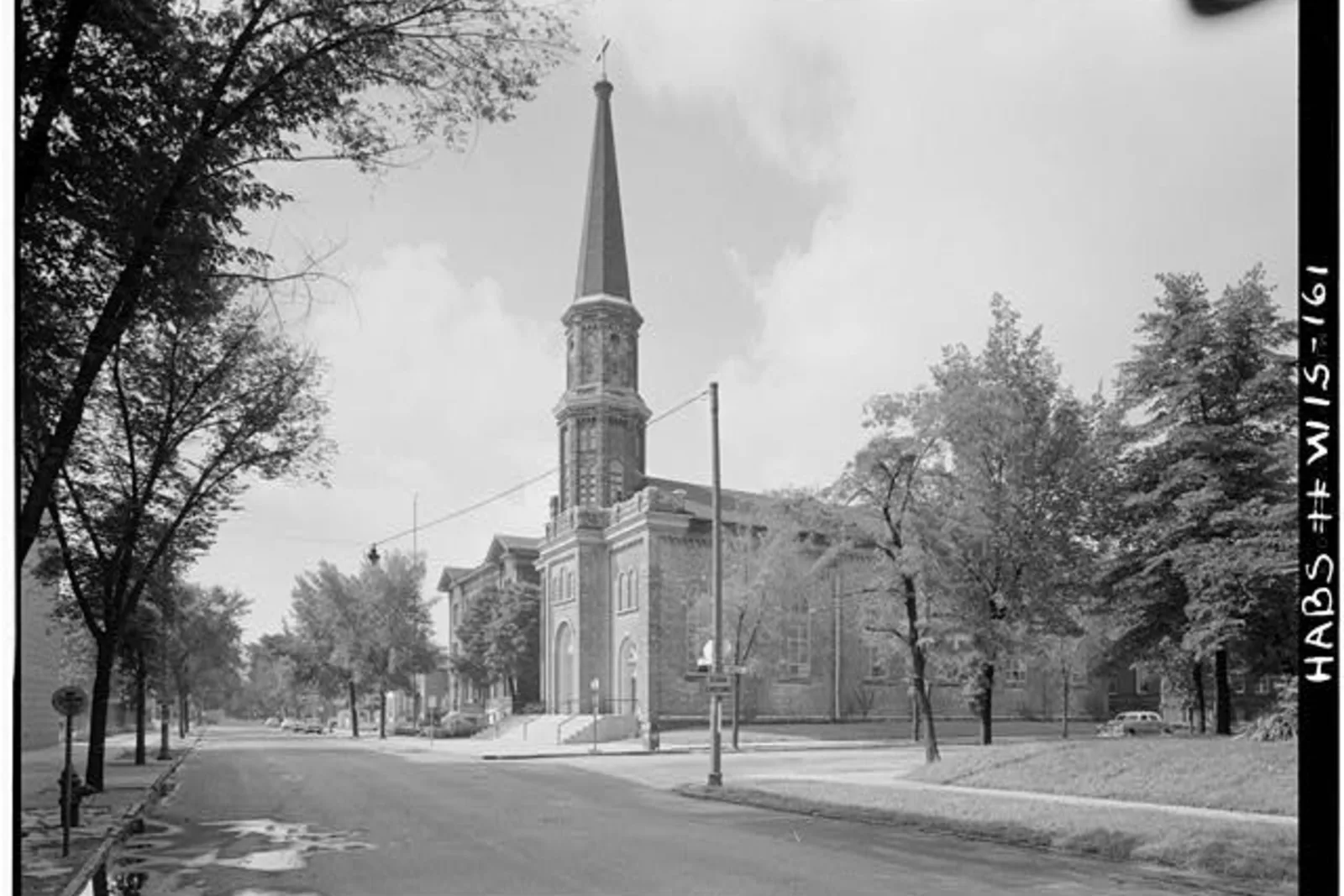
Wisconsin illustrates how the different attractions worked together. German migrants found farmland, lake access, expanding towns and earlier German-speaking residents. Milwaukee grew into a major urban center while rural settlements developed across the state. By 1900, people born in Germany made up a substantial share of Wisconsin’s foreign-born population, and German cultural institutions were visible well beyond one neighborhood.
That scale did not mean every German immigrant in Wisconsin followed the same path. Settlement varied by county, confession, occupation and arrival period. Some communities remained strongly German-speaking for generations; others shifted more quickly toward English. Some families farmed; others built businesses or entered industrial work. Wisconsin was a center because it offered several kinds of opportunity and because the network kept renewing itself.
The Midwest was not chosen for one reason
German immigrants went to the Midwest because the landscape reminded them of Germany.
Familiar-looking land may have influenced some individuals, but the documented pattern is better explained by transport, land and work opportunities, growing cities and established migration networks.
A cultural resemblance is difficult to prove as a general motive. Routes, contacts and economic choices leave stronger evidence.The Homestead Act created German settlement in the Midwest.
German settlement in the Great Lakes and central river valleys was already substantial before 1862.
The act added a later path into surveyed public land, especially farther west, but it did not begin the pattern.The Homestead Act widened one path after 1862
The Homestead Act allowed qualifying citizens and people who declared their intention to become citizens to claim surveyed public land, commonly in parcels of up to 160 acres, after meeting residence and improvement requirements. Immigrants were among those who used the law.
That matters, but the timing matters just as much. The act came after decades of German settlement in Ohio, Missouri, Wisconsin, Illinois and other parts of the interior. It widened access farther west; it should not be used as a single explanation for all Midwestern German migration.
The phrase “available land” also needs a boundary. Federal law treated land as open for settlement after the United States had asserted control over it. Indigenous nations already lived on, used and governed those homelands. Treaties made under pressure, warfare, removal policies, reservation systems and broken agreements enabled settler expansion. The details differed by nation and place, but the land was not empty.
Including that history does not erase immigrant hardship. Many German migrants had limited money, faced dangerous travel and struggled to establish farms or find work. It does keep one group’s opportunity from being told as though no one else paid for the policy that created it.
Established communities made the pattern self-reinforcing
The first migrants to a place accepted the greatest uncertainty. Later arrivals could follow addresses, employers, churches and family contacts. They might hear German in a shop, find a newspaper they could read, or receive help locating work and housing. Those supports did not remove exploitation, poverty or conflict, but they changed the odds of getting started.
The next article in the reader journey is therefore not another settlement map. It is What Life Was Like for German Immigrants: what people did after arriving, how rural and urban lives differed, and where hardship sat beside community life. From there, How German-American Communities Were Built explains how churches, schools, newspapers, clubs and mutual-aid networks turned repeated arrivals into durable institutions.
The Midwest became a German-American center because opportunity and connection reinforced each other. Land mattered. So did wages, transport, markets and a familiar name at the end of the journey. None of those forces worked alone.
The Midwest was several destination systems
The word Midwest can make the migration pattern look more unified than it was. The Ohio River corridor, the Great Lakes, the upper Mississippi and the later Plains offered different combinations of land, transport and employment. Cincinnati was already a substantial river city while parts of Wisconsin were still being opened to intensive settler agriculture. St. Louis connected river commerce with routes farther west. Chicago’s importance rose rapidly with canals, railroads and Great Lakes trade.
Those differences affected who went where. A craft worker with a city contact faced a different choice from a farm family looking for acreage. A Catholic household might value proximity to a parish; a freethinker or political refugee might prefer a city with clubs and newspapers matching that outlook. People from the same European region could cluster together, while others followed an occupation or a single relative rather than a broad ethnic community.
This is why settlement maps should be read as accumulated decisions, not as proof of one German preference. A dense German population in a state could contain river merchants, industrial laborers, farm owners, tenants and professionals whose routes only partly overlapped.
Opportunity was measured at household scale
Migration decisions were rarely made from one statistic. A family had to ask whether it could afford the onward journey, whether work was available immediately, whether land required clearing, and whether someone could help during the first weeks. A destination with slightly more expensive land might still be safer if relatives offered housing or a job. A city could be a temporary stop, a permanent home or the market supporting a nearby farm.
The same household could change its strategy after arrival. One member might earn wages while another looked for land. Relatives could arrive in stages. A family might leave one Midwestern town for another when prices, rail connections or employment changed. “Choosing the Midwest” was often a sequence of choices rather than one final decision made at an Atlantic port.
The pattern also changed within a lifetime. A railroad bypassing one town, a crop-price collapse or a factory opening elsewhere could redirect relatives who had originally planned to settle together. Migration networks were durable, but they continued to respond to local economic change.
An optional expression after the history
Carry the family story forward
These designs express a present-day connection to German-American roots; they are not historical evidence or a substitute for the sourced account.
Frequently asked questions
Common questions
Did most German immigrants become farmers?
No. Farming was important, but German immigrants also settled in cities and worked in skilled trades, shops, factories, publishing, brewing and many other occupations.
Did the Homestead Act cause German settlement in the Midwest?
It expanded access to surveyed public land after 1862, but substantial German settlement in the central river valleys and Great Lakes region was already underway before the act.
Why was Wisconsin especially attractive to German immigrants?
Wisconsin offered agricultural land, lake and river connections, growing towns and established German-speaking settlements that supplied information, contacts and familiar institutions.
Was Midwestern land empty when immigrants arrived?
No. Settlement and federal land policy operated on Indigenous homelands and contributed to dispossession, removal and confinement that differed across nations and regions.