
On this pageBefore 1848, “Germany” was an aspiration as much as a place
The Revolution of 1848 sent some Germans to America because defeat made political life—and sometimes ordinary safety—narrower at home. The revolution had promised civil rights, representative government and national unity. The Frankfurt National Assembly drafted a constitution, but it could not force the monarchies to accept it. When royal governments recovered control in 1849, activists faced arrest, surveillance, lost positions and the collapse of the futures they had expected.
America was not chosen from nowhere. German-speaking migration routes, newspapers, churches and family networks already stretched across the Atlantic. Political refugees could enter communities where they might find work before mastering English and continue public debate in German. They joined a much larger migration wave—explained in the German immigration timeline—but the recent experience of revolution gave their departure a distinct cause and memory.
Institutions and ideas behind the 1848 migration
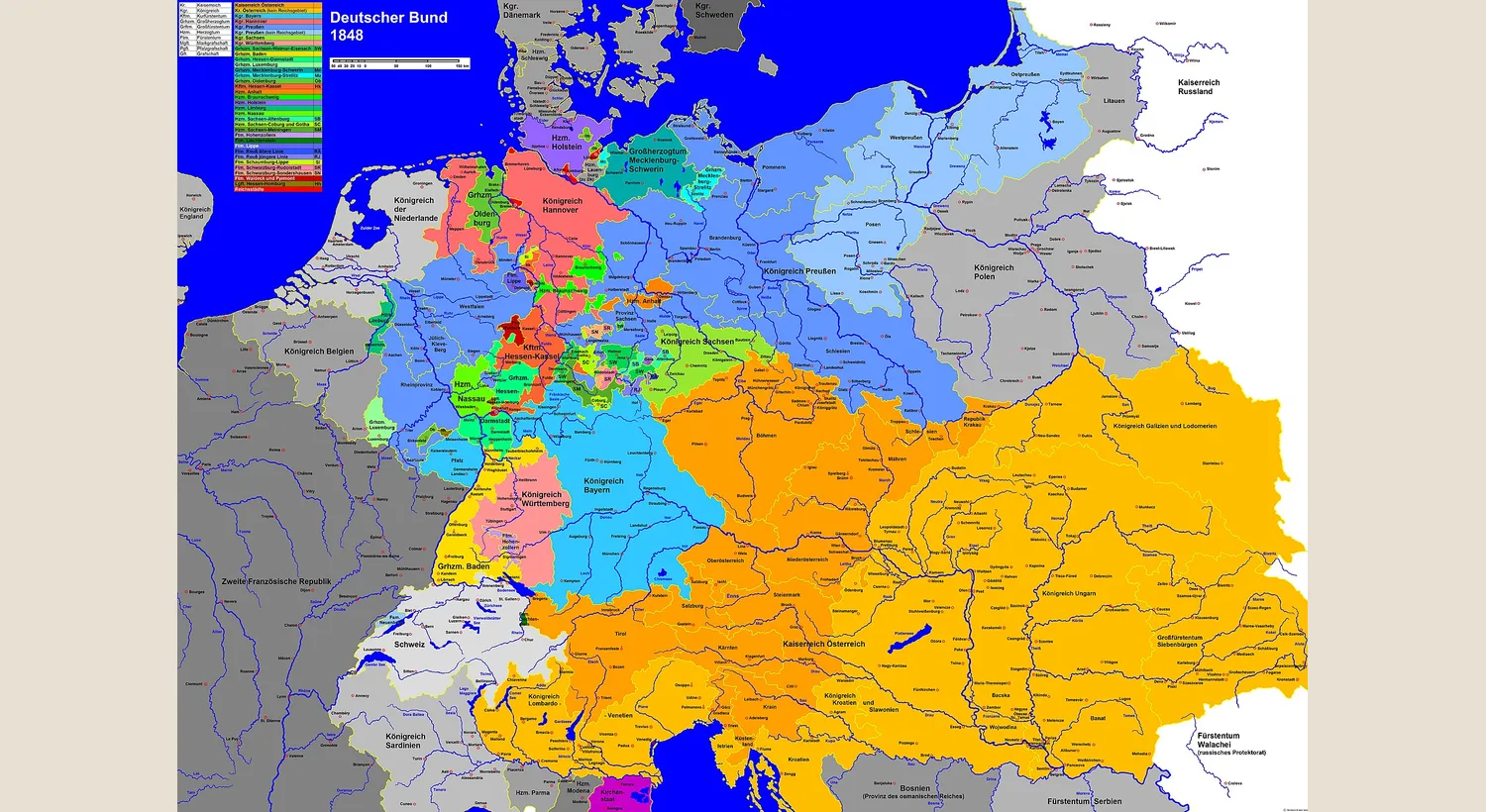
- German Confederation
- A loose association of dozens of German states and free cities created after the Napoleonic wars; it was not a unified German nation-state.
- Frankfurt National Assembly
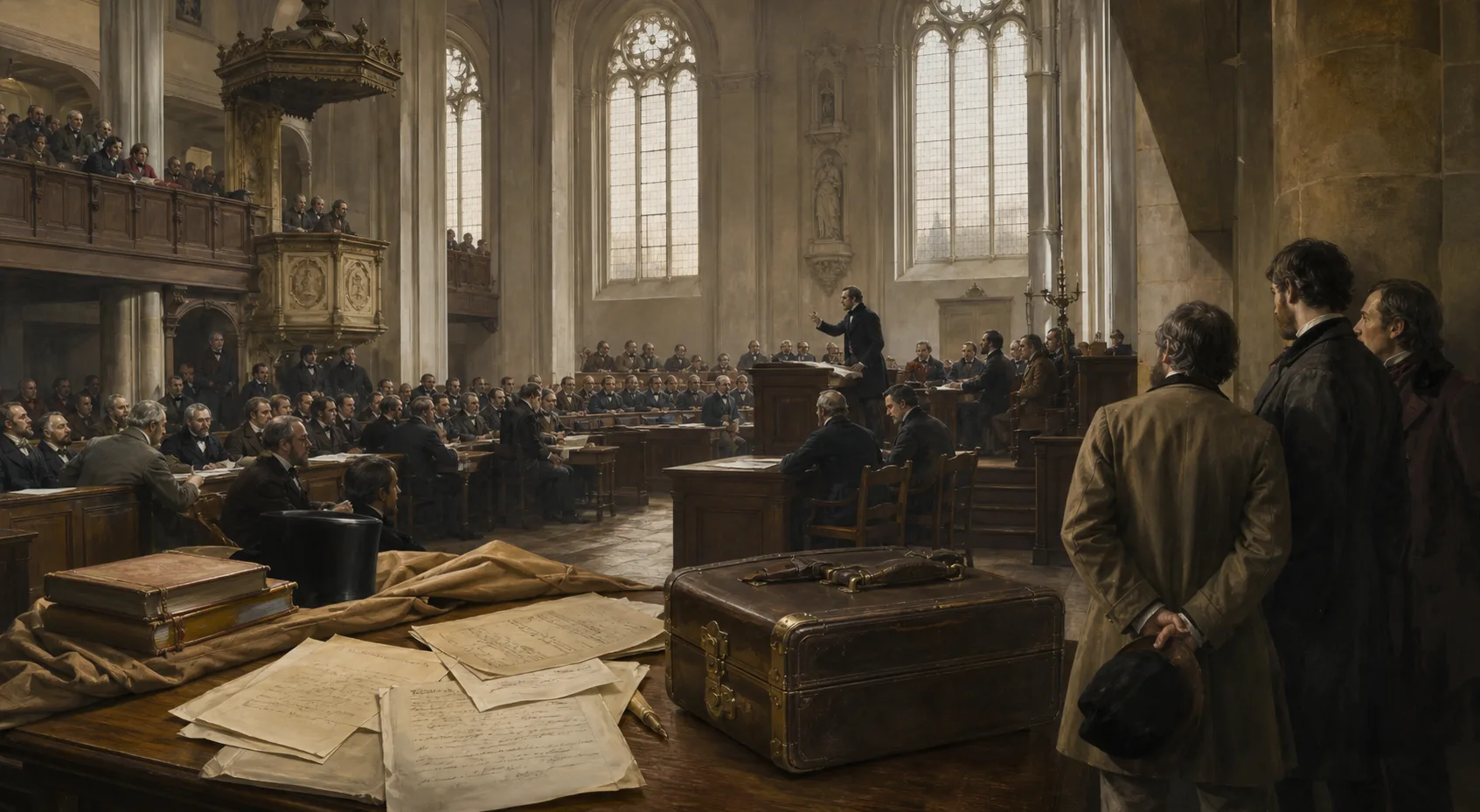
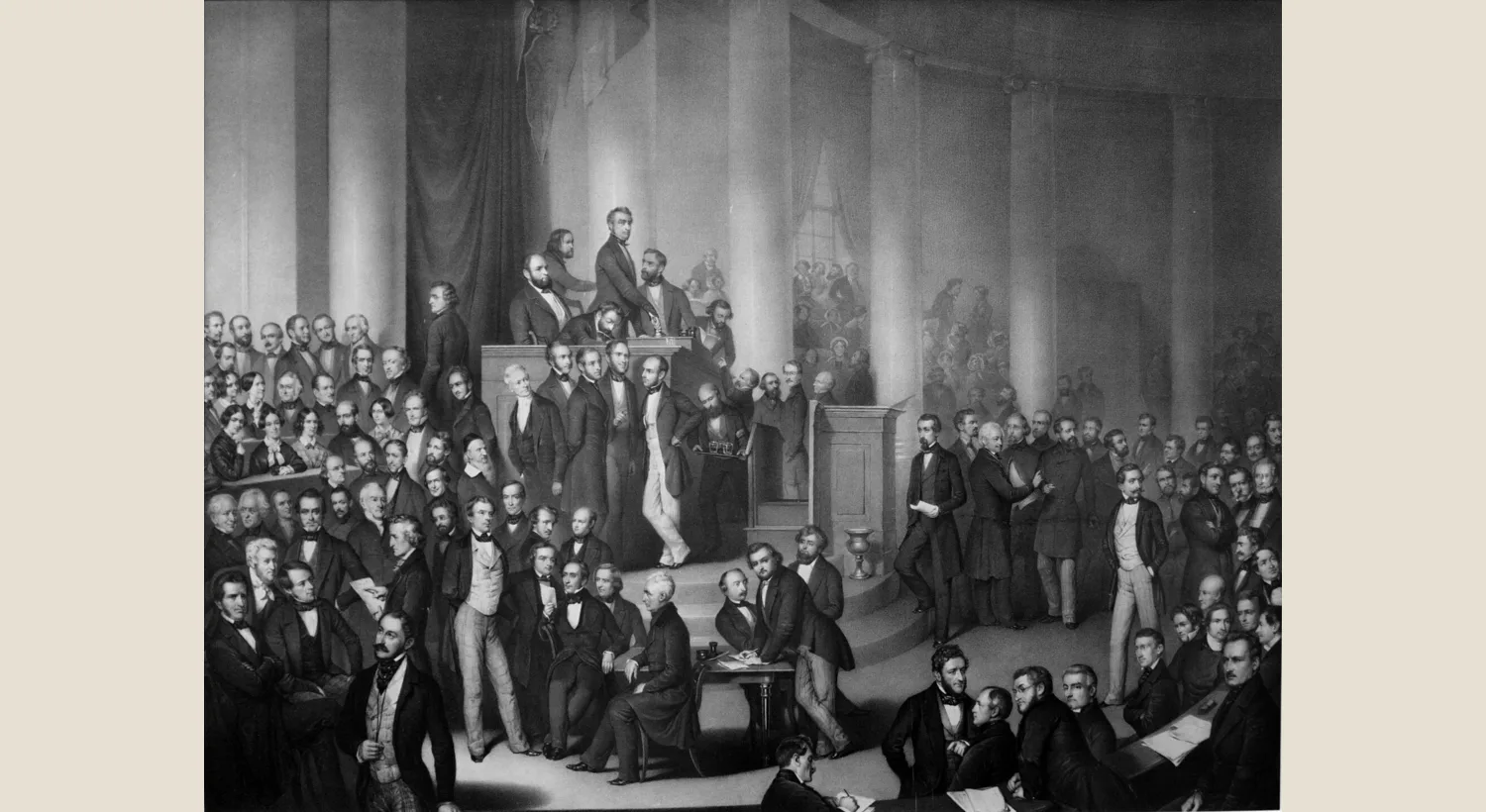
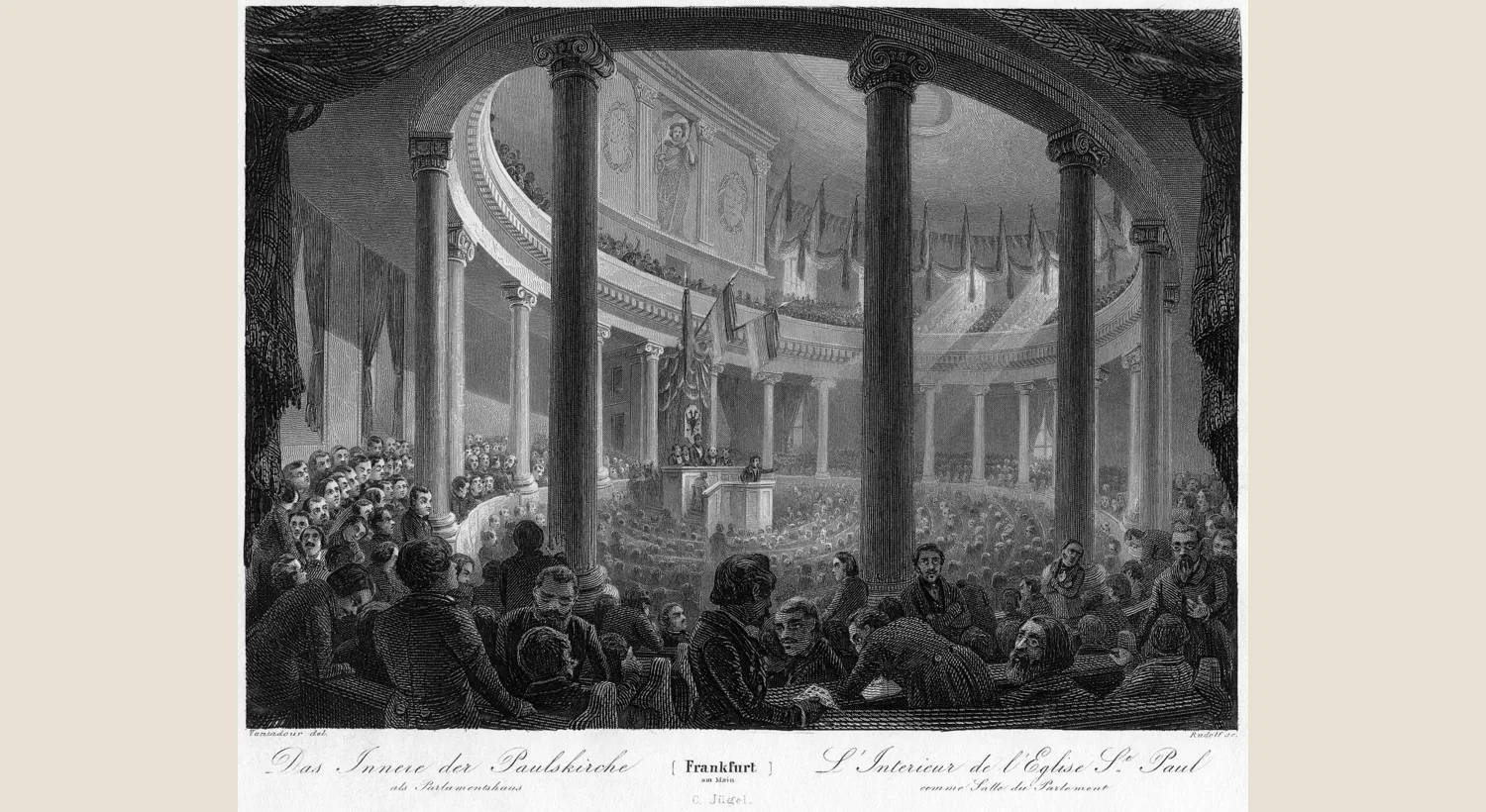
- The first all-German elected parliament, meeting in St. Paul's Church from May 1848 to draft rights and a national constitution.
- Basic rights
- The Assembly's catalogue of civil liberties and legal equality, adopted in December 1848.
- Counterrevolution
- The recovery of monarchical authority and military power that reversed revolutionary concessions and defeated resistance in 1848–49.
Before 1848, “Germany” was an aspiration as much as a place
People living in the German lands shared languages, cultural references and economic connections, but they lived under many governments. The German Confederation contained monarchies and free cities with different laws and political arrangements. Austria and Prussia were the largest powers, and rulers guarded their sovereignty.
After the Napoleonic era, students, professionals and middle-class reformers called for constitutions and national unity. Governments answered much of that activism with censorship, police surveillance and restrictions on association. Some states had representative bodies, but participation remained limited, and the confederation itself was better equipped to suppress opposition than to create a shared democratic government.
Nationalism in this setting did not have one meaning. A liberal might imagine a federal constitutional monarchy. A radical democrat might demand a republic based on popular sovereignty. Debate over whether Austria should belong to a future Germany raised questions that could not be solved by simply drawing a line around everyone who spoke German.
The movement also carried exclusions. Women organized, wrote and took part in demonstrations, but they could not vote for the Frankfurt Assembly. The election rules extended participation among adult men while limiting it to those considered “independent,” a category interpreted differently across states.
Economic crisis made political frustration harder to contain
The Bundestag’s historical account places the revolution within a broader European crisis. The 1840s brought poor harvests, rising food prices, unemployment and mass poverty. Artisans faced changing production and competition. Rural families struggled with debt and old obligations. Growing populations made land and work harder to secure in some regions.
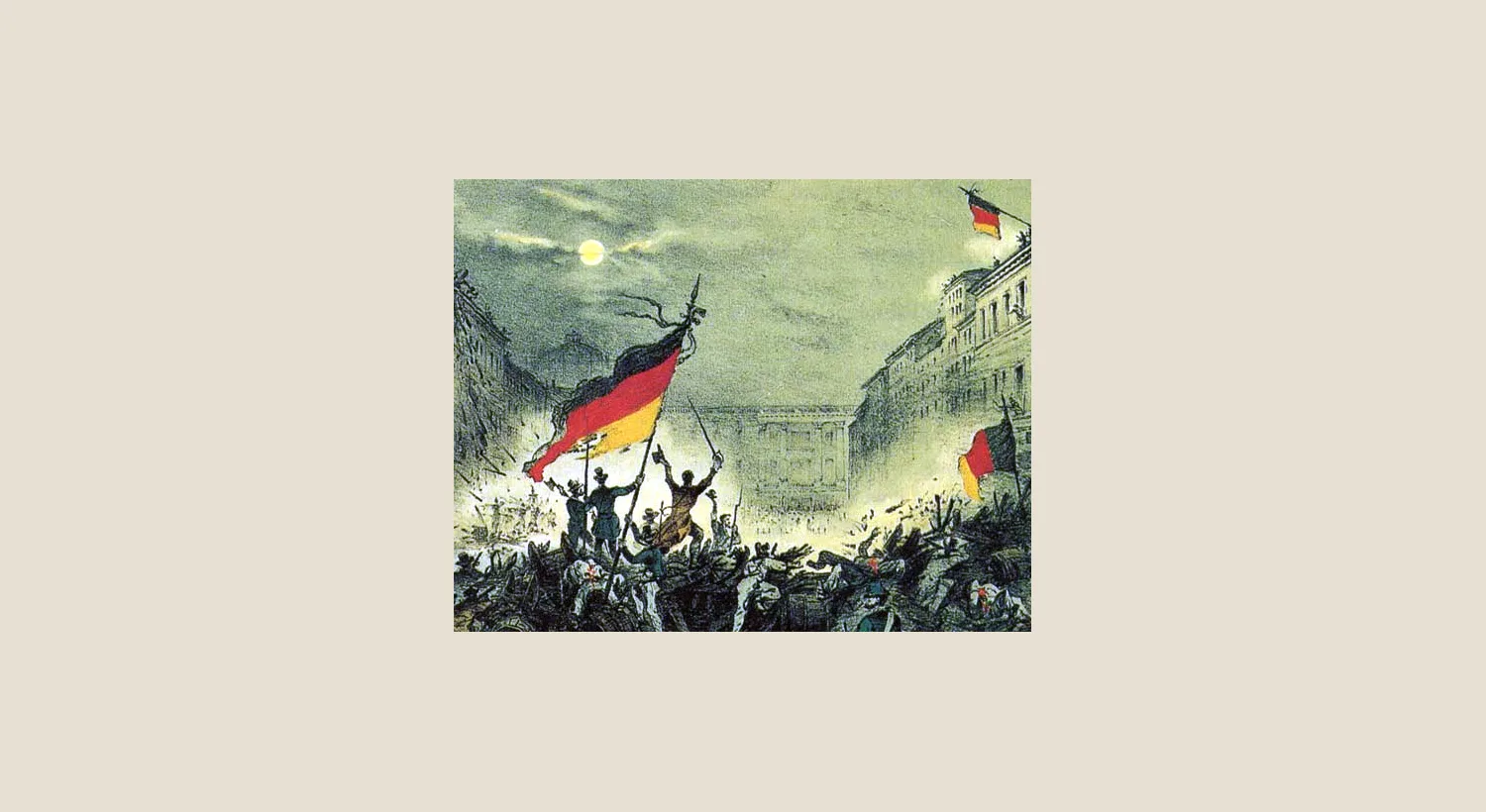
These pressures did not produce one political demand. A hungry worker, a lawyer blocked by censorship and a merchant frustrated by internal borders could all support change for different reasons. Demonstrations joined calls for bread and employment with calls for press freedom, representative government and national unity.
That mix helps explain both the revolution’s reach and its difficulty. Broad support could force rulers to make concessions in the first months. It could not guarantee agreement over what should replace the old order. Liberals worried about social revolution. Radicals distrusted compromise with princes. Local uprisings moved at different speeds.
Migration remained one response even before the revolution failed. Economic hardship had already encouraged families to leave. Once political defeat was added, a person could have several reasons to depart at the same time. The category “political refugee” should not erase the practical questions of income, property and family survival.
How revolutionary hope became political exile
Crisis deepens
Economic distress, mass poverty, censorship and political dissatisfaction weaken confidence in the existing order.
Revolution spreads
Demonstrations and street fighting push German rulers to permit political activity, lift some censorship and accept elections.
Frankfurt Assembly opens
Representatives meet in St. Paul's Church to write a constitution and create a German nation-state.
Basic rights adopted
The Assembly gives legal form to equality before the law and major civil liberties, though enforcement remains uncertain.
Constitution adopted, crown refused
The Assembly completes a federal constitution, but Frederick William IV of Prussia rejects the imperial crown offered by its representatives.
Last resistance defeated
The rump parliament is dispersed and armed constitutional movements in the southwest are suppressed, sending participants toward prison, hiding or exile.
The Frankfurt Parliament achieved more than the word failure suggests
The Assembly began work on May 18, 1848 in Frankfurt’s St. Paul’s Church. Its members formed political clubs that foreshadowed parliamentary factions. They debated national borders, the executive, military authority, citizenship and civil rights. In December they adopted basic rights including equality before the law, freedom of expression, assembly and movement, and the end of legal privileges based on estate.
In March 1849 the Assembly approved a federal constitution. It proposed an elected lower house, a chamber representing the states and a hereditary emperor. The design was a compromise: national government and representative institutions would exist alongside monarchy and federal states.
Calling this work meaningless because it never took full effect would miss its historical importance. The rights catalogue and constitutional debates influenced later German political development. The parliament demonstrated that representatives from across the German lands could deliberate and produce a national framework.
Its weakness was power. The Assembly did not command a loyal national army or an established bureaucracy. It depended on state governments to carry out decisions. While the monarchies were shaken in spring 1848, that dependence looked manageable. As their armies and administrations recovered, it became decisive.
The social makeup of the parliament also narrowed its reach. Educated professionals, especially lawyers and officials, were heavily represented. Workers and peasants had much less direct representation, and women had none. The Assembly’s long debates could appear distant from people facing urgent economic hardship or armed confrontation.
The crown refusal exposed the power problem
The constitution’s supporters chose the Prussian king Frederick William IV as hereditary emperor. A delegation offered him the crown in April 1849. He refused to accept an imperial office created by the representatives of the revolution without the agreement of the other princes.
The refusal did not single-handedly destroy a healthy revolution. It revealed that the parliament could propose a state but could not make the strongest monarch recognize it. Prussia and Austria retained armies, officials and diplomatic weight. The Assembly had legitimacy among supporters, but legitimacy without enforcement was not enough.
As governments withdrew their representatives and resisted the constitution, the parliament lost members. A smaller rump moved to Stuttgart and was dispersed. Campaigns to defend the constitution continued in places such as Baden and the Palatinate, but military defeat in summer 1849 ended the last organized resistance.
Why the revolution failed is not a story about one national character
The revolution failed because Germans preferred obedience and did not really want democratic change.
Large movements demanded rights and national government, and an elected assembly produced major constitutional work. The movement was divided and lacked control over the armies and governments that recovered power.
Institutional weakness, political disagreement and military force explain more than a stereotype about an entire people.The Frankfurt Parliament did nothing because its constitution was never enforced.
It adopted a pioneering basic-rights law and a detailed federal constitution whose ideas influenced later German constitutional development.
A failed transfer of power can still leave a legal and political legacy.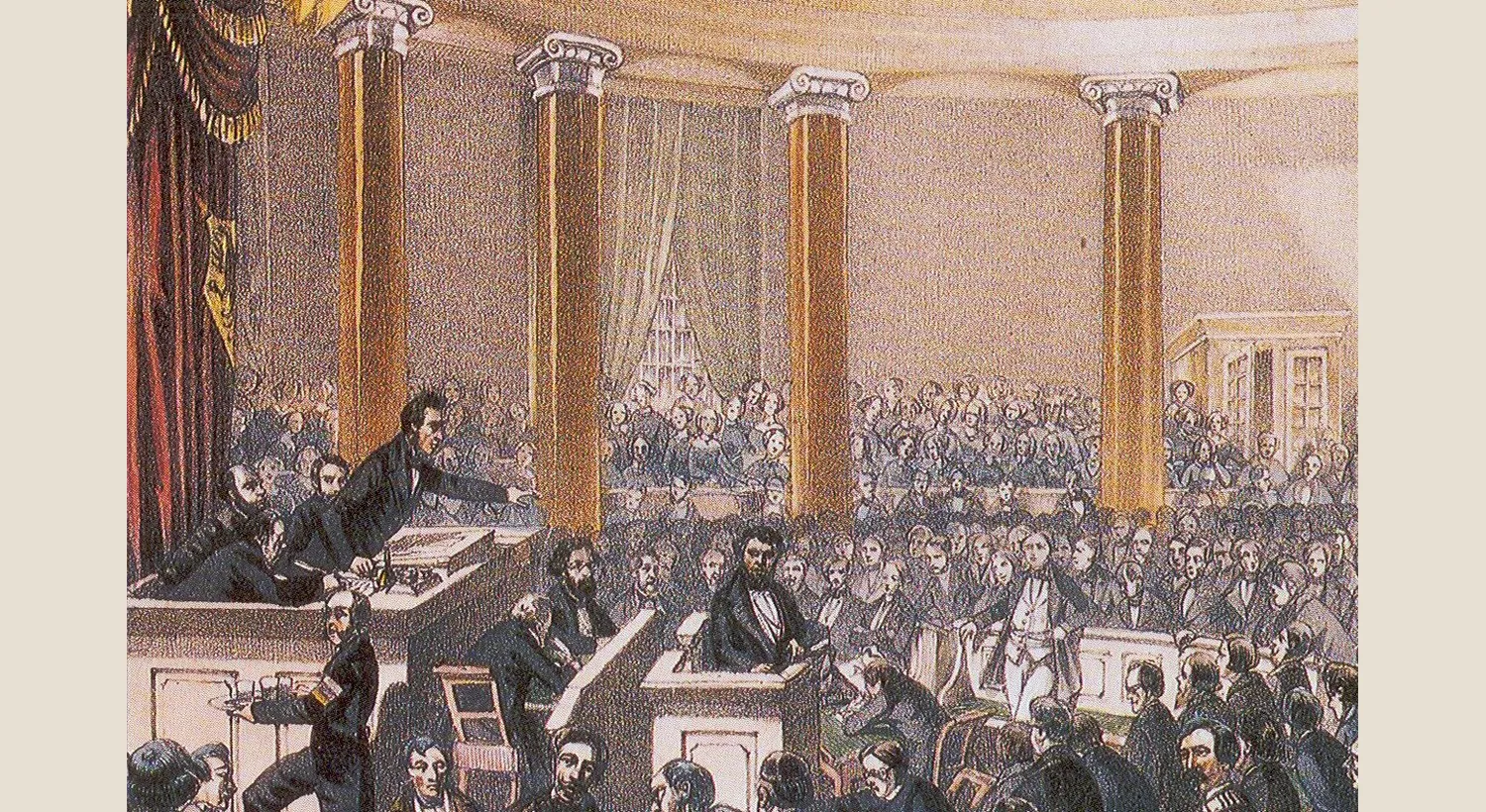
Defeat changed the risks facing participants
The consequences depended on what a person had done and where. A newspaper editor might face censorship or prosecution. A civil servant or teacher could lose a position. A participant in an armed uprising could be imprisoned, sentenced or forced into hiding. Others left because the possibility of reform had closed and they no longer saw a professional or political future.
Not everyone went directly from a barricade to an American ship. Some spent time in Switzerland, France or Britain. Some emigrated only after legal cases or failed attempts to resume work. Families had to gather money, obtain passage and decide whether everyone would leave together.
The experience of exile also differed by class. An educated man with professional contacts could turn political reputation into a newspaper or teaching position. A craft worker might depend on relatives or an ethnic association. Women often carried the practical burden of migration and household rebuilding while appearing less often in public political records.
This is why the Forty-Eighter label is both useful and incomplete. It names the political break that made departure urgent for many people. It does not tell us exactly how each household crossed the Atlantic or what happened after arrival.
America offered networks, not a perfect version of the revolution
The United States attracted refugees because it had elected institutions, a broad public sphere for white men and room for immigrant associations and newspapers. It also had established German communities. A newcomer could read political news, find a congregation, join a Turner society or seek work through German-speaking contacts.
Those advantages should not be turned into a claim that the United States already embodied universal freedom. Slavery was expanding into the central political crisis of the 1850s. Black Americans faced enslavement or severe legal discrimination. Women could not vote. Immigrants encountered nativist politics and pressure to abandon their language.
For some Forty-Eighters, those contradictions became a reason to remain politically active. Antislavery and Republican organizing offered a new field for arguments about free labor, rights and republican government. For others, America was primarily a place to rebuild a career and household.
The older migration infrastructure mattered as much as abstract ideals. German-language newspapers linked cities. Churches and clubs provided introductions. Friends and relatives sent information about wages, land and routes. The political refugee followed paths created by migrants who had left for many other reasons.
Political exile was a visible part of a much larger migration
German immigration surged in the mid-nineteenth century, but most migrants cannot be explained by the revolution alone. Land pressure, industrial change, military obligations, religious conflict, work and family chains continued to move people. Some left regions scarcely touched by armed revolution.
The Forty-Eighters nevertheless shaped how the era is remembered because many produced public records. They edited newspapers, delivered speeches, founded organizations and later held office or military command. Their political biographies gave a clear narrative to a migration wave whose ordinary causes were more diffuse.
The next article follows that cohort after arrival: Who Were the German Forty-Eighters?. Their later involvement in Union politics and military service is covered in German Americans and the Civil War. For the economic, religious and family pressures beyond this one political crisis, see why Germans came to America.
The revolution sent Germans to America not because one event suddenly created migration, but because it changed the cost of staying for people committed to political change. Existing routes made departure possible; defeat made it necessary or attractive; American institutions gave the exiles another place to test ideas that had lost their immediate battle in Europe.
A present-day expression after the sources
Remember the journey without simplifying it
These designs speak to German-American roots today; they do not turn political defeat, prosecution or exile into a product claim.


Frequently asked questions
Common questions
Was the German Revolution of 1848 only about national unity?
No. National unity was one major demand, but protesters and politicians also sought freedom of the press, assembly and movement, equality before the law, constitutional government, economic relief and, among radicals, republican democracy.
Why did the Frankfurt Parliament fail?
It drafted rights and a constitution but did not control an army or the governments of the German states. When powerful monarchies recovered from the first revolutionary shock, the parliament could not compel them to accept its settlement.
Did all Forty-Eighters flee immediately in 1848?
No. The revolution continued into 1849, and migration happened across several years. People left after uprisings failed, prosecutions began, careers closed or family plans made departure possible.
Were political refugees the main German immigrants of the 1850s?
They were an influential minority within a much larger migration. Economic hardship, land, work, religion and family chains continued to move far more people than political exile alone.