
On this pageDecide what a finished result looks like
Tracing a German line is not a single database search. It is a chain of documented identities: you to a parent, that parent to a grandparent, and eventually an immigrant to a specific place in Europe. The safest route is to build that chain in the United States first. A name that looks German, a DNA estimate, or a family statement that someone came from “Germany” can be a clue, but none of those establishes a lineage by itself.
Decide what a finished result looks like
For this first pass, success is not “I found people with my surname in Germany.” A useful result is narrower: you can show how one person in your documented American family connects to a named immigrant, and you have a defensible clue to that immigrant’s exact birthplace or last residence.
Write the question in one sentence. For example:
Which German town was the birthplace of the Johann Keller who lived in Hamilton County, Ohio, with his wife Maria in 1880?
That question identifies a person, a place in America, a relationship and a period. It is much stronger than “Where did the Kellers come from?” If you cannot yet name the immigrant, begin with the zero-information starting process before attempting the full workflow.
If your starting evidence is still in albums, envelopes or a relative’s memory, preservation tools can support this stage without replacing the research. Compare a flatbed scanner for loose photographs and papers(paid link) when originals can safely lie flat, or a simple voice recorder for a consent-based family interview(paid link) when a tested phone is not practical.
Browse Flatbed Photo Scanners
Search Amazon for flatbed scanners and compare scan area, optical resolution, software compatibility, file formats, seller, and returns.
Best for: Families scanning loose photographs, letters, and documents that fit safely on a flat bedBrowse Digital Voice Recorders
Search Amazon for a recorder and compare controls, supported file formats, battery life, storage, and computer transfer.
Best for: Families recording a focused conversation in a quiet roomFollow the evidence from America to Germany
A complete German-ancestry workflow
Each step produces something the next step needs. Do not skip the identity checks simply because a German record looks promising.
Start with yourself and the known generations
Record full names, maiden names, dates, places and relationships for yourself, parents and grandparents. Ask relatives which details are remembered, which are written down and who supplied each statement.
Tip: Label family memory as memory until a record supports it.
Choose the immigrant you are trying to identify
Use the working tree to isolate one foreign-born ancestor or couple. Record their children, spouse, occupation, religion and every American location connected to them; these details help separate people with similar names.
Build an American record trail
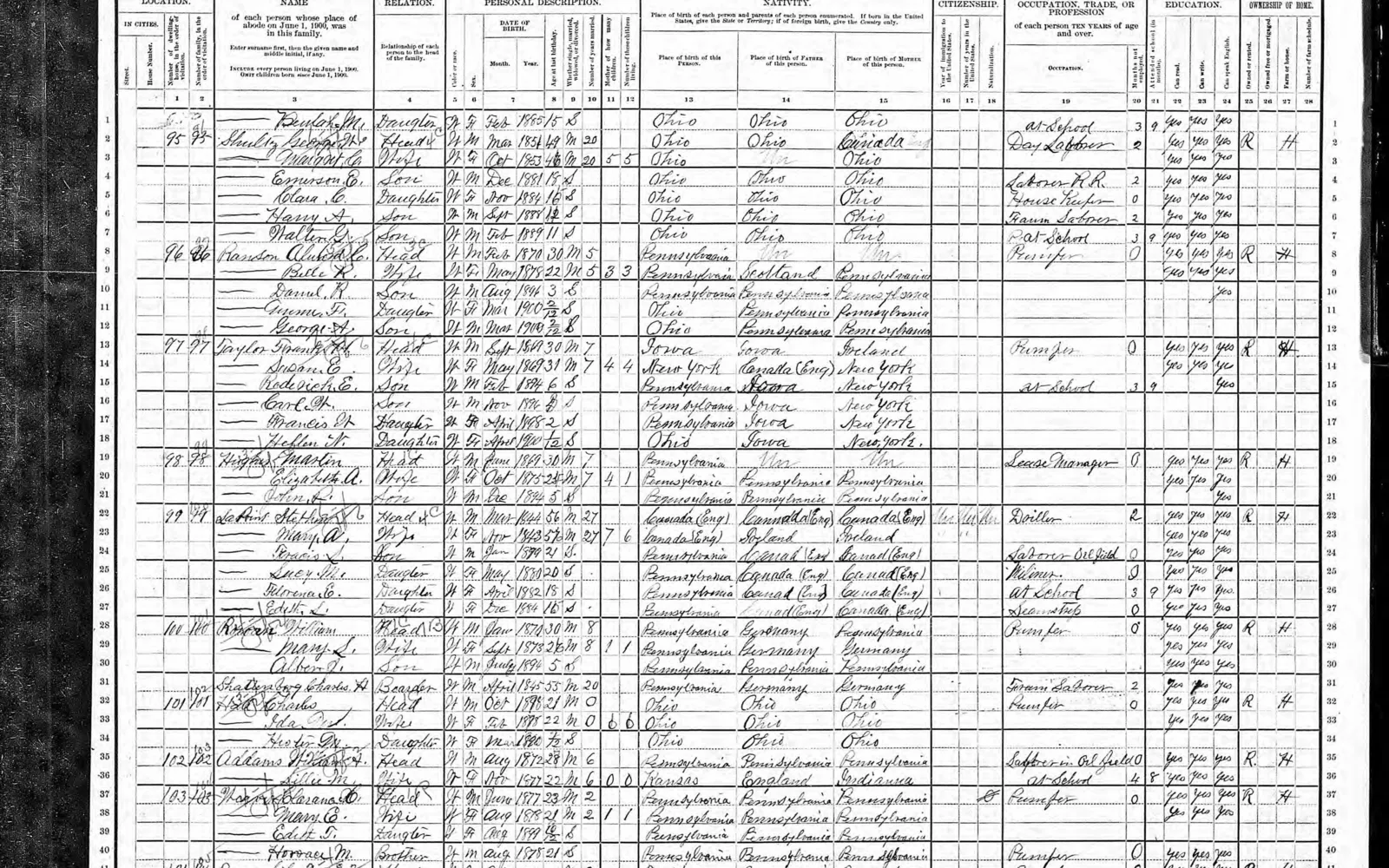
Search backward through census, vital, church, obituary, cemetery, naturalization, passenger, probate, military and land records as appropriate. Extract names, dates, places and relationships from the actual record image when available, not only from an index.
Tip: Later records may give a broad birthplace; earlier or locally created records may be more specific.
Resolve the immigrant’s identity
Compare age, family members, residence, occupation, witnesses and associates across records. Do not merge two people because their names and approximate birth years match. Write down why each record belongs to the same person.
Identify the exact European locality
Look for a town, village, parish, district or last residence in naturalization papers, passenger lists, church registers, obituaries, marriage records and children’s records. Preserve the spelling exactly as written before trying to modernize it.
Tip: Historical borders changed. A place may now be in another country or may have several names.
Determine the record jurisdiction
Use a gazetteer and archive guidance to learn which civil registration office, parish, church archive, municipal archive or state archive served the locality during the event year. Germany has no single central collection containing every family.
Tip: The Federal Archives states that civil and church registers are generally held locally, not in the Bundesarchiv.
Search German records and test the connection
Look for the relevant baptism, birth, marriage, death, burial or household record. Compare parents, spouse, occupation, religion, witnesses and locality—not just the name. Record translations and uncertain handwriting separately from the original text.
Write the conclusion and preserve the path
Summarize which records support the relationship, which conflicts remain and what would disprove it. Attach citations to the people and relationships in your tree, then back up the records and log.
The National Archives recommends beginning with yourself and moving from the known toward the unknown. Its genealogy holdings commonly include census, immigration, naturalization, military and land records, but NARA also warns that no single repository can complete a family history. That matters here: the American phase is not busywork before the “real” German search. It is where you establish which immigrant you are actually following.
Treat “Germany” as a clue, not a destination
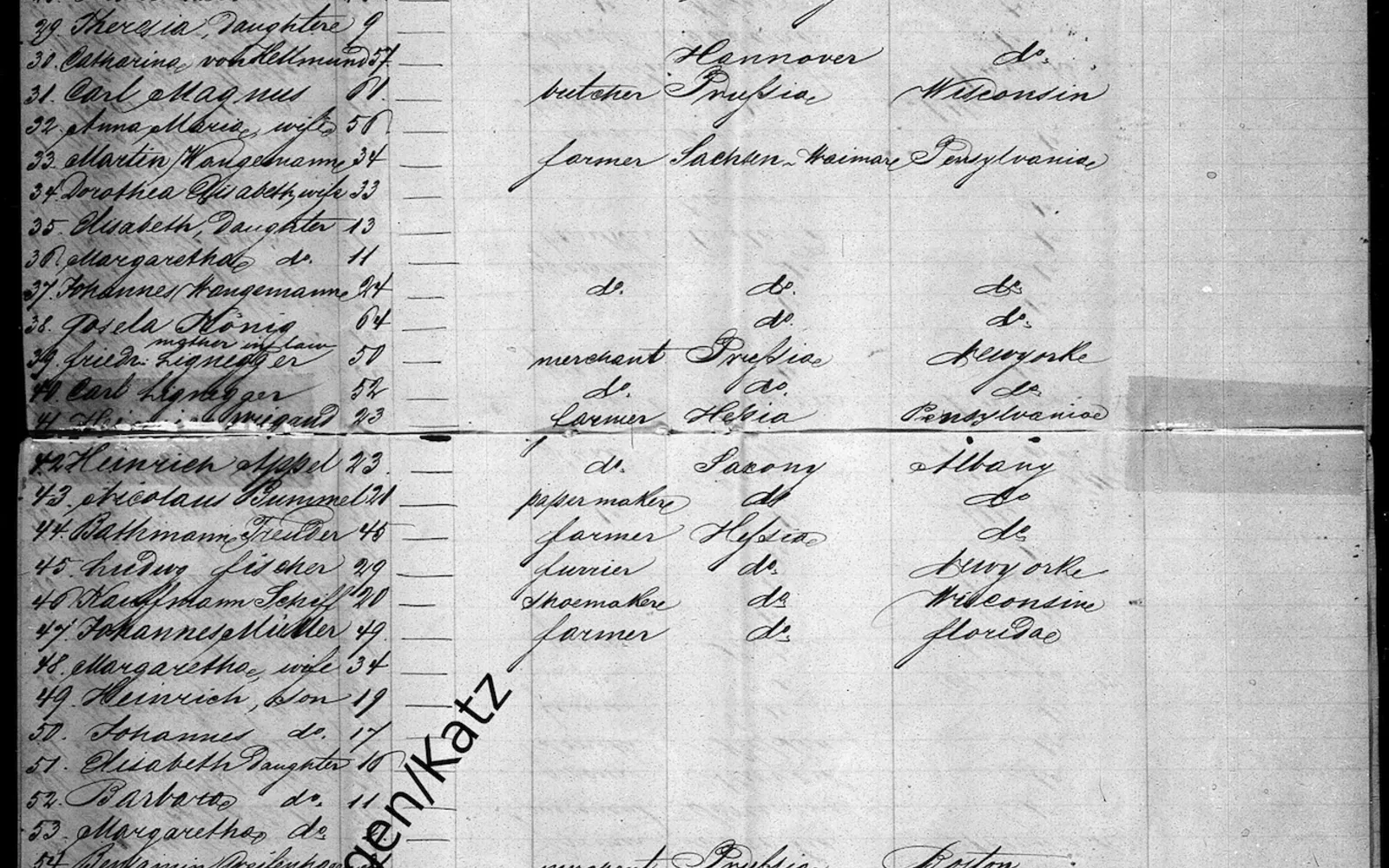
A record that says “Germany” may be accurate and still be too broad for German research. Records were created by local civil and religious authorities, and the responsible jurisdiction depended on place, date and denomination. The FamilySearch Germany research guidance therefore begins with the ancestral town and its changing jurisdictions before directing researchers to archives and record sets.
Do not silently convert a historical place into a modern one. Copy the place as the source gives it. Then record your interpretation in a separate note:
- Source wording:
Breslau, Schlesien - Working interpretation: Breslau, Silesia; now Wrocław, Poland
- Confidence: probable, pending confirmation from a second source
This separation protects the original evidence and makes later corrections possible. It also prevents a modern map result from erasing the political and jurisdictional context in which the record was created.
Compare records instead of counting matches
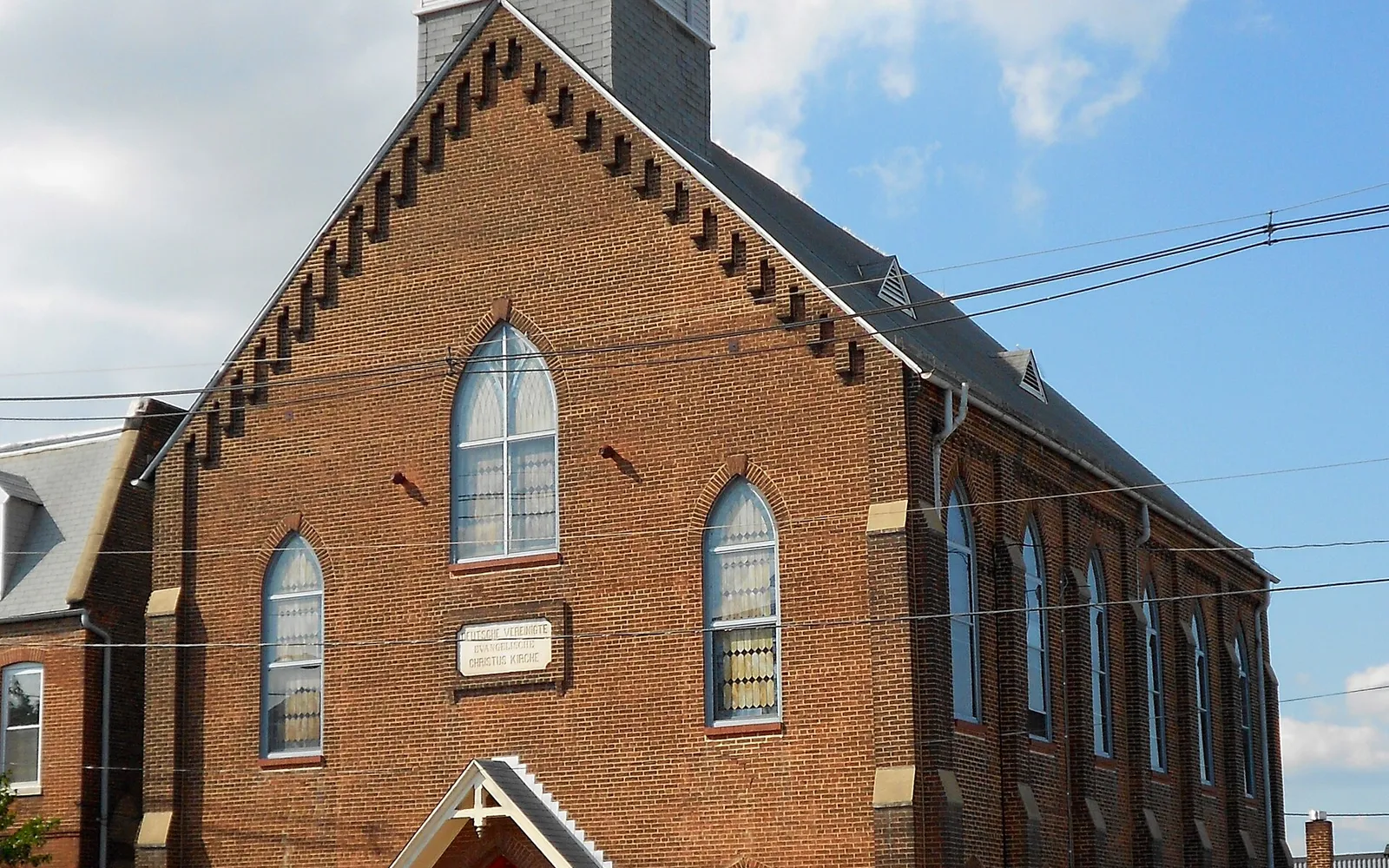
Genealogy databases make it easy to collect records that share a name. The harder job is deciding whether they describe the same person. Use a cluster of details:
- spouse and children;
- age and calculated birth range;
- occupation and religion;
- street, town and neighbors;
- witnesses, sponsors and traveling companions;
- immigration and naturalization details.
A conflicting date does not automatically invalidate a record. Ages were reported, copied and calculated differently; spellings changed across languages and clerks. Preserve the disagreement and ask which source was closest to the event, who supplied the information and whether the rest of the identity matches.
Evidence habits that prevent expensive detours
Do
- Use indexes to locate records, then inspect the record image or an official copy when possible.
- Keep maiden names, German spellings and American spellings as searchable variants.
- Record a negative search when it changes what you will try next.
- Separate the words in a source from your translation, interpretation or hypothesis.
- Pause when two plausible people cannot yet be distinguished.
Avoid
- Jump from an American surname to a similarly named family in Germany.
- Treat an online tree as proof merely because it has many generations.
- Assume a DNA ethnicity percentage identifies a particular ancestor or town.
- Search the Federal Archives as though it were a national storehouse of civil and parish registers.
- Replace uncertainty with a precise date or place that no source actually gives.
Know when you are ready to cross the Atlantic
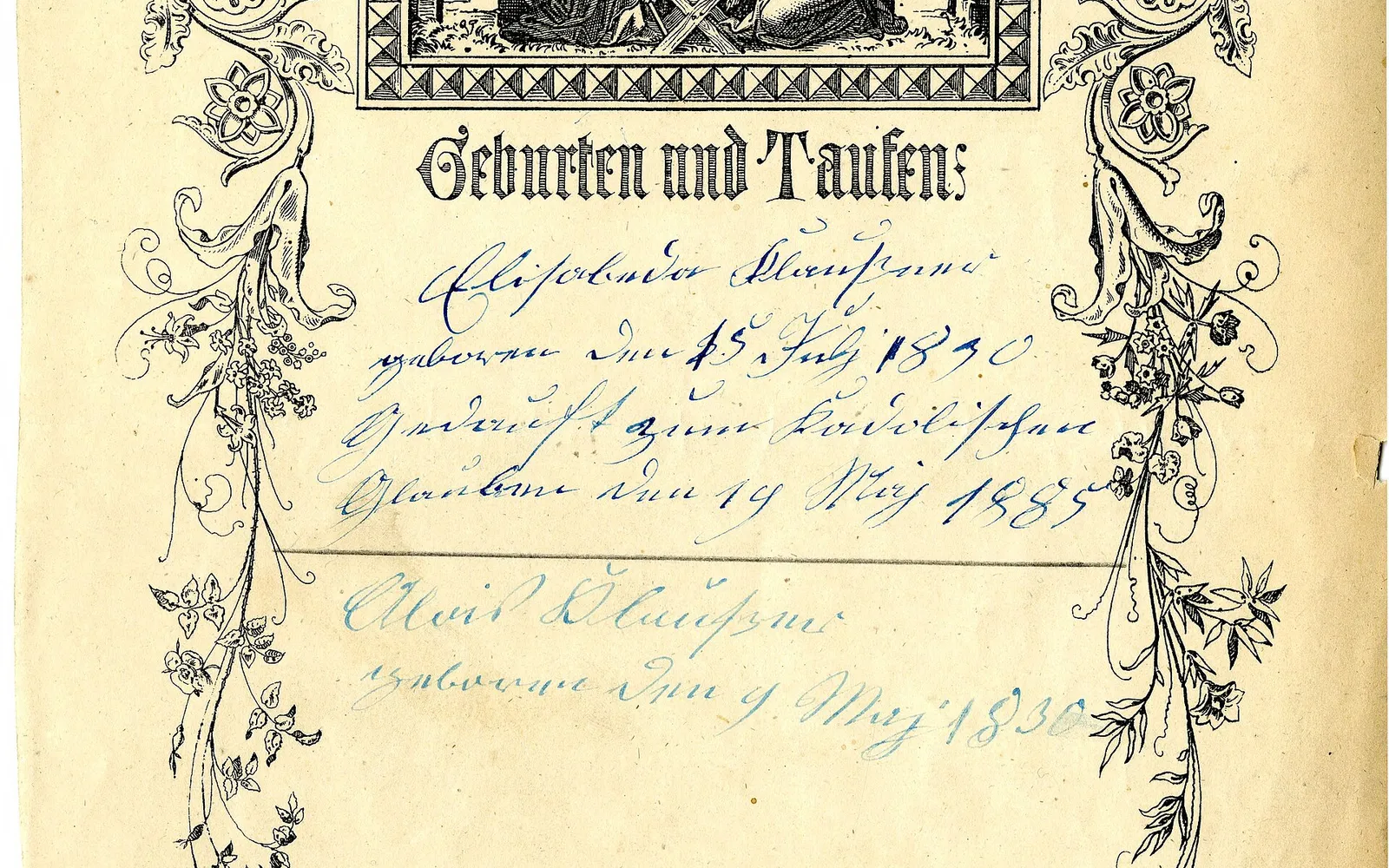
Move into German locality research when you can answer most of these questions:
Your American evidence is strong enough to continue
- The immigrant is distinguished from people with similar names
Family, residence, age and associates form a consistent identity.
- The relationship to you is documented generation by generation
Each parent-child connection has at least one source and no unexplained jump.
- You have a locality clue more specific than Germany
A town, village, parish, district or last residence is recorded with its source wording.
- You know what German event you need
For example, a baptism that should name parents or a marriage that should identify an earlier residence.
- The correct local jurisdiction has been identified
You know which archive, registry office or parish is likely to hold the record for that date.
- Conflicts are visible in the notes
You have not hidden a second birth year, spelling or competing identity.
If several items are missing, return to the American trail rather than searching Germany more broadly. The beginner guide explains the evidence terms behind this workflow, while the family-tree guide shows how to record the relationships without turning a hypothesis into a fact. Use the research checklist as the repeatable quality check for each new generation.
The useful finish line is not a tree that looks complete. It is a trail another person can follow, question and improve.
A personal connection after the records
Let the research carry the claim
This design can express German roots; it is not evidence of a family line or a substitute for documentation.
Frequently asked questions
Common questions
Should I begin with German records or American records?
For a German-American line, begin with the known family in the United States. American records help identify the correct immigrant and may reveal the town or parish needed to search German collections.
Is a matching surname enough to connect two people?
No. Compare relatives, ages, residences, occupations and dates, then document the records and reasoning that support the relationship.
What if every record says only Germany?
Search the immigrant's siblings, spouse, children, church community, naturalization file, obituary and passenger records. A collateral relative may preserve the more specific locality.