
On this pageBegin with what belongs to your family
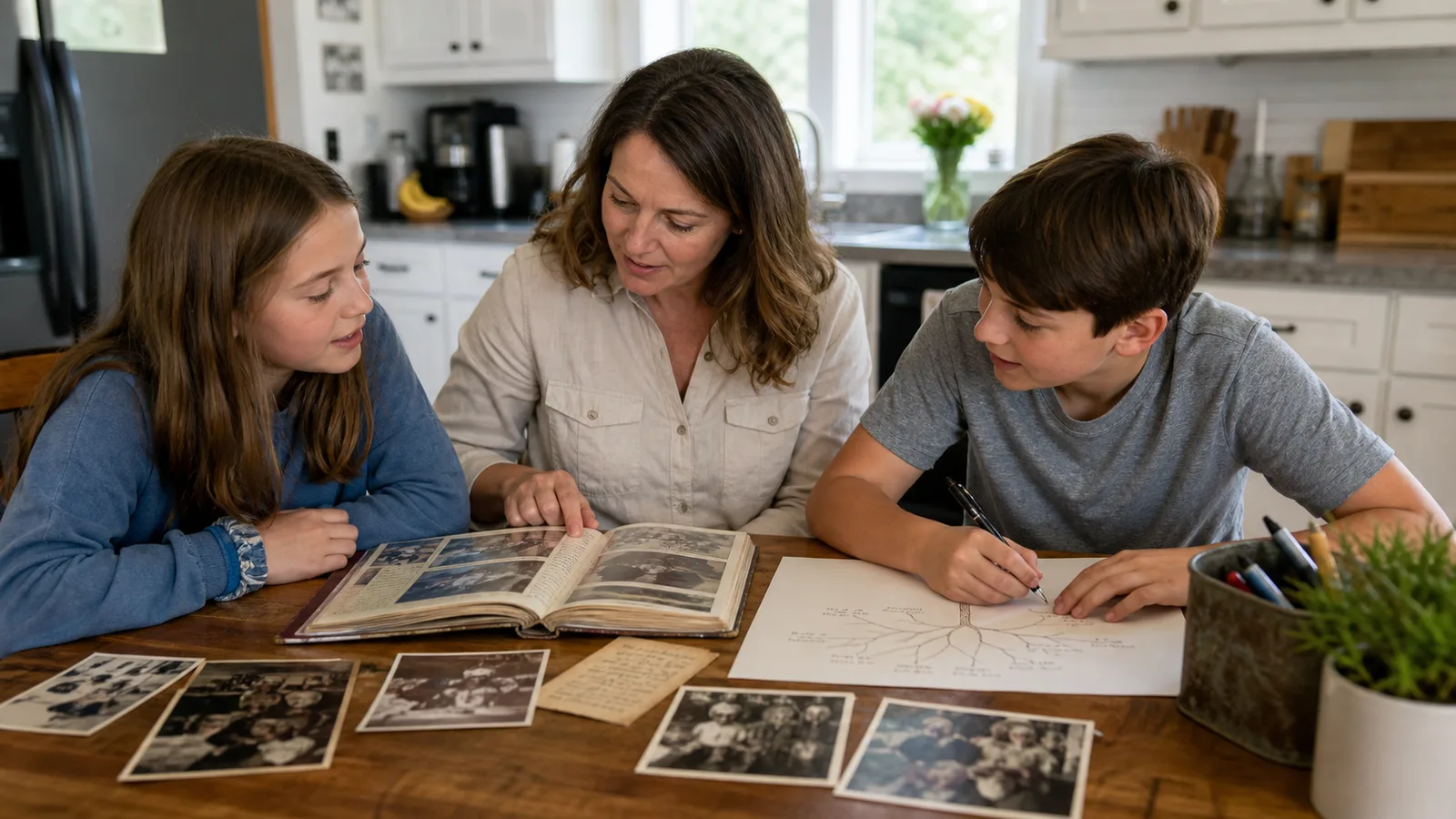
German heritage becomes easier to pass on when it is part of ordinary family life rather than a lesson children are expected to perform correctly. A remembered name at the dinner table, a recipe explained while it is made, a photograph identified together, or a family phrase used naturally can carry more meaning than a once-a-year presentation about “being German.”
When your own knowledge is still incomplete, begin with the German heritage meaning guide so you can explain ancestry, memory and practice without presenting them as one test.
The goal is not to prove how German a child is. It is to give them enough context, choice and repeated contact that the family story remains available when they are ready for it.
Begin with what belongs to your family
Before choosing activities, separate three things that often get mixed together:
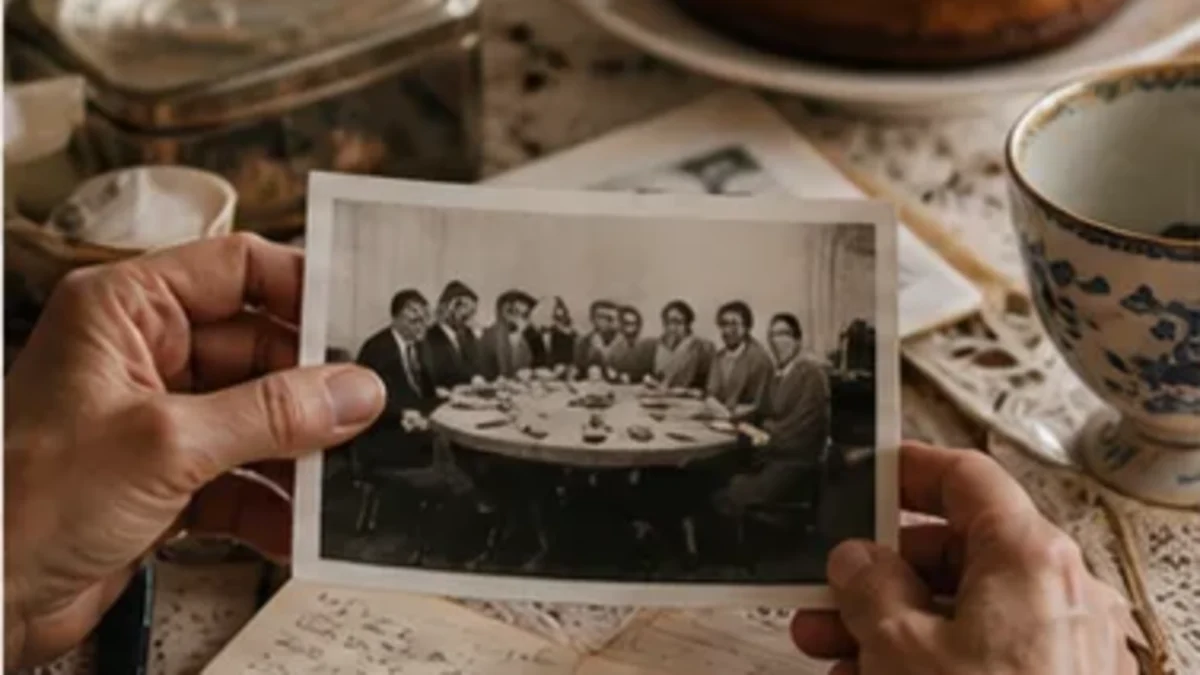
- Your family’s own story: people, places, photographs, recipes, sayings and memories connected to named relatives.
- German or regional culture: traditions, foods, language and history that may be relevant but are not automatically part of every German-American family.
- A new family practice: something your household chooses to begin now, even when it was not handed down unchanged.
That distinction prevents a common mistake: teaching a broad cultural fact as though every ancestor practiced it. A Bavarian custom may be interesting without being part of a family from northern Germany. A German-American recipe may have changed in the United States. A holiday habit may come from one household rather than an entire country.
None of this makes the tradition less worthwhile. It simply gives the child a truthful label: “This is what our family did,” “This is common in this region,” or “This is something we are starting together.”
If you cannot yet name a reliable family anchor, build the short snapshot in where to start with German roots before planning activities.
Build a small family practice, not a complete program
A useful starting plan needs only three parts:
- one story or object with a known connection;
- one repeatable activity;
- one way for the child to participate or make a choice.
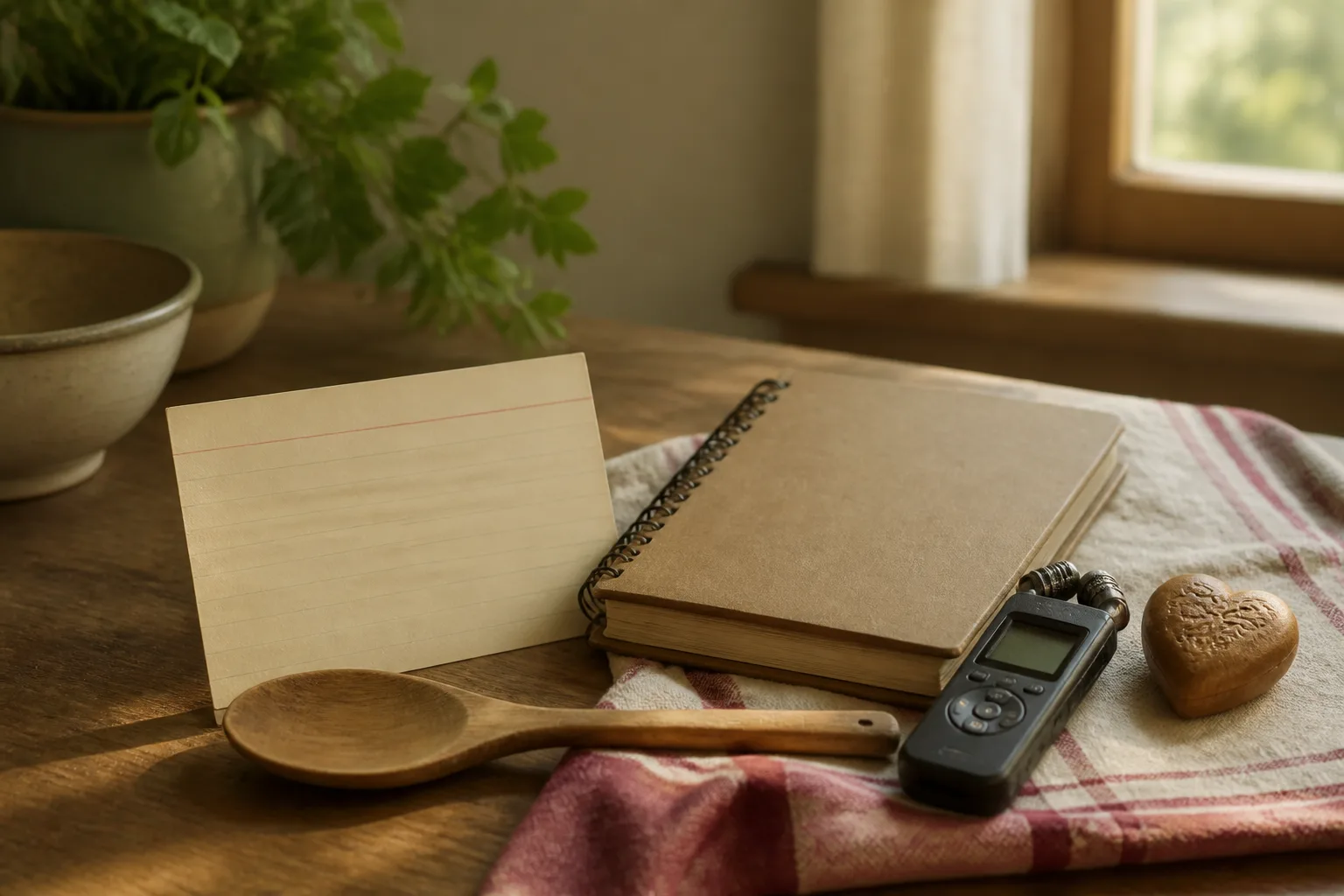
The plan may be as small as looking through two photographs, learning who is pictured, cooking one family dish once a season, and letting the child write the updated recipe card. It does not need a curriculum, matching outfits or fluent German.
A six-step way to carry the story forward
Choose a plan small enough to repeat. Repetition gives heritage a place in family life; pressure usually gives it a deadline.
Choose one reliable starting point
Pick a named person, a labeled photograph, a known hometown, a family recipe or a phrase someone actually used. Mark uncertain details as uncertain.
Explain why it matters
Give the child one clear sentence of context: who the person was, when the object was used, or why the family kept the practice.
Turn it into something the child can do
Let the child measure an ingredient, choose a photograph to scan, mark a place on a map, practice a greeting or ask a relative one question.
Repeat it at a natural time
Connect the activity to a birthday, family visit, holiday, school project or ordinary weekend rather than creating an elaborate event that happens once.
Invite a choice
Offer two or three ways to take part and allow the child to choose. Participation should not be used as proof of loyalty to the family.
Record what changed
Write down the story, the child’s question, a revised recipe or a new family version of the practice so the next generation receives context, not only an object.
Match the invitation to the child’s age
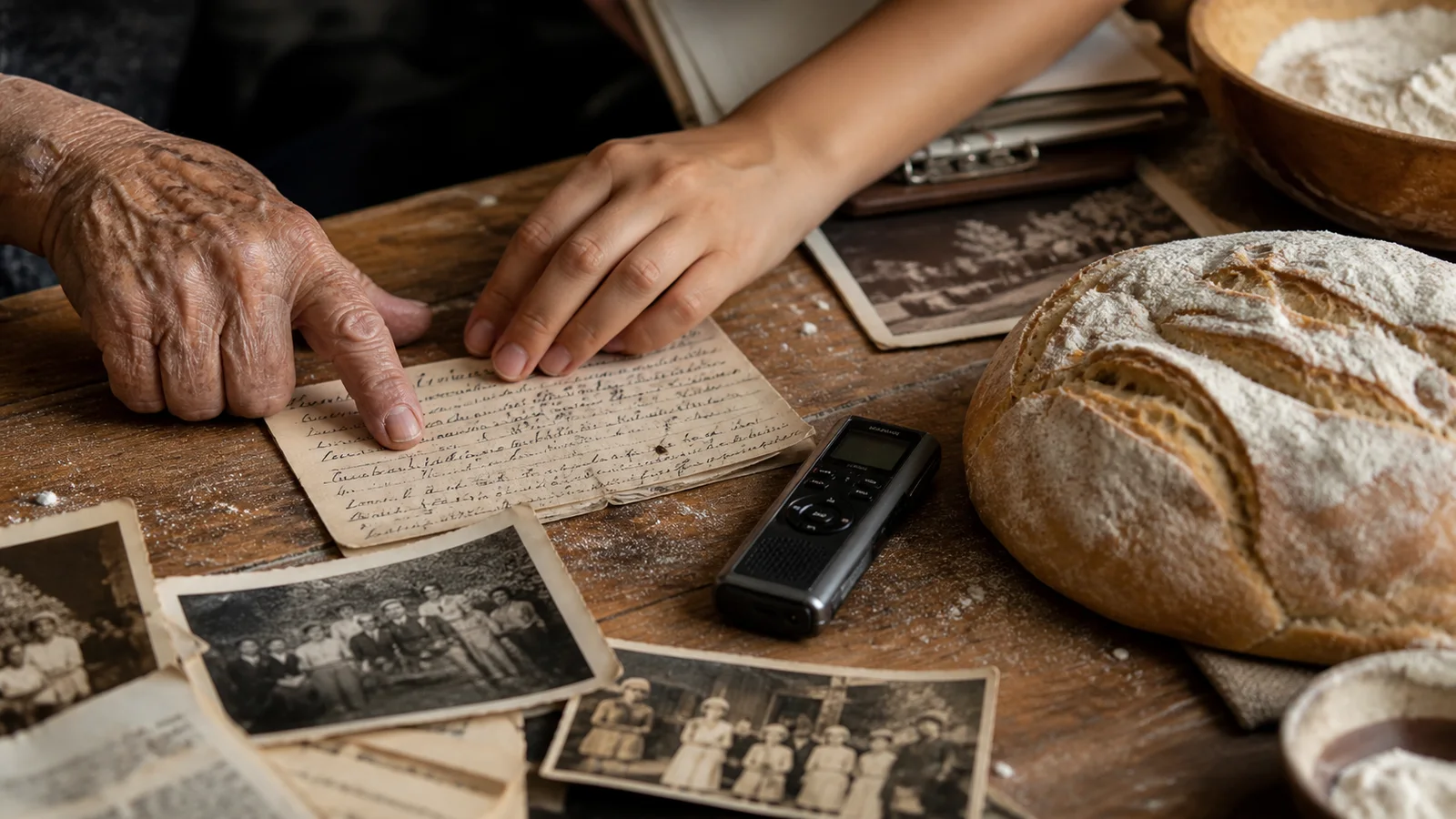
Young children usually need a concrete action and a short explanation. They can identify people in photographs, repeat a family name, help shape dough, color a map or learn a simple greeting. A long immigration timeline will probably matter less than knowing, “This was your great-grandmother’s recipe card.”
School-age children can compare versions, ask why a tradition changed, create labels for a photo album or interview a relative with help. This is also a good age to explain that Germany has regions and that German-American family life developed differently in different parts of the United States.
Teenagers may want more control and more evidence. Give them room to question a family story, look up a place, choose not to participate publicly, or connect heritage to music, language, design, history or travel rather than the activity a parent prefers. A teenager’s skepticism can improve the family record when it leads to clearer sourcing and fewer exaggerated claims.
Age is not the only factor. One child may love family photographs and dislike cooking. Another may remember a song but have no interest in a family tree. Passing heritage forward does not require identical outcomes among siblings.
Use German words without turning them into a test
Language can make heritage feel immediate, especially when a word belongs to a real relationship. Opa and Oma, a familiar greeting, the name of a dish, or the original spelling of a town may be enough to open a useful conversation.
Keep the meaning clear and pronunciation humble. Parents who are not fluent do not need to pretend otherwise, and children should not be made responsible for recovering a language the family lost across generations. A phrase learned with care can be meaningful. It should not become evidence that one child belongs more than another.
When the family wants to learn more, choose a realistic next step: label a few household objects, learn the words used in a song, or ask a fluent speaker to review a short family phrase. Do not build confidence on an uncertain translation found in a decorative graphic.
Children do not need fluency to inherit a family connection. German-American heritage without speaking German explains that distinction without minimizing the value of learning the language.
Make mixed heritage visible rather than competitive
Many children inherit several family histories. German heritage can sit beside Mexican, Irish, Vietnamese, African American, Jewish, Polish or any other part of the household without becoming a contest for time or authenticity.
A practical approach is to use the same respectful questions for every branch: What do we know? Who told us? What did this mean in that family? What has changed? What would we like to continue? This keeps one heritage from being treated as the “main” story while the others become occasional decorations.
For more low-pressure choices, meaningful ways to celebrate German roots includes research, food, language and community paths rather than one required performance.
It also helps children understand that identity is not a percentage chart they must perform. They may feel closer to one side at one age and another side later. The parent’s job is to keep the doors open and the labels honest.
Keep heritage warm without making it compulsory
The difference is usually not the activity itself, but the meaning adults attach to participation.
Do
- Tell specific family stories and name the source when you know it
- Let children ask whether a detail is memory, documentation or a new family choice
- Adapt traditions to the household, age, budget and time available
- Welcome partial knowledge and return to uncertain details later
Avoid
- Use ancestry, appearance, a surname or language ability as a test of identity
- Present one regional custom as the way all German families behave
- Require a child to wear, say or perform something that makes them uncomfortable
- Invent a family connection because a general German tradition feels appealing
When a plan is not working

If the child is bored, reduce the scale. Ask one question instead of giving a lecture. Use one object instead of opening every box. Let the child choose the next activity or decide that this is not the right day.
If relatives disagree about a story, preserve the disagreement rather than choosing the version that sounds best. “Aunt Maria remembered the town as X; Uncle Paul remembered Y” is more useful than quietly turning one memory into settled fact.
If the parent feels unqualified, say so plainly. “I do not know much yet, but I want us to learn what we can” models better heritage work than pretending certainty. A family can begin again without claiming an unbroken tradition.
If no child wants to engage right now, keep the material accessible and low-pressure. Label the photographs, save the recipe, write the names down and leave a path back. Heritage sometimes becomes meaningful when a person is older, has children of their own or encounters a place or question that makes the family story newly relevant.
A workable family plan is ready when
- You have one specific starting point
A person, place, object, phrase or practice with an honest description of what is known.
- The child has an active role
They can choose, ask, make, label, record or help decide rather than only listen.
- The activity can be repeated
It fits ordinary family time and does not depend on a large event or expensive purchase.
- Uncertainty is visible
Family memory is not presented as verified history, and regional variation is not erased.
- Participation remains voluntary
The child can engage differently, pause or return later without being treated as less connected to the family.
A parent does not need to hand a child a finished identity. The more useful gift is a set of recognizable entry points: a name with context, a practice with room to participate, and a family record honest enough to trust.
A grandparent can add another kind of connection. How to share German heritage with grandchildren focuses on that relationship without asking grandparents to replace the parents’ role. When the family is ready to record an older relative directly, questions to ask your German Opa and Oma provides a consent-first interview guide.
Optional family expression
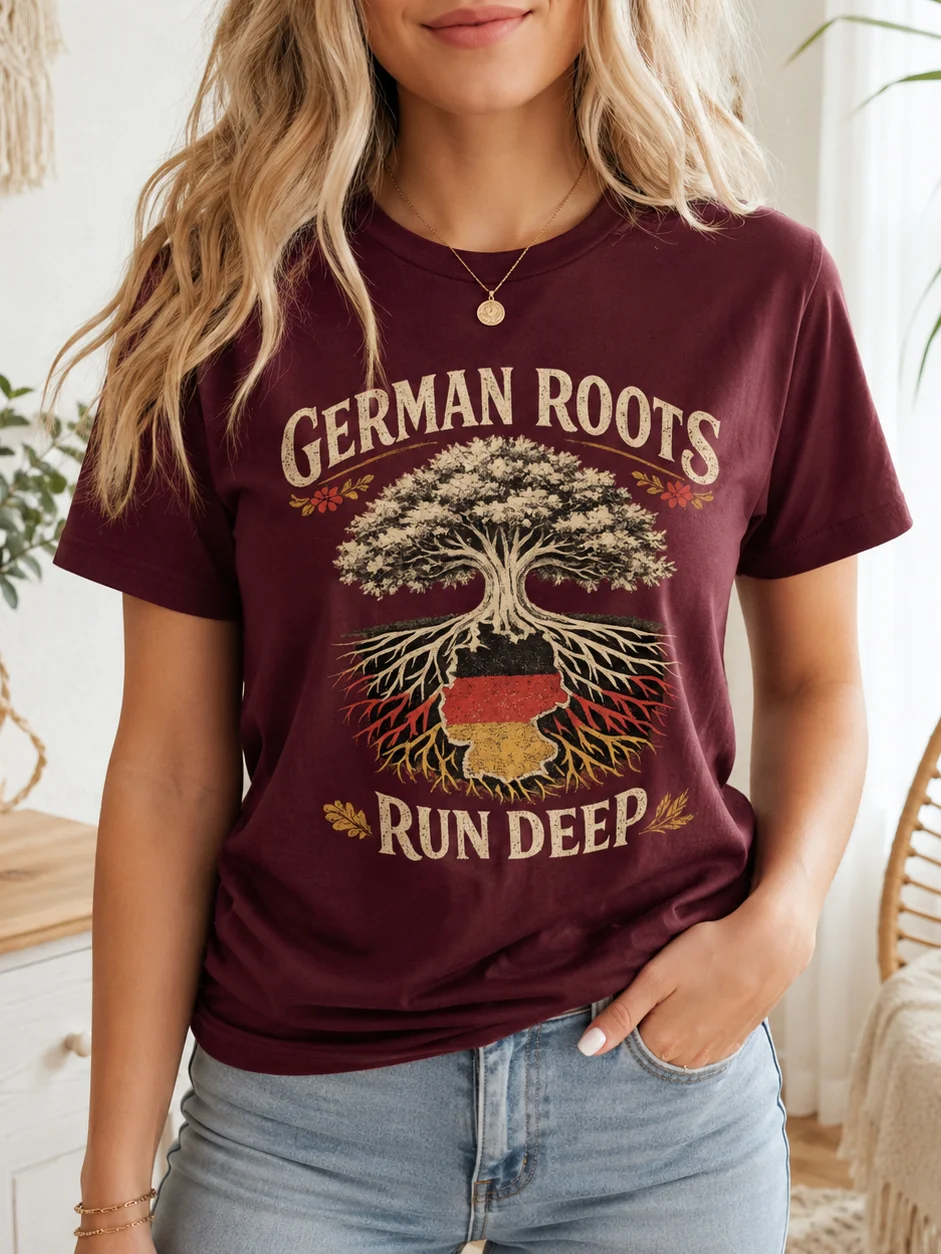
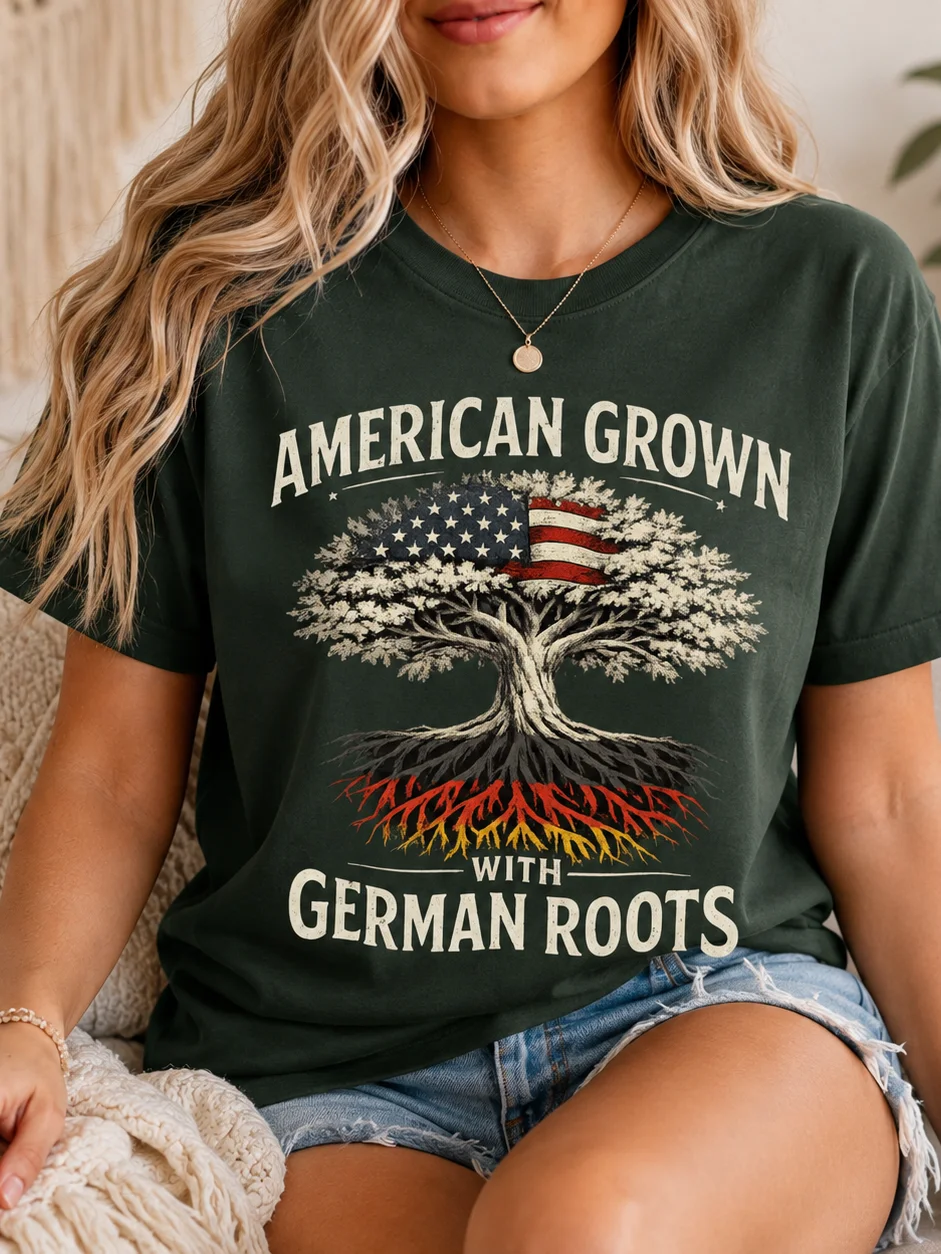
Wear the connection after giving it context
These designs can support a family gathering or everyday conversation, but the shared story and repeatable practice come first.
Frequently asked questions
Common questions
Do my children need to speak German to inherit German heritage?
No. Language can be a meaningful part of heritage, but it is not a test of belonging. A family may begin with names, greetings, songs or labels and learn more only when there is genuine interest.
What if I know very little about our German family history?
Start with what is known and label uncertainty honestly. One relative, photograph, recipe, place name or family phrase is enough for a first conversation. Do not turn guesses into facts.
What if our household has more than one heritage?
Make room for all of them. German heritage does not need to replace another parent’s or grandparent’s history. Children can learn that families carry several stories at the same time.
Should I correct my child when they lose interest in a tradition?
Adjust the activity rather than treating disinterest as disrespect. Children are more likely to keep a practice they can understand, help shape and return to voluntarily.