
On this pageGerman America was highly visible before the war
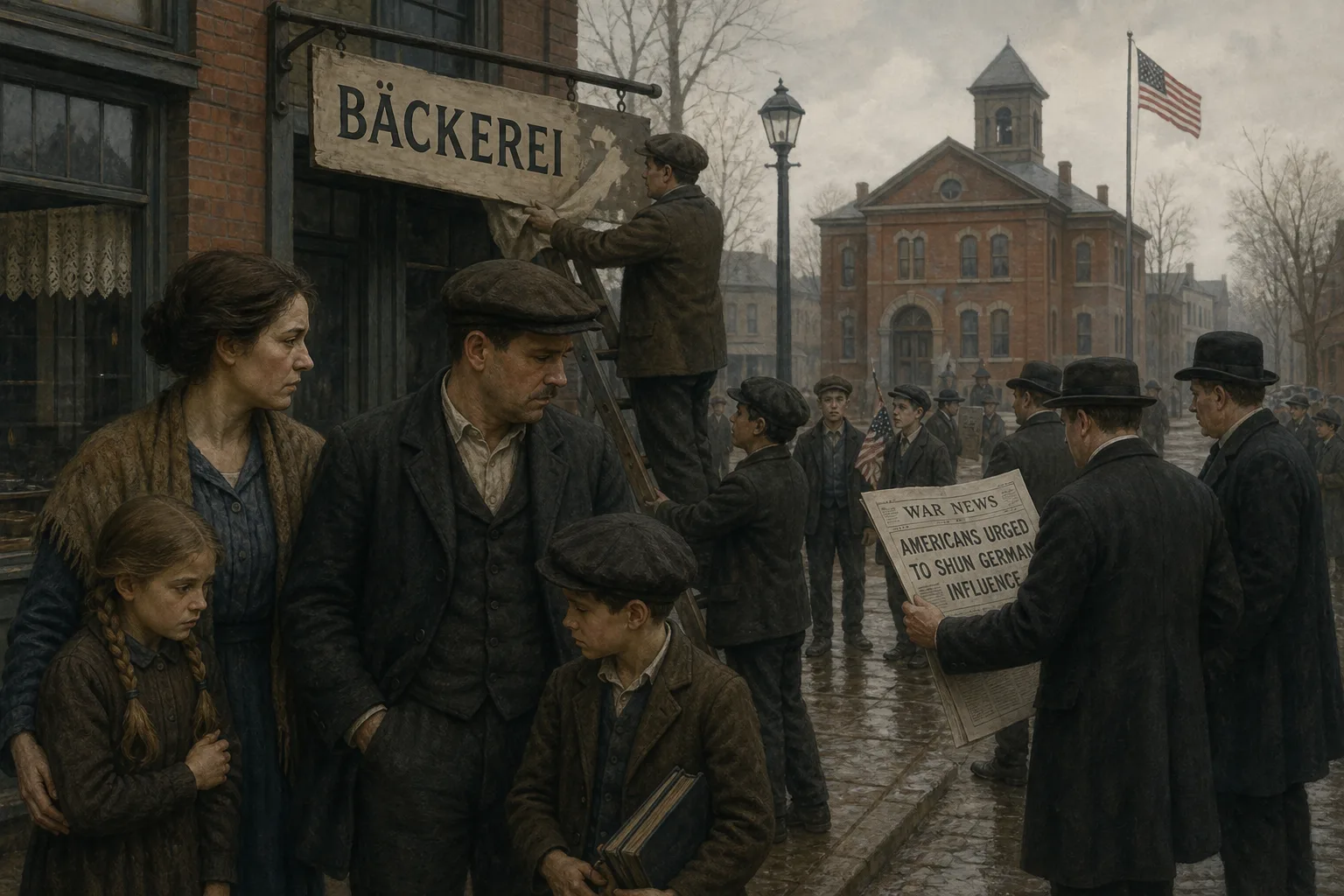
Anti-German sentiment during World War I did not begin with one law or affect every family the same way. It grew from wartime fear, propaganda, old cultural conflicts and pressure for national unity. After the United States entered the war in 1917, speaking, teaching or publishing in German could be treated as a sign of disloyalty.
The result was more than temporary insult. German-language institutions closed or changed, families reduced public use of German, and organizations removed visible ethnic markers. The damage helps explain why a culture that had once supported newspapers, schools, churches and clubs became much less visible within a generation.
The earlier history of German-American community building shows the scale of the public culture placed under pressure.
Different forms of wartime pressure
- Enemy alien
- A legal category applied under federal wartime authority to certain noncitizens who were nationals of an enemy country; it was not a synonym for every German American.
- Americanization
- Programs and pressures encouraging immigrants and their children to use English and adopt dominant civic norms.
- Vigilantism
- Private coercion or violence carried out outside ordinary legal process, often defended as patriotic action.
- Language restriction
- A state or local rule limiting foreign-language teaching or use in particular institutions.
German America was highly visible before the war
German was used in homes, churches, schools, newspapers, theaters and businesses across the United States. Large cities supported daily German-language papers, while smaller communities maintained clubs, parochial schools and mutual-aid societies.
That visibility made German Americans seem both established and separate. Many people saw bilingual institutions as normal parts of American pluralism. Others viewed them as obstacles to national unity.
When war began in Europe in 1914, those older disagreements became questions of loyalty. German Americans held varied opinions about Germany, Britain, neutrality and U.S. policy. Public debate often flattened those differences.
How wartime pressure developed
War began in Europe
German Americans faced political division over neutrality, Germany and the meaning of loyalty before U.S. entry.
The United States entered the war
Public pressure on German-language institutions intensified as federal mobilization began.
Restrictions and vigilantism spread
Enemy-alien rules, state language measures, renaming campaigns and private harassment affected communities unevenly.
Language restrictions continued after fighting ended
Some states maintained or expanded school-language controls in the postwar Americanization climate.
Meyer v. Nebraska
The Supreme Court struck down Nebraska’s restriction on teaching foreign languages to younger children.
U.S. entry changed the public climate
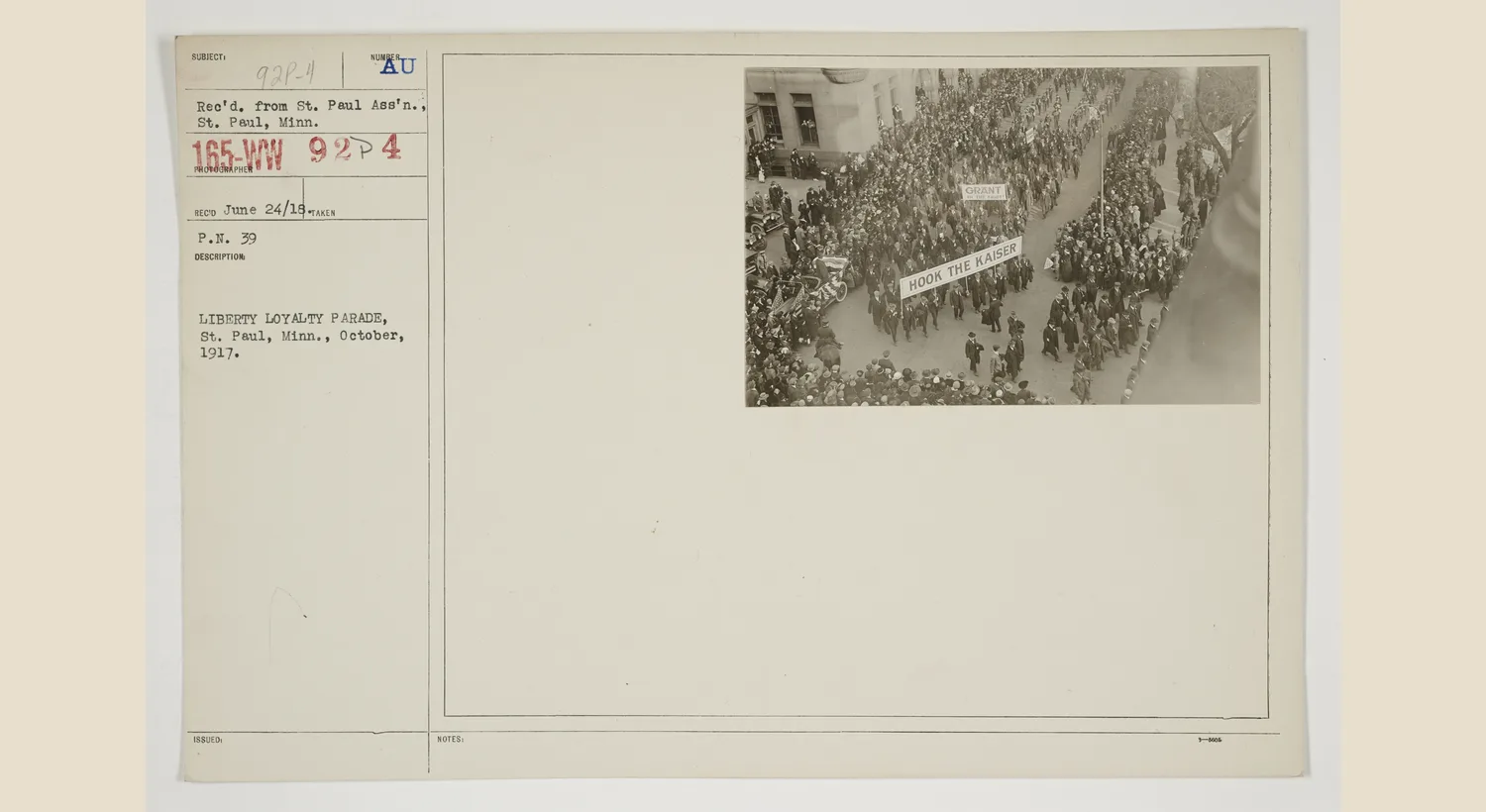
President Woodrow Wilson asked Congress for a declaration of war against Germany in April 1917. Mobilization required the government to identify threats, raise troops, control information and build public support.
German identity then became vulnerable to association with the enemy state. The distinction between German nationals, naturalized citizens, U.S.-born descendants and people with only distant ancestry often disappeared in popular suspicion.
German Americans responded in different ways. Some emphasized military service and patriotic fundraising. Some changed institutional language. Some defended constitutional rights. Others withdrew from public ethnic life.
Federal enemy-alien rules had a specific legal scope
Federal wartime authority imposed registration and movement restrictions on certain noncitizen enemy nationals. National Archives holdings preserve photographs, registration affidavits and related records.
Those controls were serious, but they did not legally classify every person of German descent as an enemy alien. Citizenship, sex, age and changing regulations affected who fell within the system.
Keeping the legal category narrow matters. Broad public hostility reached U.S. citizens and families who were not subject to enemy-alien regulation. Legal authority and ethnic suspicion overlapped without being identical.
State and local restrictions reached schools and language
States and local communities adopted measures aimed at foreign-language education. Nebraska’s law prohibited teaching subjects in languages other than English and restricted modern foreign-language instruction for younger students.
Robert Meyer was convicted for teaching a child to read German in a parochial school. In 1923, the Supreme Court reversed the conviction in Meyer v. Nebraska, recognizing constitutional protection for the teacher’s and parents’ liberty.
The decision came after the war. It did not restore the institutions already weakened or reverse the language choices families had made under pressure.
Private harassment could be more immediate than law
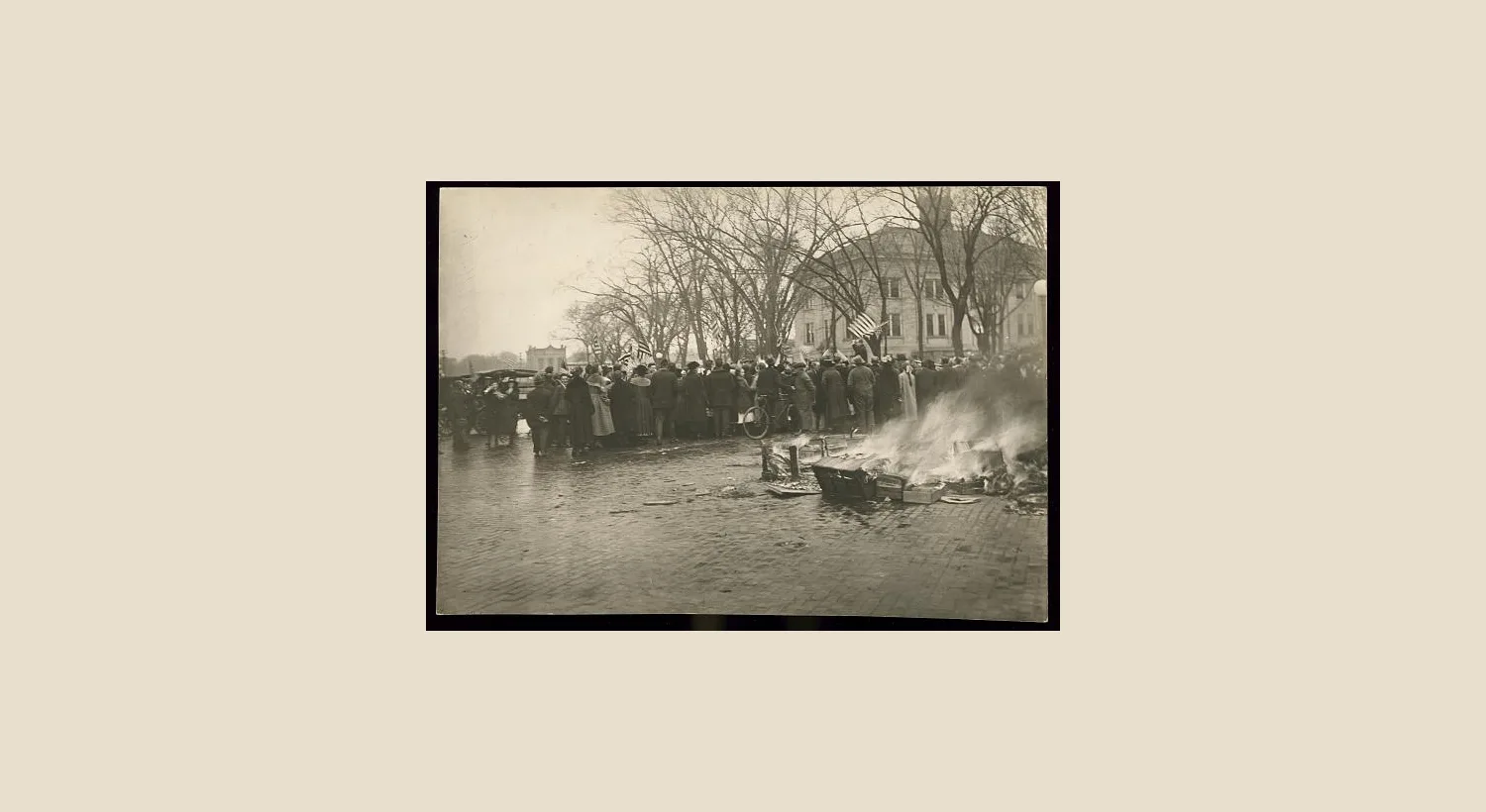
Communities saw boycotts, forced displays of loyalty, attacks on German books and music, threats and physical violence. Sauerkraut became “liberty cabbage” in popular retellings; orchestras reduced German works; organizations and businesses adopted less German names.
The details varied, and some famous stories have been exaggerated. The broader pattern is well documented: individuals could face consequences from neighbors, employers and local organizations even when no law prohibited their language or surname.
Private coercion also made formal rights difficult to use. A person may have had the legal right to speak German while deciding that doing so was unsafe for a child, business or church.
Wartime pressure was not one uniform national ban
The federal government outlawed German culture everywhere.
Federal regulation, state laws, local decisions and private coercion operated through different rules and actors.
Their combined effect could feel comprehensive even though no single policy covered every institution.Only recent immigrants were affected.
Public suspicion also reached naturalized citizens and U.S.-born descendants with German names, churches or institutions.
Popular hostility often ignored legal status and generational distance.Newspapers lost readers, advertising and freedom to maneuver
The history of German-language newspapers explains why a closure meant losing a civic institution, not merely one source of headlines.
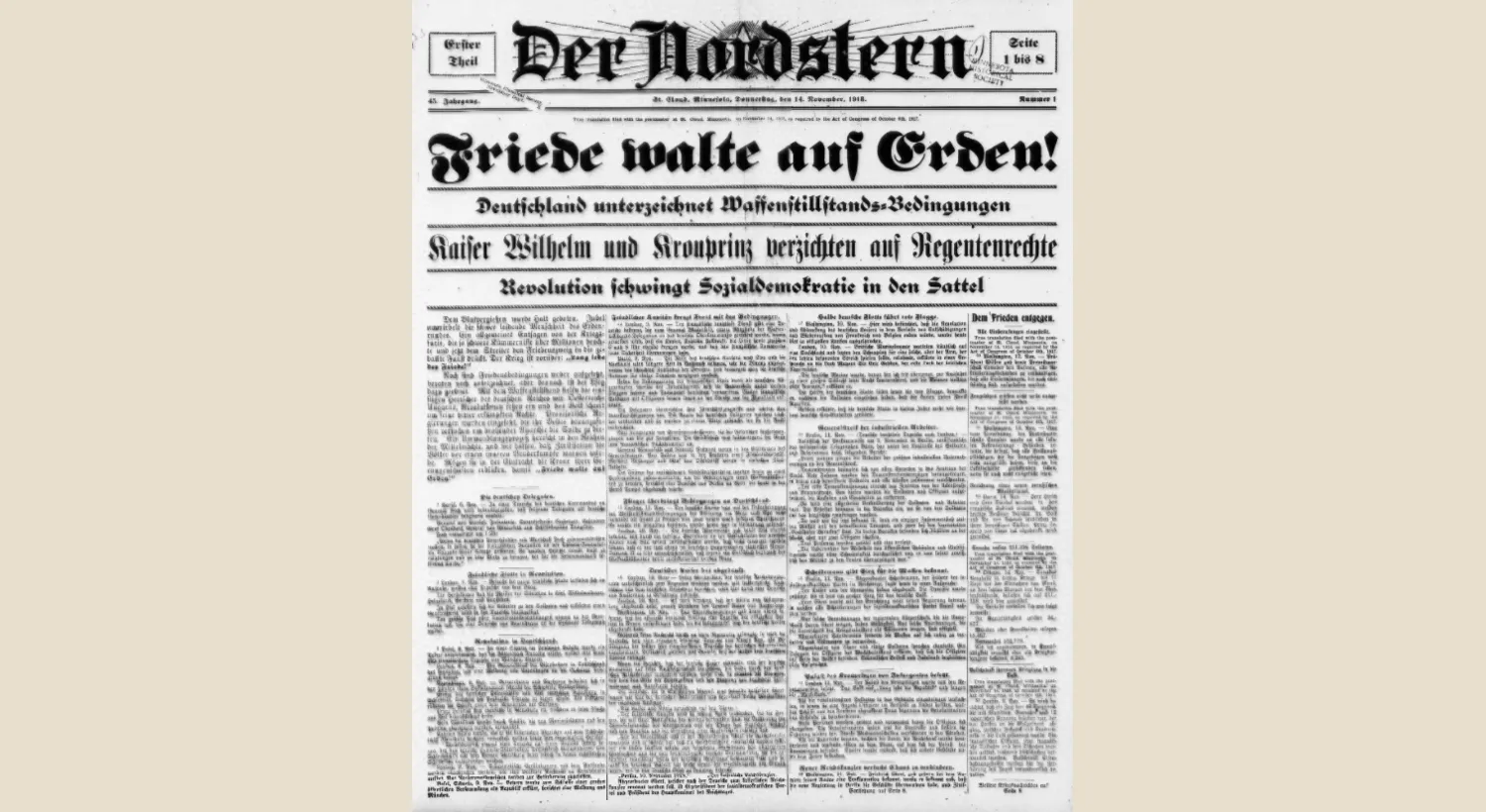
German-language newspapers faced a difficult choice. They had to report a war against Germany to readers with varied loyalties while demonstrating commitment to the United States.
Postal scrutiny, political attacks, declining advertising and subscriber fear weakened papers. Some switched to English, merged or closed. Others survived but served a shrinking audience.
The decline was not created entirely by war. English use had already increased among younger generations. The war made publishing in German more costly and less socially secure.
Music, clubs and churches changed public presentation
German singing societies, Turnvereine, churches and social clubs had made ethnic life visible. During the war, some organizations reduced German programming or adopted English names.
Churches faced particular tension because language was tied to worship and schooling. A congregation could change the language of services to protect its institution while older members still understood German best.
These changes were not simple proof that people abandoned their heritage. They were decisions made under unequal risk, often with no satisfying option.
Businesses separated themselves from German identity
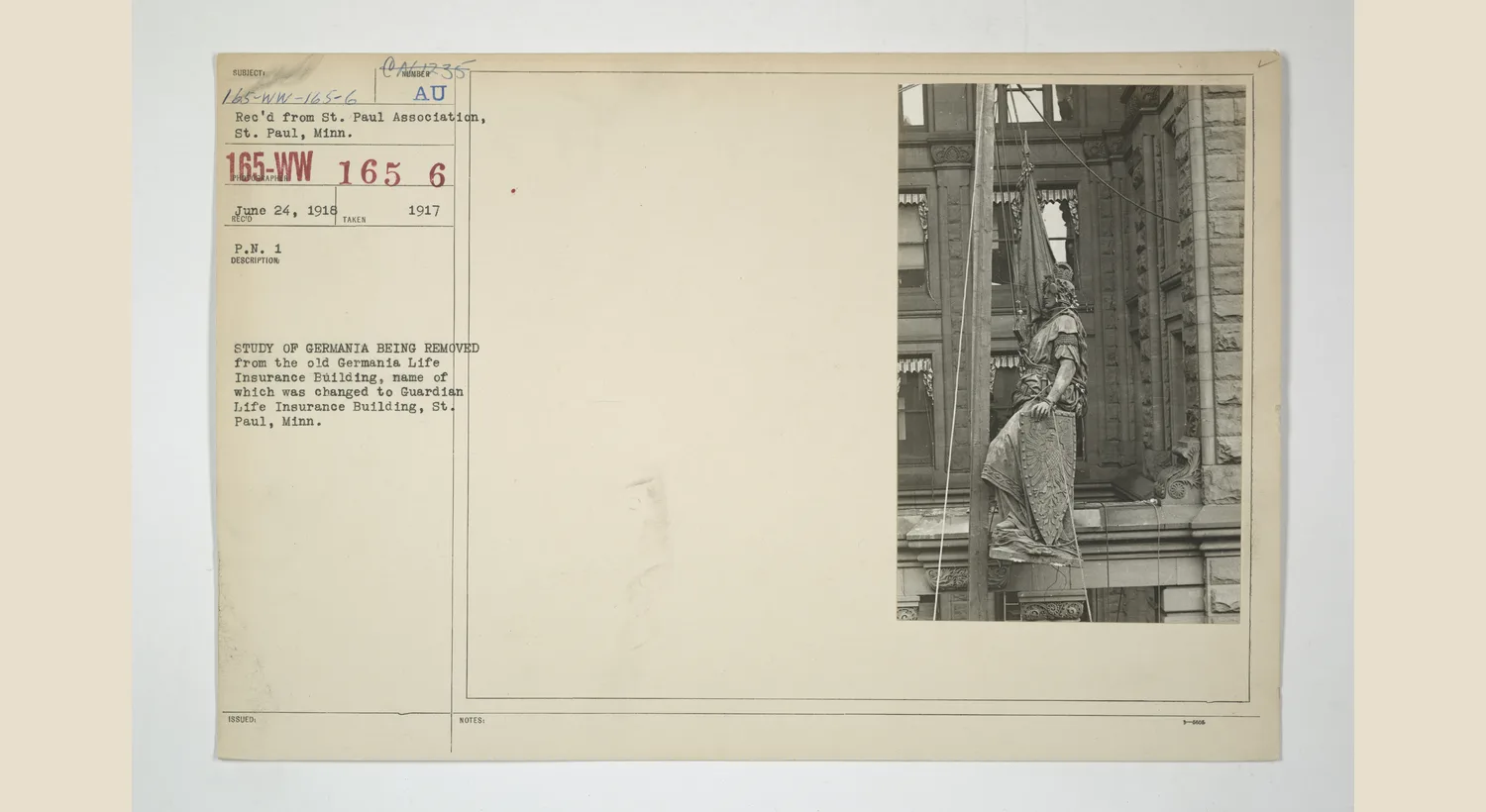
Breweries were prominent targets because German names, beer culture and political influence were highly visible. Wartime temperance campaigns linked alcohol with German interests, strengthening a movement that already existed.
Restaurants, shops and family firms sometimes changed names or advertising. A new name could protect sales, simplify pronunciation or signal loyalty. The motive must be documented rather than assumed.
Commercial pressure shows how assimilation could occur without a formal command. If customers avoided a German business, changing its public identity became an economic survival decision.
Military service did not automatically end suspicion
Large numbers of German Americans served in the U.S. military. Families purchased bonds, joined relief work and participated in mobilization.
Patriotic action could challenge accusations, but it did not always erase them. People were sometimes expected to perform loyalty more visibly because of their ancestry.
The burden was unequal: other citizens could disagree about policy without having their family language treated as evidence against them.
The war accelerated family language loss
Language shift was already underway through schools, workplaces, marriage and generational change. Wartime hostility added fear and stigma.
Parents who had grown up bilingual sometimes chose English for their children. Teachers and churches reduced German. Newspapers disappeared. Once those institutions weakened together, later families had fewer places to use the language even after hostility declined.
This helps explain a common descendant experience: grandparents or great-grandparents spoke German, but did not pass it forward or rarely discussed why.
The legacy was silence as well as assimilation
One household-level consequence appears in the record-based history of German surname changes.
After the war, many German Americans blended more fully into a broad white American identity. That process brought social security and opportunity, but it also obscured the coercion behind some changes.
Family stories may remember that “we stopped speaking German” without preserving the local law, school decision or workplace pressure involved. Other families shifted gradually and had no dramatic break.
A responsible account leaves room for both. Wartime persecution was real, but not every loss can be traced to one incident.
Why Meyer v. Nebraska matters
The Supreme Court decision is important because it recognized that government could not use Americanization to eliminate parents’ and teachers’ liberty so broadly.
It is sometimes treated as a clean ending to language suppression. It was not. Court decisions operate after institutions and habits have changed. A constitutional victory could protect future teaching without rebuilding a closed school or restoring confidence.
The case therefore belongs to both civil-liberties history and the history of German-American decline.
What the period changed permanently
World War I narrowed the public space available for German-American difference. German identity did not disappear, but it became safer when expressed through ancestry, food or private family custom than through newspapers, schools and political institutions.
That shift helps explain the modern visibility of festivals and surnames alongside the relative absence of German fluency.
Understanding the pressure does not require claiming that every descendant is the victim of a hidden family trauma. It requires recognizing that assimilation was shaped by power as well as preference.
Geography changed the intensity of the experience
Anti-German pressure depended heavily on local conditions. A city with large, established German institutions could offer networks of support, yet those same institutions were highly visible targets. A smaller town might have fewer formal restrictions but expose one family or teacher to intense personal scrutiny.
State politics mattered. Language laws, school systems and enforcement practices differed. Newspaper coverage could magnify a local incident into a broader campaign. Rural and urban communities therefore cannot be described with one national sequence beyond the major federal milestones.
This regional variation is not a reason to minimize the pattern. It is a reason to document who acted, under which authority and with what consequence in each place.
Race and citizenship shaped who could assimilate
German Americans were increasingly incorporated into a broad category of white Americans during and after this period. Public conformity, English use and military service could make German ancestry less socially visible over time.
That pathway was not equally available to all immigrant or racialized groups. The history of German assimilation belongs inside a larger American history of citizenship and race, not as a universal immigrant model.
Recognizing this distinction prevents a simple story in which every ethnic group supposedly faced the same pressure and then disappeared into the mainstream in the same way.
Children experienced the change through institutions
Adults made decisions about newspapers, businesses and organizations, but children encountered the consequences at school and church. A child could hear German at home while being told that English alone belonged in the classroom.
When parochial schools reduced German instruction, families lost a major route of literacy. Spoken language may survive for a time without schools, but reading and writing are harder to maintain across generations without formal support.
The result was not only fewer fluent speakers. It was a break in access to letters, newspapers, hymns and records that earlier generations could read directly.
Public memory often preserves symbols rather than mechanisms
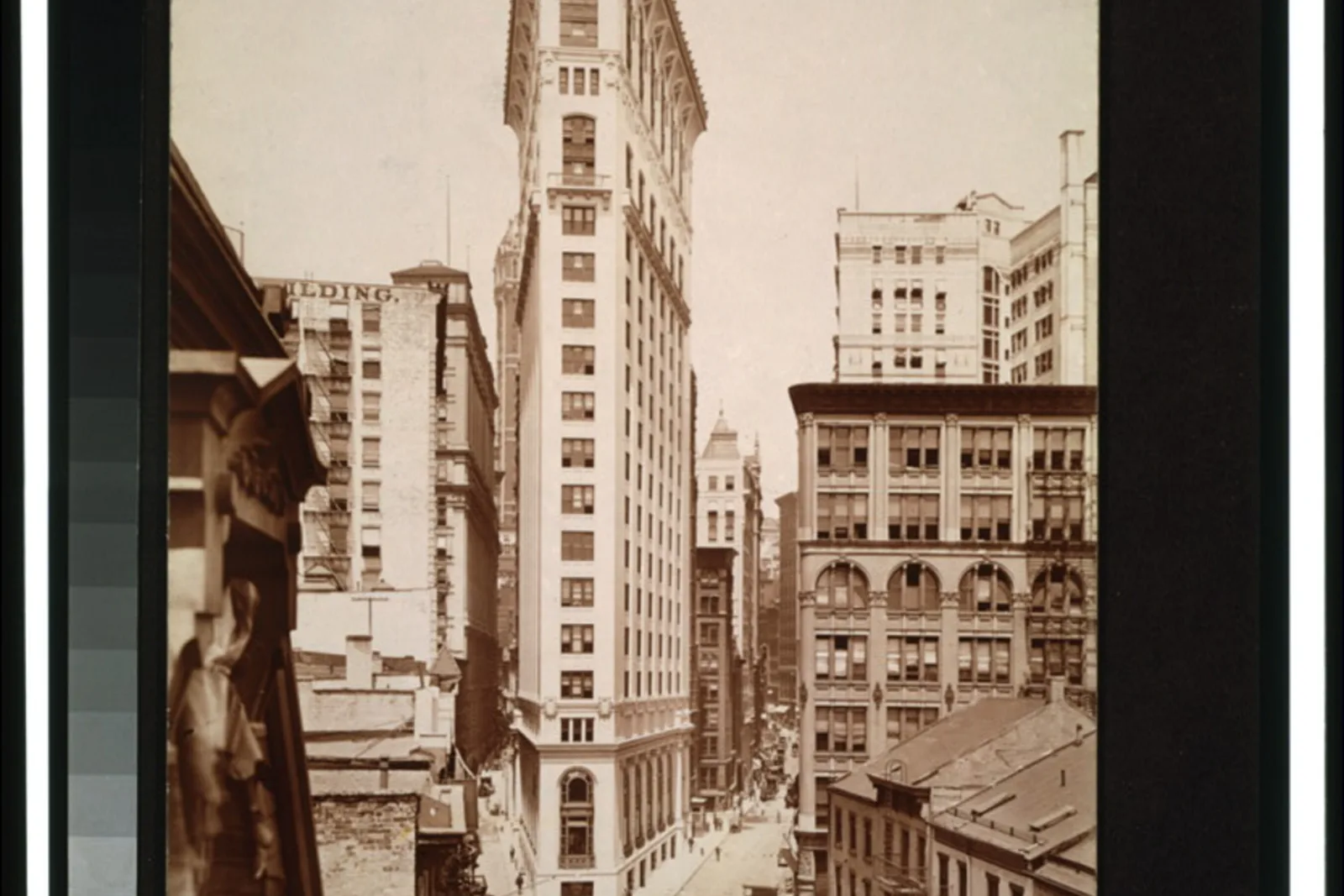
Later accounts remember renamed foods, removed music or dramatic acts of violence because those examples are vivid. The quieter mechanisms—lost advertising, changed curricula, cautious parents and club decisions—may have had wider cumulative effects.
A balanced history includes both. Spectacular incidents reveal the emotional climate, while institutional records show how language and public identity contracted over time.
This distinction also helps families research their own histories. The absence of a dramatic story does not mean wartime pressure was irrelevant. A church minute book, school policy or city directory may show change that no descendant remembered as a single event.
A careful present-day expression
German-American roots without turning hardship into merchandise
These modern designs appear only after the historical account and are not memorabilia of wartime persecution.

Frequently asked questions
Common questions
Were all German Americans classified as enemy aliens?
No. Enemy alien was a federal legal category focused on certain noncitizens; public hostility reached much more broadly.
Was German legally banned everywhere?
No. Restrictions differed by state and locality, while private pressure also shaped behavior.
What did Meyer v. Nebraska decide?
The Supreme Court invalidated Nebraska’s restriction on foreign-language teaching to younger children in 1923.