

On this pageMany variants existed before immigration
German surnames changed in America through a mixture of everyday adaptation and deliberate choice. A clerk might record a name by sound. A family might adopt an English spelling. A business owner might shorten a name for customers. A court might formalize a new form during naturalization. During World War I, a visibly German name could also attract hostility.
The familiar Ellis Island story is usually the wrong starting point. Immigration inspectors worked from passenger manifests prepared before arrival. To understand a real family name, follow the spelling across documents and identify when one form became consistent.
Use the German immigration timeline first when the family’s arrival period is still uncertain.
Four kinds of surname change
- Spelling variant
- A different written form that may refer to the same family without reflecting a formal decision.
- Anglicization
- Adapting spelling, pronunciation or form to fit English-language use.
- Translation
- Replacing a German word-name with an English equivalent, as when Müller becomes Miller in some families.
- Legal name change
- A change recognized through a court or another legally authorized process.
Many variants existed before immigration

German was not standardized in every place and record during the periods when many ancestors emigrated. Dialect, handwriting, literacy and local clerical habits affected spelling.
A surname could appear differently in church registers, military documents and civil records before the family left Europe. Umlauts might be written, omitted or represented with an added “e.” Fraktur and handwritten scripts created transcription problems for later indexers.
This means the earliest American variant may not be the first change. Researchers need the last reliable European records as well as the first American ones.
How a surname could change across generations
Variants already existed
Dialect, handwriting, church records and local spelling could produce several forms before a family reached the United States.
English records multiplied forms
Census takers, clerks, employers and families recorded names according to sound, habit and available spelling conventions.
Naturalization became more standardized
Federal forms created clearer paper trails, although courts and procedures still varied.
German names carried new risk
Wartime hostility encouraged some families and businesses to adopt less visibly German forms.
One branch could settle on a different spelling
School, marriage, military, Social Security and other records gradually made a chosen form more consistent.
Ellis Island did not routinely rename immigrants
Passenger names were entered on ship manifests before arrival, usually by steamship companies at the port of departure. U.S. inspectors used those lists to examine passengers.
An inspector could correct or annotate a record, and mistakes could occur. That is different from routinely assigning a new American surname to someone at the inspection desk.
The myth remains attractive because many families did use different names after immigration. Ellis Island provides a dramatic moment, while the actual change may have unfolded gradually in schools, workplaces, courts and households.
The Ellis Island name-change story
An immigration officer replaced the family's surname because it was difficult to spell.
Inspectors generally checked passengers against manifests prepared before arrival.
The new form may have begun earlier, later or through several independent record makers. The manifest is evidence to compare, not the automatic cause.Clerks wrote what they heard and understood
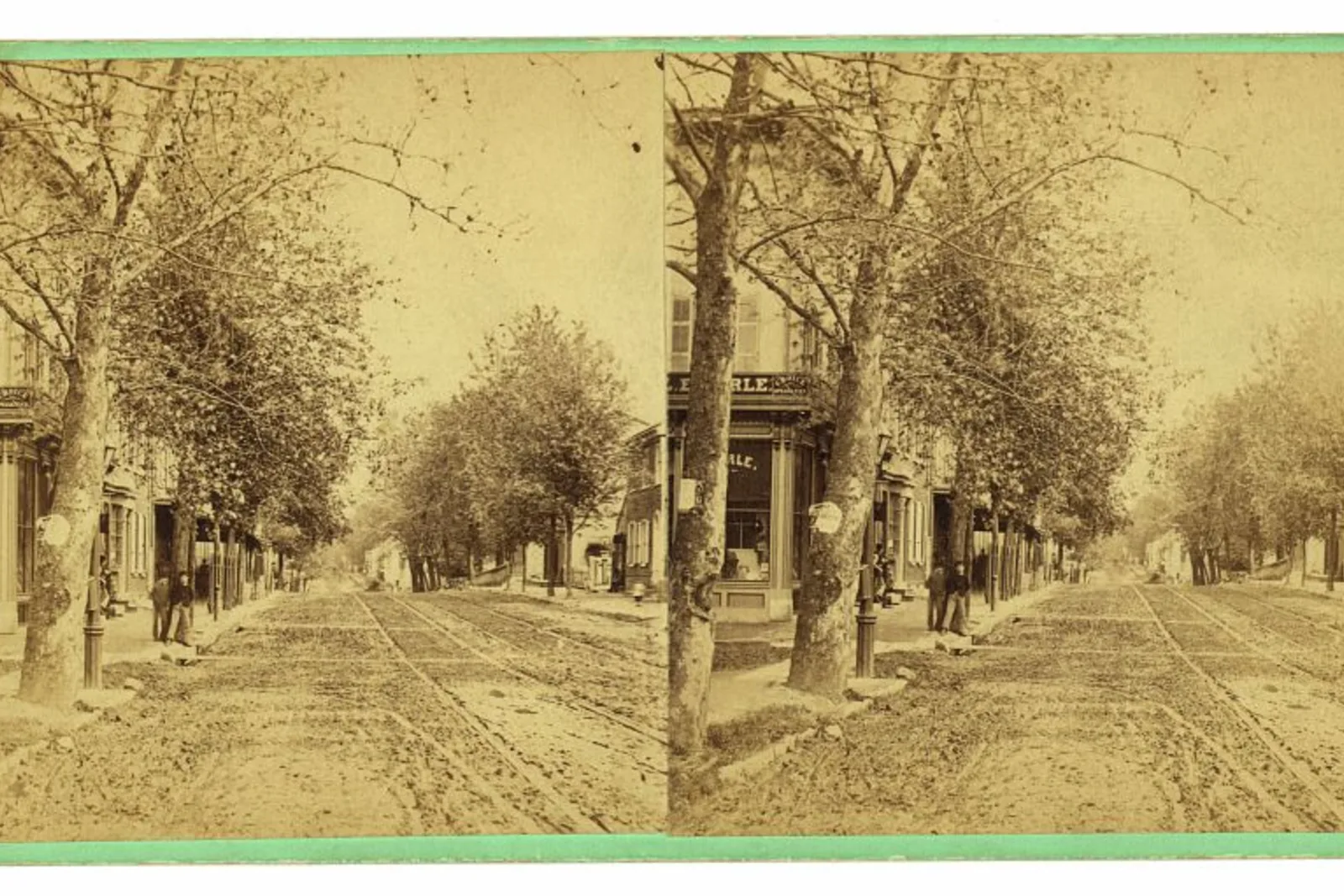
Census enumerators, county clerks, priests, ministers and employers worked with names across accents and languages. Some asked the person to spell the name; others wrote a form that seemed reasonable.
A person might use one spelling in German and another in English. Family members did not always insist on consistency because modern identity documents and databases did not yet make exact matching as important.
Indexes add another layer. A modern database spelling may be the indexer’s reading of old handwriting, not the spelling on the original page.
Families adapted names for English pronunciation
Some names changed because an English-speaking community pronounced the original form differently. Families might remove letters, alter consonants or choose a shorter version.
These changes could be practical rather than shame-driven. A new form might make business, school or correspondence easier while the German pronunciation continued at home.
Different branches could make different choices. That is why cousins descending from the same immigrant may use Schmidt, Schmitt, Smith or another form without one branch necessarily being “correct.”
Translation produced familiar English surnames
Occupational surnames sometimes had clear English equivalents. Müller could become Miller; Schneider could become Taylor in some cases; Schumacher could become Shoemaker.
A translation is not automatic. Many families kept the German form, and similar English surnames may have unrelated origins. Researchers should not convert a name simply because a dictionary equivalent exists.
The evidence lies in linked records for the same people, relationships, places and dates.
Naturalization could formalize a chosen name
Naturalization records sometimes document a name used on arrival, a current name and a requested legal change. Judicial ceremonies can provide authority for the change under applicable procedure.
Not every naturalization file contains such evidence, and not every name change happened during naturalization. Before 1906, records varied greatly by court. After federal standardization, forms became more consistent but still need to be read as individual documents.
A petition, certificate or court order is stronger evidence of a formal change than a later family story alone.
World War I made German names more costly
The wider climate documented in anti-German sentiment during World War I can support a wartime explanation, but it cannot prove one family’s motive by itself.
After U.S. entry into World War I, German language and institutions faced suspicion. Businesses removed German branding, organizations renamed themselves and families emphasized American loyalty.
A surname could affect employment, sales, school treatment or social safety. Some people adopted less German forms in response.
That motive should not be assumed solely from timing. A change around 1917 might reflect war pressure, but it might also continue an earlier spelling pattern. Newspaper notices, business directories, court files and family correspondence can distinguish the possibilities.
Businesses often changed before every family record did

A shop or brewery needed a public name that customers would accept. Owners could alter signs and advertisements without immediately changing every legal document.
A business name therefore may show public adaptation before a census, deed or vital record shows a family surname change.
City directories are useful because they can trace the same person or address annually. They may reveal a gradual transition, such as alternating spellings before one form becomes stable.
Schools and military records encouraged consistency
Children encountered English spelling through teachers and school records. A teacher’s preferred form could become the spelling used by the next generation.
Military records, draft registrations and later Social Security systems also encouraged fixed identity forms. Once a spelling appeared across employment, tax and benefit records, changing it became less convenient.
This administrative consistency can make a gradual family choice look like one formal event when viewed only from later documents.
Women’s surname histories can be harder to see
Marriage commonly changed a woman’s surname in American records, which can hide the timing of changes in her birth family. Obituaries may use married names and omit or alter maiden names.
Women also participated in choosing how a household name was spelled, even when legal records centered a husband’s identity. Letters, church records and children’s birth records may preserve forms missing from naturalization files.
Research should follow each person rather than treating the male immigrant’s papers as the whole family history.
How to identify when the change occurred

Start with a timeline rather than a favorite explanation.
- Record the exact spelling on the passenger manifest image.
- Find the person in early census, church, city directory and naturalization records.
- Track relatives, addresses, occupations and birthplaces to confirm identity.
- Note which record makers used each spelling.
- Look for a court order, petition notation, newspaper notice or consistent self-signature.
- Separate a formal legal change from an informal public name.
The first appearance of a spelling is not always the moment it was chosen. A record may simply be the earliest surviving example.
Evidence is stronger than surname folklore
Family stories often preserve a true emotional core: an ancestor felt pressure, a teacher changed a spelling, or a business needed a simpler name. Details may shift over generations.
Treat the story as a research lead. Ask who changed the name, where, approximately when and whether the change was legal, commercial or informal.
A conclusion can remain qualified. “The family used Miller consistently by 1918, possibly under wartime pressure” may be more accurate than claiming a specific official renamed them.
What a variant can and cannot prove
A variant can help connect records when it appears with matching relatives, locations and dates. It cannot by itself prove ethnicity, motive or legal identity.
Common names create special risk. A Miller in one county is not automatically the same person as a Müller on a manifest. The name is one identity feature among several.
Genealogy becomes more reliable when researchers preserve every observed form instead of replacing them all with the modern surname.
Why families remember Ellis Island
Ellis Island symbolizes arrival, separation and becoming American. It gives a complicated process a clear setting and a memorable official.
The myth also protects family dignity. Saying an officer changed the name can feel easier than discussing discrimination, illiteracy, business pressure or a deliberate decision not explained to children.
Correcting the mechanism should not dismiss the family’s experience. The useful response is: the arrival record probably did not create the new name, so let us find where the change actually appears.
The surname is evidence of adaptation, not lost authenticity
A changed surname does not make one branch less connected to its ancestry. Names are used in social systems, and families adjust them for many reasons.
The research goal is not to restore one supposedly pure spelling. It is to document the forms people used, the settings in which they used them and the evidence for any motive.
That approach respects both the German record and the American life built afterward.
Build the conclusion from record layers
Local notices can supply another layer; the history of German-language newspapers explains how to evaluate the publication before relying on one item.

A strong surname study separates records made by the person from records made about the person. A signature, petition or family letter may show chosen usage. A census entry or index may reflect another person’s spelling.
Dates also matter. If a new form appears only once and the older form returns, the entry may be clerical variation. If the new form appears in a self-signature, business advertisement and later legal record, deliberate adoption becomes more plausible.
This layered method may not produce one dramatic moment. It can still identify a defensible period of transition and distinguish formal change from ordinary variation.
Preserve every form in the research file
Modern family trees often standardize a person under one surname. That helps display, but it can hide evidence. Record the preferred display name while preserving each observed variant with its source and date.
Doing so improves search results and prevents circular reasoning. A researcher who records only the expected German form may miss later English records; one who records only the modern form may miss the immigrant and European trail.
The variants are not clutter. They are part of the family’s adaptation history.
A modern family-history expression
Keep the connection without claiming proof
These designs can mark a present-day German-American connection, but records—not apparel—establish surname history.

Frequently asked questions
Common questions
Were surnames changed at Ellis Island?
Passenger manifests were generally prepared before arrival, so inspectors did not routinely invent new surnames there.
Why did Müller become Miller?
Some families translated or anglicized the name, but the change must be demonstrated through linked records.
Can naturalization records show a legal name change?
Sometimes. Petitions, certificates or court orders may record both names, depending on period and court procedure.