

On this pagePrint created a public world across distance
German-language newspapers were once ordinary parts of American public life. They did not sit outside the country’s history. They reported elections, advertised jobs and shops, argued about religion and labor, printed letters from readers, and helped newcomers understand the towns where they lived.
Their importance is easy to miss today because the surviving story is often reduced to two facts: German immigration was large, and German public culture faded during World War I. The press connects those facts. It shows how German-speaking Americans built institutions before the war, how varied those institutions were, and why losing a newspaper meant more than losing a source of headlines.
The German immigration timeline helps place that publishing growth beside the major arrival waves.
Terms that clarify the story
- German-language newspaper
- A newspaper published mainly or partly in German for readers in the United States.
- German-American press
- A broader category that can include bilingual and English-language publications serving German-American communities.
- Vereinsleben
- The associational life of clubs, societies, choirs, lodges and other voluntary organizations that often supplied news and subscribers.
- Americanization
- A broad and contested process through which institutions and families adopted English and prevailing American civic norms.
Print created a public world across distance
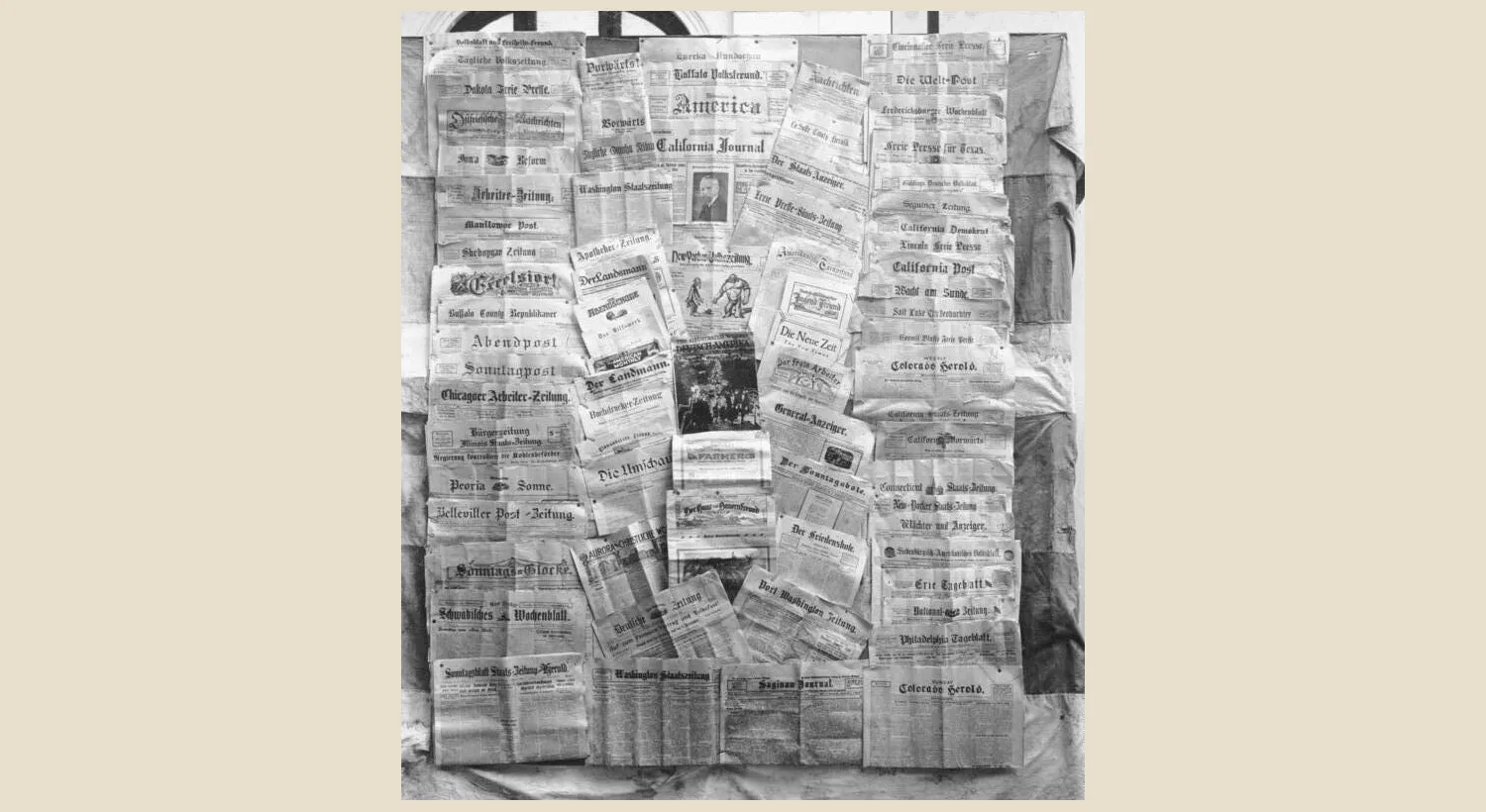
A newspaper gave scattered readers a shared calendar. It announced church services, meetings, lectures, concerts, deaths, arrivals and political events. A reader might use the same issue to follow European news, compare local candidates, find a boarding room and learn which business employed German-speaking staff.
That mix mattered because “German American” did not describe one church, class or political position. Readers came from different German-speaking regions and arrived in different decades. Some were Catholic, some Lutheran, some Jewish, some freethinking. Some supported labor movements, while others owned businesses. A paper could represent one part of that world without representing all of it.
The colonial beginning was small but significant
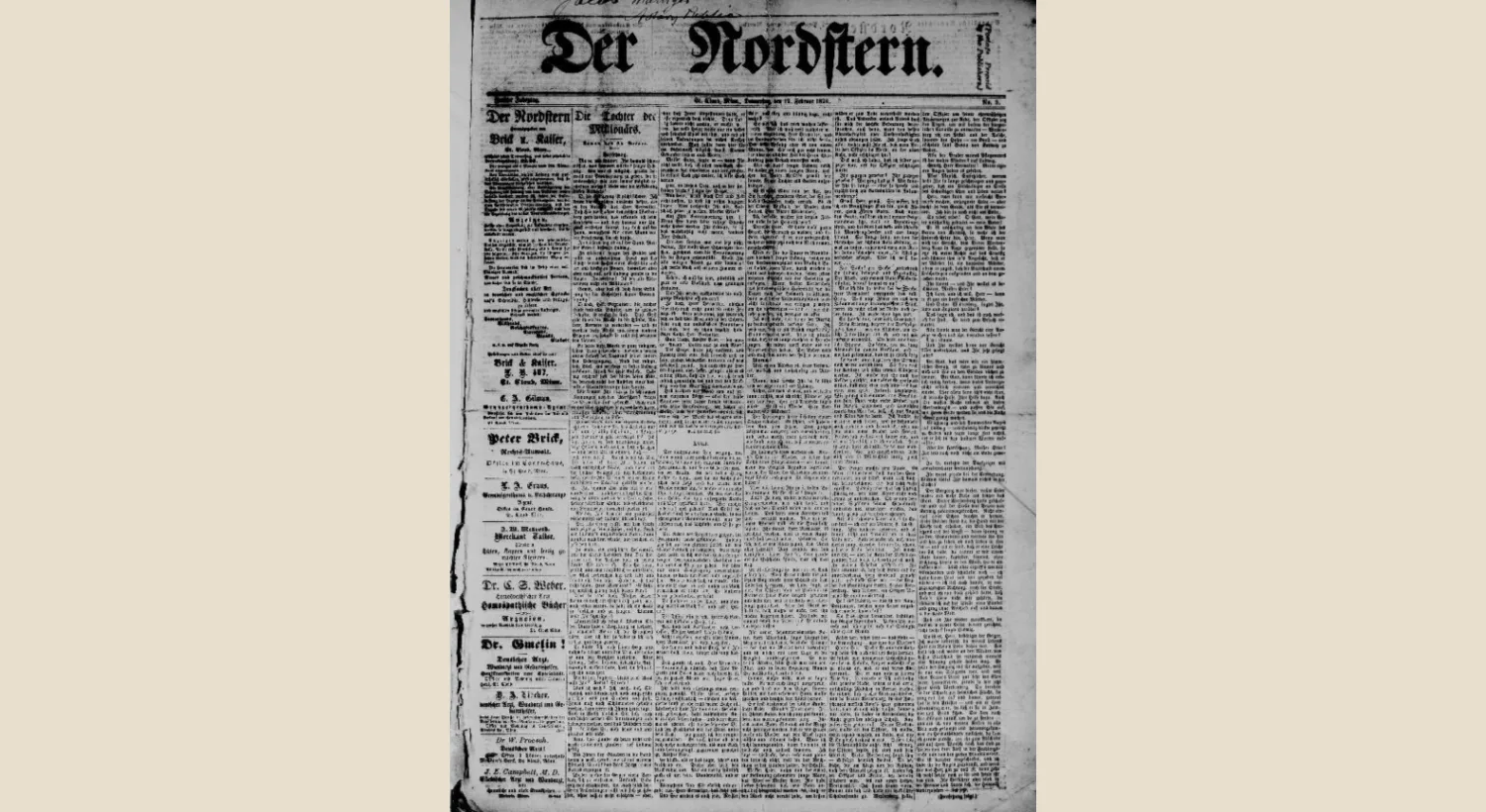
German-language print appeared early in Pennsylvania, where a substantial German-speaking population developed during the colonial period. The Philadelphische Zeitung is commonly identified among the earliest German newspapers in British North America.
An early title does not prove that every German-speaking settler read newspapers or shared one political culture. It does show that publishers believed a German-reading public existed and that information could circulate in a language other than English within colonial society.
As printing expanded, German almanacs, religious texts and newspapers reinforced one another. Literacy, faith and practical information often traveled through the same networks of printers, ministers, schools and book dealers.
How German-language newspapers rose and declined
An early colonial newspaper
The Philadelphische Zeitung appeared in Pennsylvania, showing that German-language print had a place in colonial public life.
Immigration expanded the press
Growing German-speaking populations supported newspapers in cities and regional centers across the United States.
A broad press ecosystem
Daily, weekly, religious, labor, commercial and political publications served distinct readers rather than one single German-American viewpoint.
War transformed the environment
Anti-German pressure, advertising losses, censorship concerns and public suspicion weakened many publications.
English increasingly dominated
Some papers survived, but later generations and institutions increasingly used English, narrowing the audience for a full German-language press.
Mass immigration turned papers into urban institutions
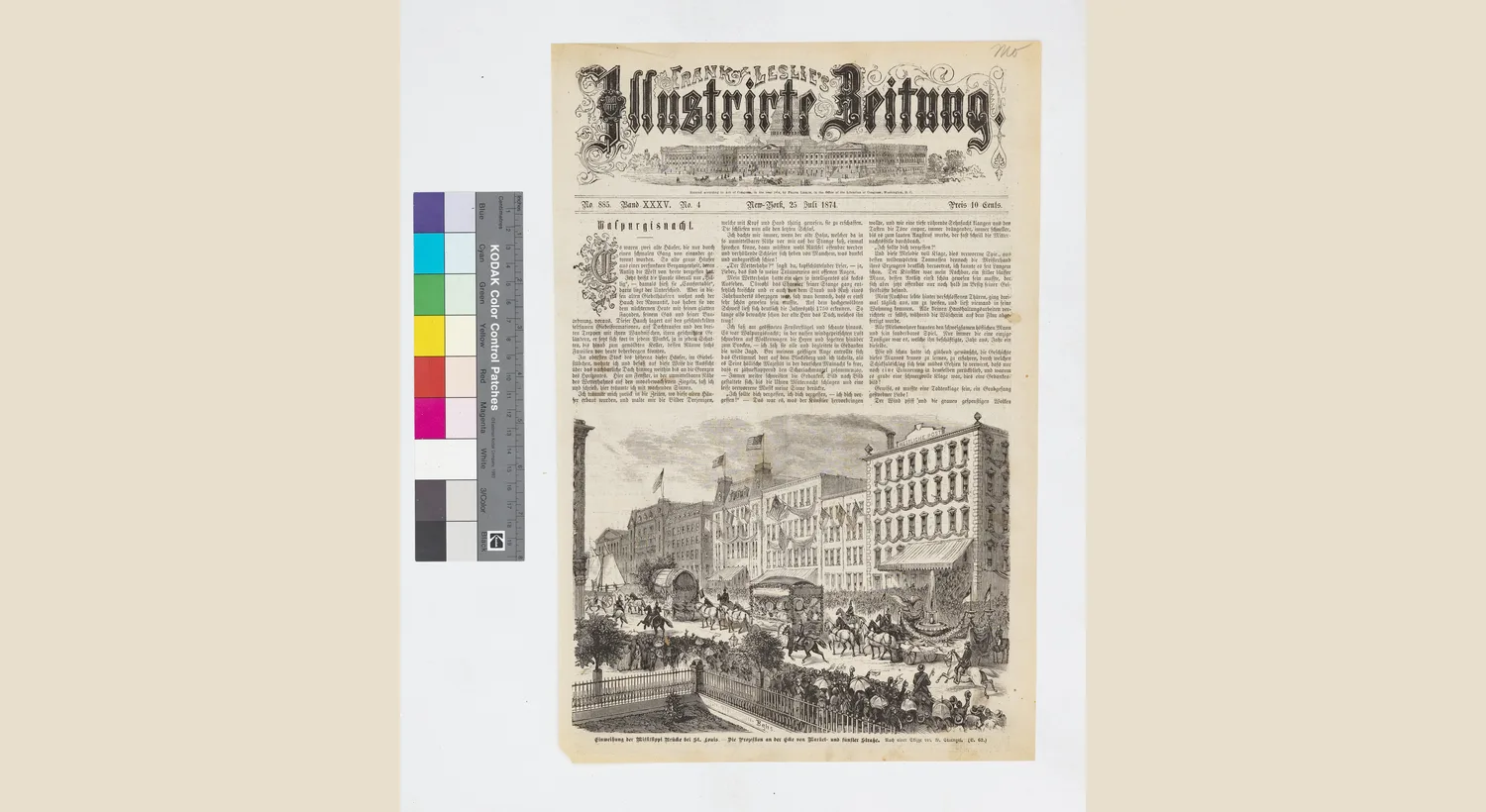
The nineteenth-century immigration waves created audiences large enough to support daily papers in major cities and weekly papers in smaller communities. Cincinnati, St. Louis, Milwaukee, Chicago, Baltimore, New York and other centers developed dense German-speaking institutional networks.
A newspaper was one business inside that network, but it also connected the others. Breweries and shops bought advertisements. Clubs sent announcements. Political organizations supplied speeches and resolutions. Churches debated schools and doctrine. Mutual-aid groups reported benefits and meetings.
Editors often acted as political figures, though their influence should not be exaggerated. A paper could mobilize readers, but subscribers did not automatically accept its editorial line. Competition among titles is evidence of disagreement as much as unity.
The press carried politics in several directions
The political refugees described in the history of the German Forty-Eighters strengthened some reform newspapers, but they never represented every editor or reader.
German-language newspapers supported abolition, labor reform, liberal republicanism, Catholic interests, conservative business views and many other positions. The Forty-Eighters helped strengthen some urban newspapers and reform networks after the failed revolutions of 1848, but they were one strand in a much larger population.
This is why phrases such as “the German vote” can mislead. Newspapers tried to shape voting blocs, yet religion, class, region, generation and local conditions divided German-speaking voters. The press made those arguments visible.
The Civil War sharpened political stakes. Some newspapers strongly supported the Union and antislavery politics; others approached the war differently. A responsible history keeps those differences instead of turning German-language publishing into a single heroic tradition.
Newspapers also helped families navigate America
Not every page was ideological. Practical reporting often mattered more in daily life. Papers published shipping news, local ordinances, court notices, market prices, school information and advertisements for skilled labor.
They also helped maintain relationships with Europe. Reprinted dispatches and letters allowed readers to follow political events and family regions abroad. That did not make them less American. Nineteenth-century American newspapers routinely mixed local, national and international reporting.
For immigrants learning English, a German paper could serve as an interpretive bridge. It explained American institutions in familiar language while also preserving vocabulary, literary culture and regional references.
The press was not one unified voice
German-language newspapers spoke for one German-American community.
They represented competing communities, parties, denominations and business interests.
The number and variety of titles are evidence of a large reading public, but also of internal disagreement.German papers existed only because immigrants refused to learn English.
Many bilingual households and institutions used German and English for different purposes.
Language maintenance and adaptation could occur at the same time, especially across generations.World War I changed the cost of publishing in German
The broader account of anti-German sentiment during World War I follows the pressure beyond newspaper offices into schools, clubs and businesses.
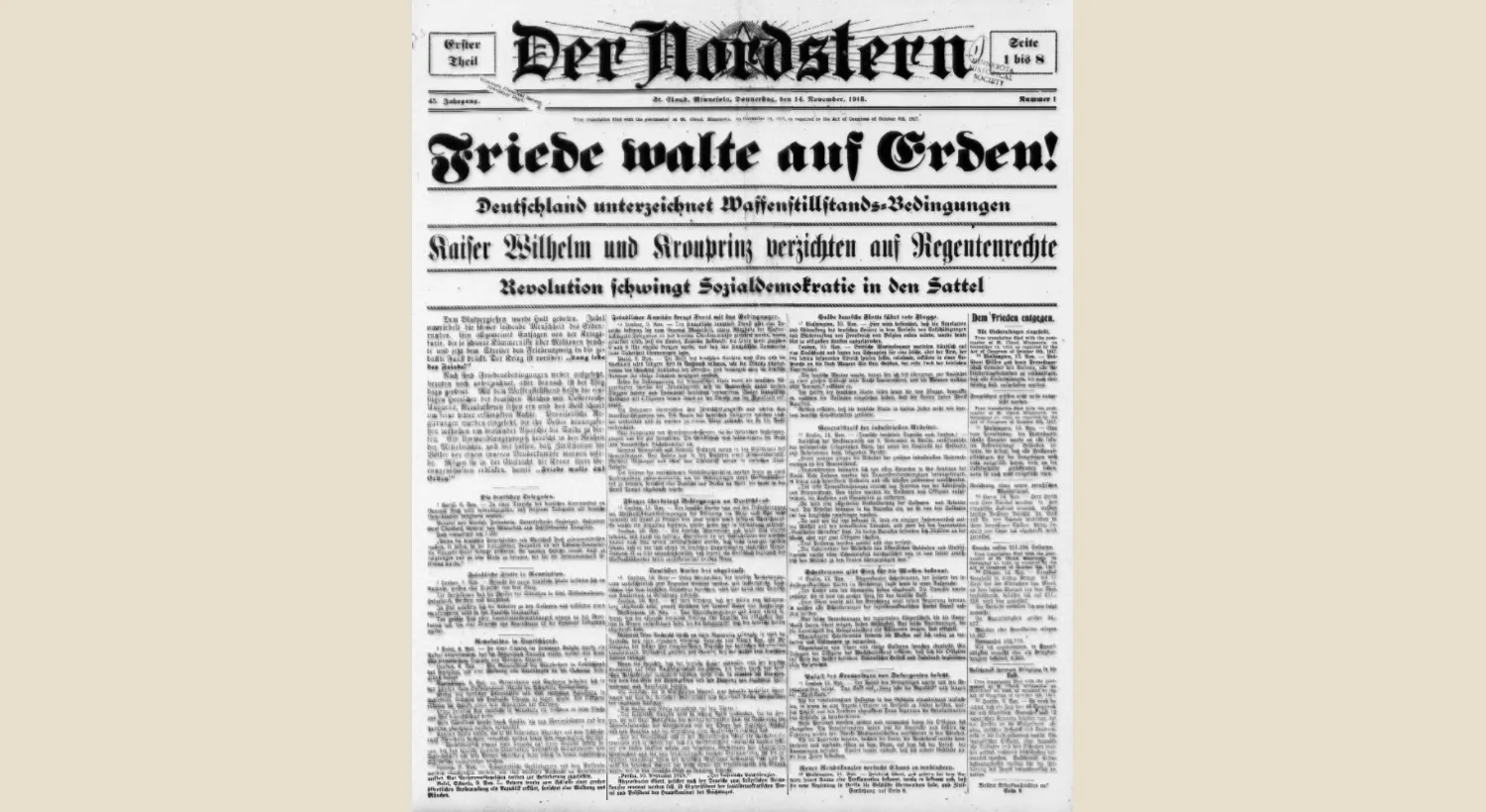
The United States entered World War I in April 1917. German-language institutions then faced a political climate in which language could be treated as evidence of doubtful loyalty.
Newspapers encountered several kinds of pressure. Advertisers and subscribers could withdraw. Postal and government scrutiny increased. Editors had to decide how to report the war and whether to reduce or abandon German content. Community leaders sometimes changed names or public language to signal loyalty.
The effect differed by city and publication. Some papers closed, some merged, some switched partly or fully to English, and some continued. The important point is not that one order ended the press everywhere. The war made an already difficult transition much faster and more public.
The decline had begun before the war
Children of immigrants commonly learned English through schools, workplaces and public life. As generations changed, some readers no longer needed a German newspaper for local information. Large English-language papers also gained resources, circulation and advertising power.
Urban mobility weakened some neighborhood-based institutions. Immigration patterns changed. Radio later altered the media landscape. These pressures did not erase German overnight, but they reduced the market for a complete daily press in German.
World War I therefore works best as an accelerator. It attached stigma and risk to a language whose institutional base was already changing.
What survives in newspaper pages
Digitized German-language newspapers now preserve details that may not appear elsewhere. They can show how a community described itself, which organizations existed, what businesses served it and how public debates unfolded.
For family historians, advertisements, obituaries and local notices may provide names and relationships. A newspaper item is still evidence that needs interpretation. Political labels, translated place names and spelling variants can mislead when removed from context.
For cultural history, the papers reveal something broader: German-American life was not only private food and family memory. It once had a visible public language with editors, readers, institutions and arguments.
Why this history matters now
The disappearance of most German-language newspapers helps explain why descendants may inherit a surname or a recipe without inheriting the public world that once surrounded them. Language loss can look like an individual family decision when it was also shaped by schools, markets, war and institutional change.
Recovering that history does not require romanticizing every newspaper. Some were partisan, exclusionary or unreliable. Their value lies in showing a living public sphere with all its ordinary conflicts.
The strongest next step is to read a newspaper as a local institution: identify its city, years, politics, audience and competitors before using one article as representative of German Americans as a whole.
How historians should read the surviving press
A newspaper is not a transparent window into an entire community. It is a produced object with an editor, owner, political line, business model and intended readership. A strong reading therefore begins with the publication itself: where it appeared, how often it was printed, who financed it, which organizations advertised in it and whether a rival paper served the same city.
Editorials deserve special care. They show what editors wanted readers to believe, not automatically what every subscriber believed. Letters, advertisements, meeting notices and election results may reveal disagreement that an editorial page tries to smooth over. Comparing several titles is often more informative than collecting many examples from one paper.
Language also changed within individual publications. A title might remain German while printing more English material, or become bilingual before switching fully to English. That transition can mark a changing audience rather than one moment of cultural rejection. Researchers should record the language mix by date instead of assigning one permanent label to the publication.
Digitization creates its own limits. Surviving runs may be incomplete, optical character recognition works unevenly on Fraktur type, and catalog titles can hide mergers or minor spelling changes. A failed keyword search does not prove the newspaper never mentioned a person or event. Browsing by date, address, organization and surname variant remains necessary.
Newspapers linked local history with family history
For descendants, the press can help reconstruct institutions that family memory no longer names. A brief notice about a Sängerbund concert, church anniversary or mutual-aid payment may identify the social world surrounding an ancestor. Business advertisements can connect an address with an occupation. Death notices can identify relatives, hometown associations and burial societies.
Those clues become stronger when matched with census, church, city directory and civil records. A newspaper alone may repeat rumor, misspell a name or assume readers know local relationships. Used with other sources, it can explain not only who lived in a place but how people organized public life there.
The history of the press therefore belongs to both media history and the history of assimilation. When a newspaper disappeared, descendants lost a continuing record of local German-language life. Recovering even fragments can restore names, debates and institutions that broad national histories leave out.
That careful context keeps fragmentary evidence useful and proportionate.
Readers who want a broader shelf reference can browse a curated search for German-American history books. A book is most useful here when it identifies its sources and treats newspapers as competing institutions rather than one ethnic voice.
Browse German-American History Books
Search Amazon for German-American history books and compare author credentials, publisher, edition, citations, period covered, seller and returns.
Best for: Readers who want a longer account of German immigration, political exile and German-American public lifeA present-day connection after the history
German-American roots beyond the archive
These modern designs express family connection; they are not historical newspapers or evidence about an ancestor.


Frequently asked questions
Common questions
Were German-language newspapers politically unified?
No. Titles differed by city, party, religion, class and editorial leadership.
Did World War I alone end the German-language press?
No. The war accelerated language shift, market pressure and institutional decline already underway.
Can German newspapers help genealogy?
Yes. Obituaries, notices, advertisements and local reports can provide clues, but each item must be evaluated in context.