
On this pageThe idea began as a theory of childhood
Kindergarten entered American life through a chain of people, languages and institutions. German-speaking educators carried Friedrich Fröbel’s ideas into immigrant communities. English-speaking reformers translated and promoted them. Public-school leaders then adapted kindergarten to American cities.
That sequence matters because the familiar version often gives one person the entire credit. Margarethe Schurz, Elizabeth Peabody and Susan Blow each played an important role, but they did different work in different settings. The history is stronger when those roles remain distinct.
The movement grew through the schools, households and reform networks of established German-American communities.
Three distinctions behind the kindergarten story
- Kindergarten
- Fröbel's educational setting for young children, built around guided activity, play, songs, movement, nature and social learning.
- Fröbel gifts
- Designed learning materials such as balls, blocks and forms used to explore pattern, shape, movement and relationships.
- Public-school kindergarten
- A kindergarten administered as part of a public school system rather than a private household, charity or independent school.
- German-language kindergarten
- A kindergarten where instruction and songs were conducted mainly in German, often serving an immigrant community.
The idea began as a theory of childhood
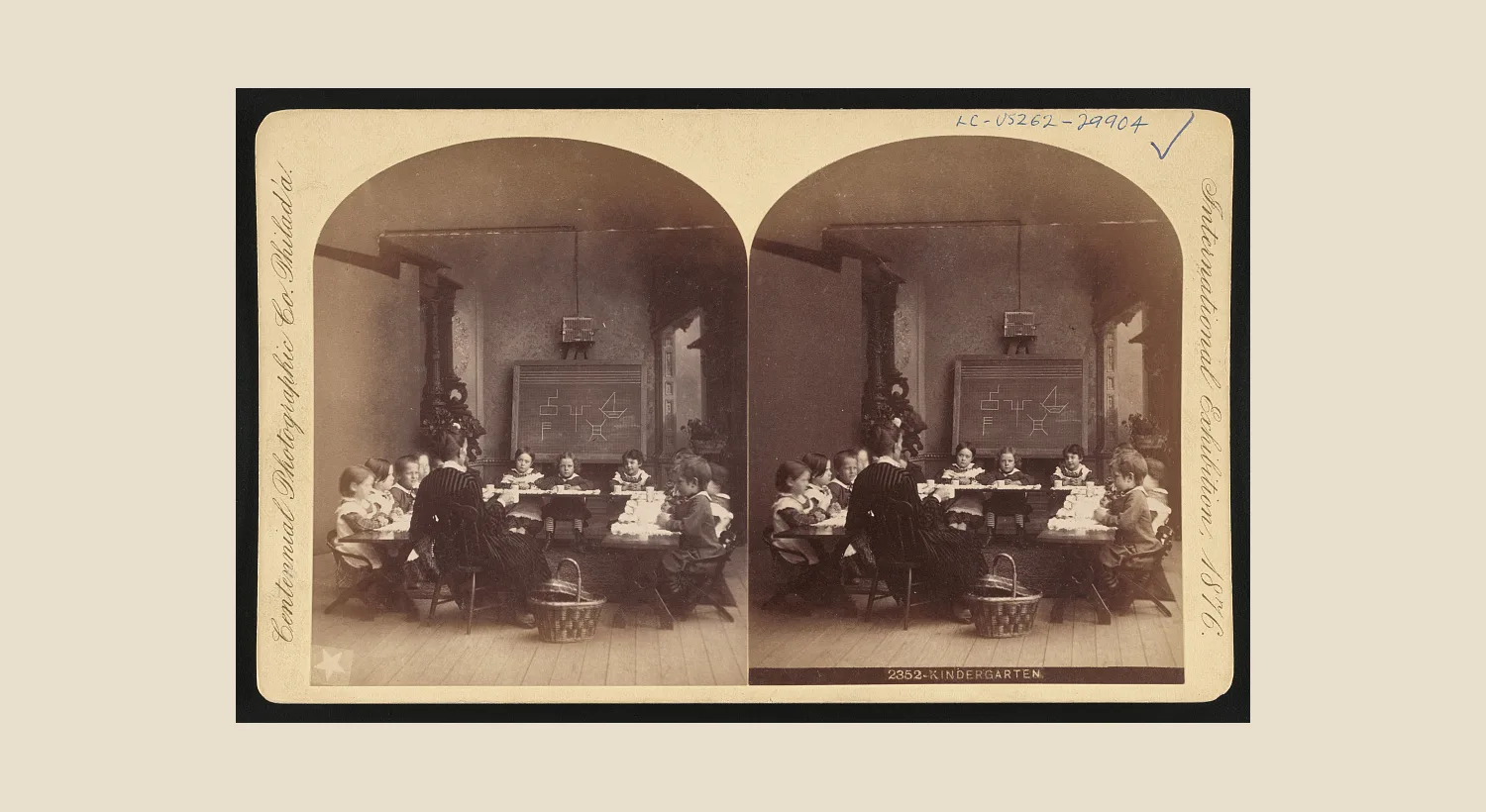
Friedrich Fröbel argued that early childhood deserved an educational form suited to young children. The kindergarten was not simply a smaller primary school. Its activities were intended to develop attention, coordination, imagination, language and cooperation through structured experience.
The German word means “children’s garden.” The metaphor suggested growth under thoughtful care, but Fröbel’s program was not unstructured freedom. Teachers organized songs, movement, stories, gardening and work with designed objects.
This combination of play and order made kindergarten recognizable as a distinct educational idea. It also made teacher preparation important. Adults had to understand the purpose behind an activity rather than merely occupy children.
German political conflict helped carry the movement abroad
Kindergarten spread during a period of political and social upheaval in the German states. Fröbel’s movement attracted reform-minded educators, including women seeking meaningful public roles. Political suspicion and restrictions in parts of Germany disrupted the movement.
German-speaking migrants then carried its practices into other countries. Their reasons for migration varied, and not every immigrant knew or supported Fröbel’s ideas. The important link is institutional: educators and families with direct experience of the movement established settings where it could be practiced in the United States.
How kindergarten moved into American education
Fröbel named the kindergarten
Friedrich Fröbel developed an educational setting centered on guided play, songs, movement, nature and carefully designed materials.
German-language kindergarten in Wisconsin
Margarethe Schurz organized a kindergarten for children in Watertown, Wisconsin.
The idea reached English-speaking reformers
Elizabeth Peabody studied and promoted kindergarten education, helping connect the German model to a wider American audience.
Public-school kindergarten in St. Louis
Susan Blow opened a kindergarten within the St. Louis public-school system and trained teachers.
Kindergarten spread and changed
Cities, settlement houses, teacher-training programs and public schools adapted kindergarten to local goals and institutions.
Margarethe Schurz created an early American example
Watertown’s place in this story makes more sense beside the wider settlement history of Germans in the Midwest.
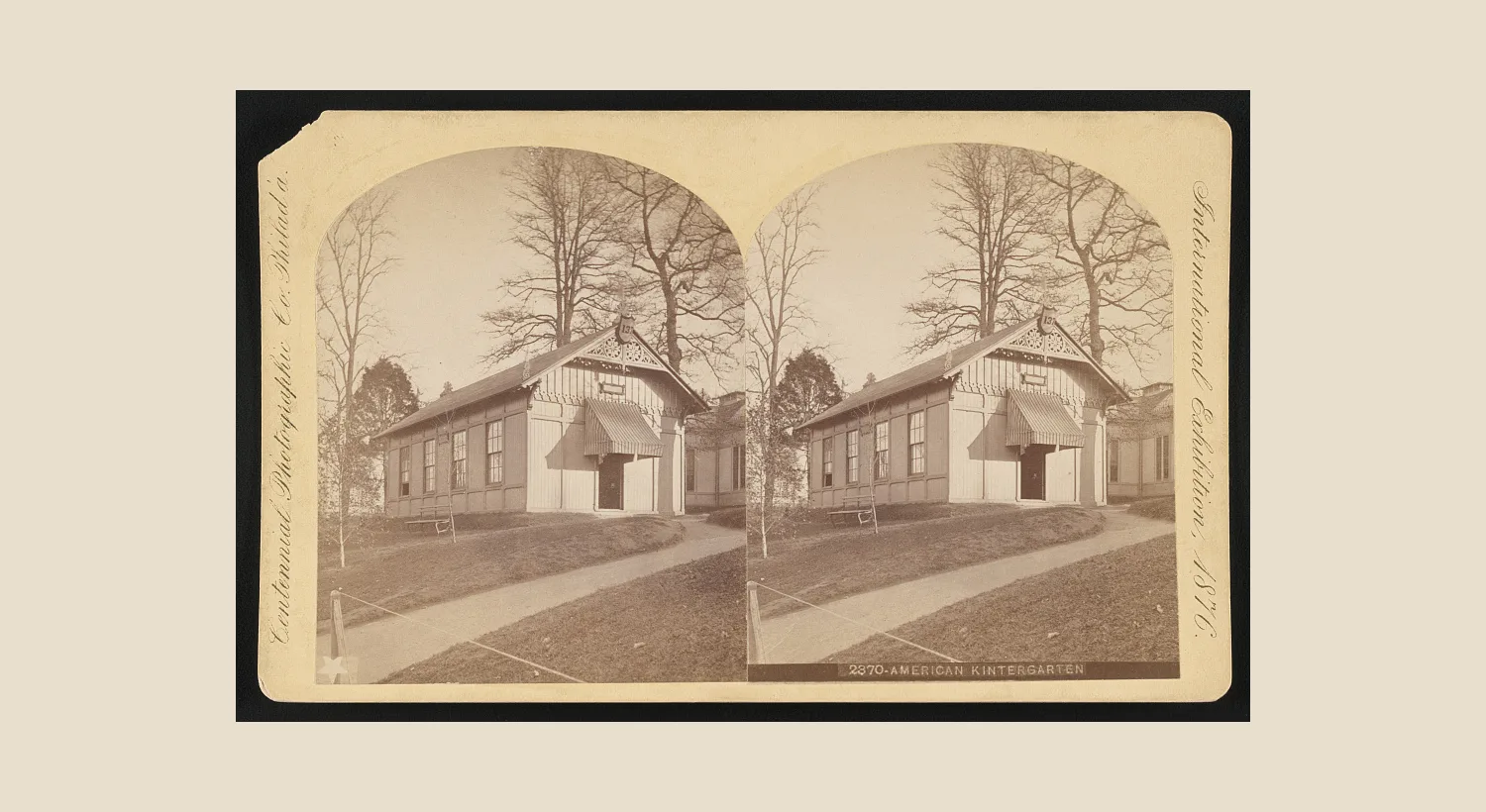
Margarethe Schurz had encountered Fröbelian education in Europe. In Watertown, Wisconsin, she organized a kindergarten for young children in a German-speaking community during the 1850s.
It is often called the first kindergarten in America. That label needs one qualification: histories distinguish among the first German-language kindergarten, the first English-language kindergarten and the first successful public-school kindergarten. They are not the same claim.
Schurz’s significance lies in practice. She demonstrated that Fröbel’s approach could function in an American community and that immigrant cultural knowledge could shape education beyond the immigrant household.
Elizabeth Peabody helped translate the movement
Elizabeth Peabody learned about kindergarten and became one of its strongest English-language advocates. Her work included writing, organizing and teacher education.
Translation here meant more than replacing German words with English ones. Peabody had to explain why the activities mattered and persuade American reformers that early childhood education deserved institutional support.
Her promotion widened the movement’s audience. It also began a pattern that continued as kindergarten grew: Fröbel’s original ideas were interpreted through American religious, civic and educational goals.
Susan Blow made public-school adoption visible
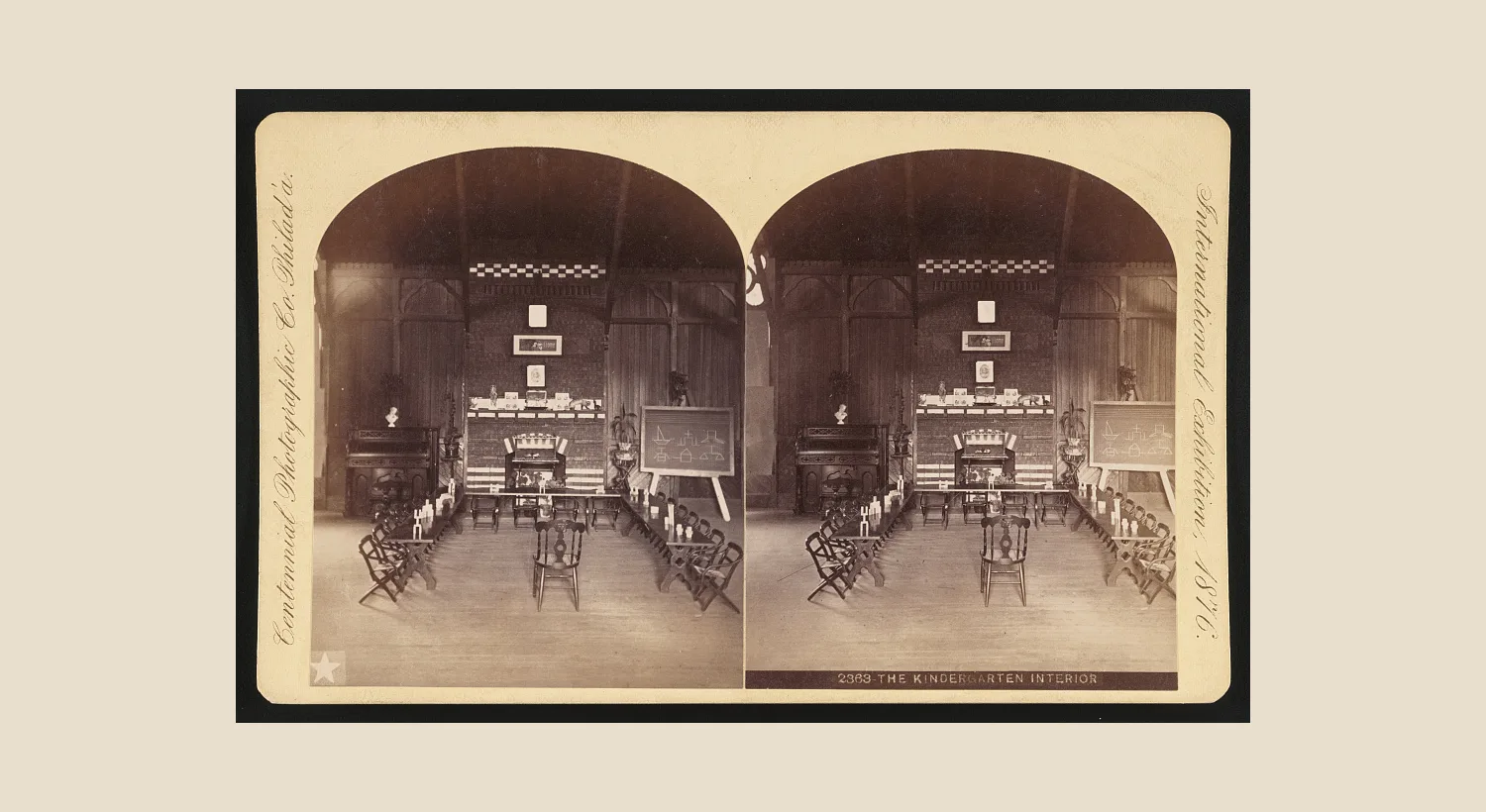
Susan Blow opened a kindergarten in the St. Louis public-school system in 1873 and developed teacher training around it. St. Louis became an influential example because kindergarten was no longer only a private experiment.
Public-school adoption changed the scale of the idea. It brought kindergarten into debates about budgets, curriculum, teacher qualifications and the purpose of public education.
Blow did not simply repeat Schurz’s work in English. She operated inside a different institution with different responsibilities. Keeping that distinction avoids turning a networked history into a relay race with one winner.
The Fröbel gifts were tools, not toys without purpose
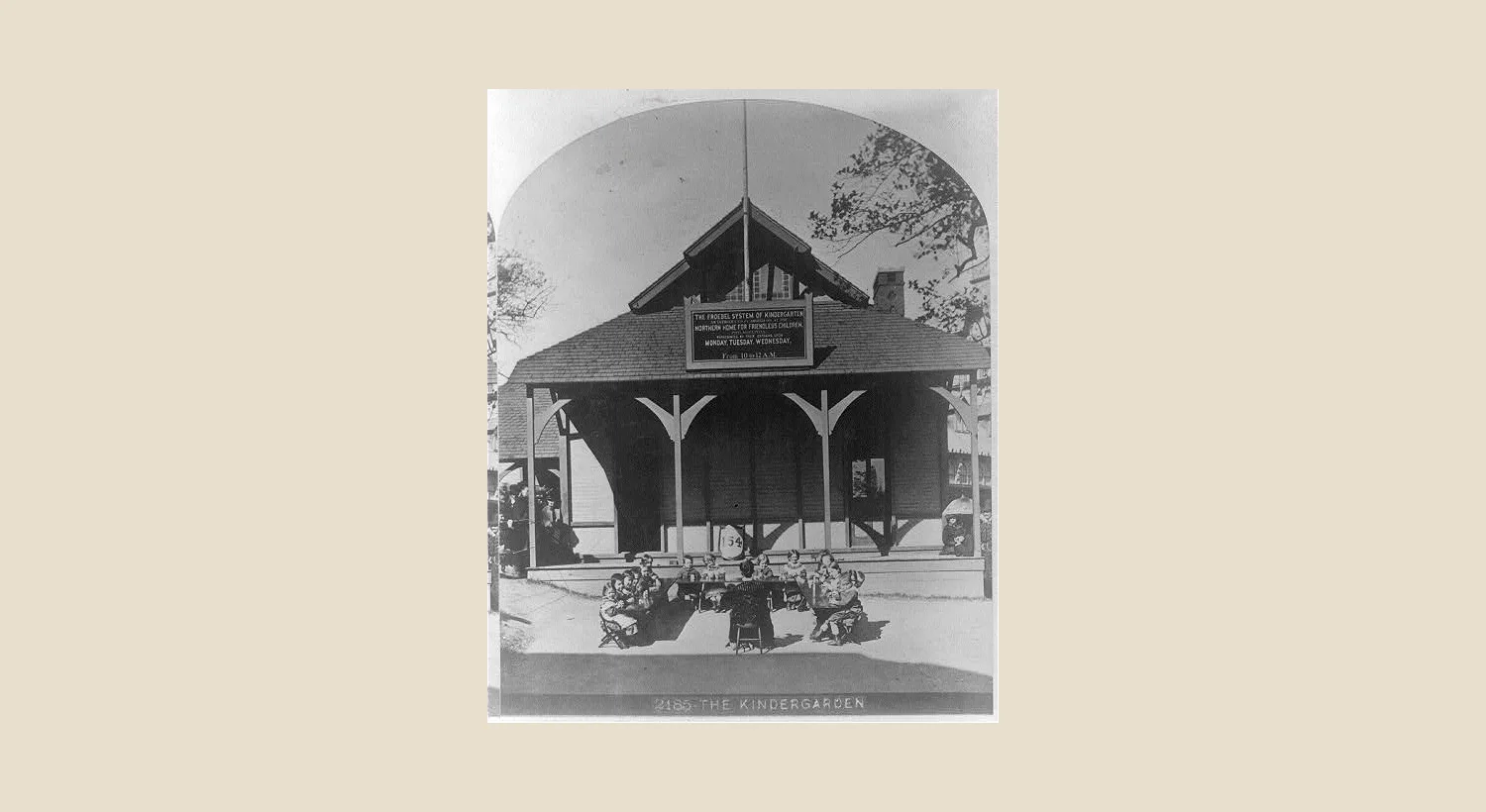
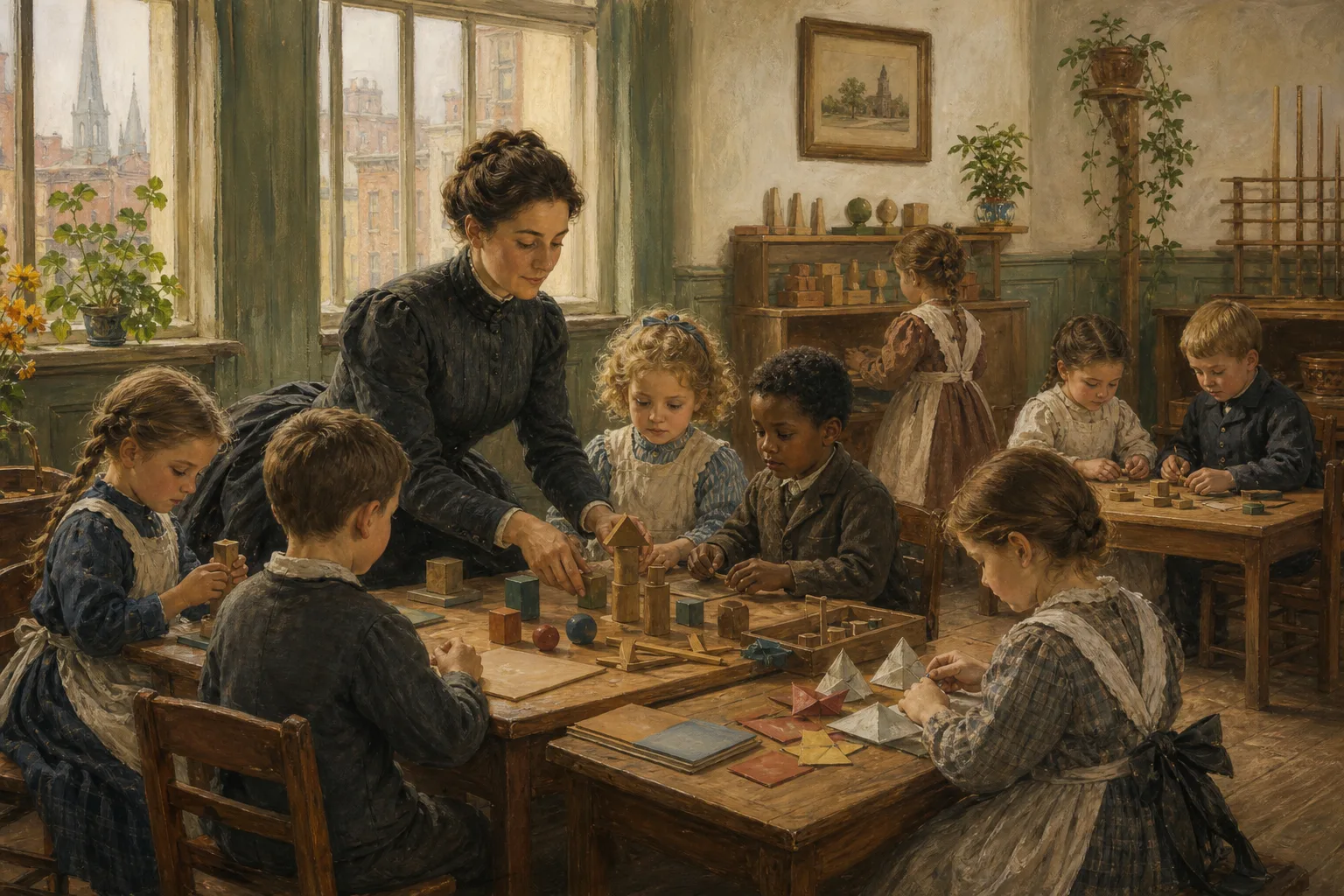
Blocks, balls, sticks, paper folding and other materials became visible symbols of kindergarten. Their purpose was relational: children explored shape, number, balance, movement and transformation.
The materials were structured, but the child’s activity mattered. A block could be arranged, compared and rebuilt. A ball could introduce motion and rhythm. Songs and group games linked physical movement with language and cooperation.
Later American kindergartens varied in how closely they followed Fröbel. Some preserved highly formal sequences. Others emphasized free play, social welfare or readiness for primary school. The name remained while the practice changed.
Kindergarten did not arrive as one finished American institution
One immigrant invented American kindergarten in a single moment.
Several educators introduced, translated, promoted and institutionalized the idea over decades.
Schurz, Peabody and Blow are central because their roles were different and connected.Kindergarten was simply playtime added before first grade.
The early movement treated guided play and activity as an educational method with its own theory and teacher preparation.
American programs later adapted that theory in many directions.Women built much of the movement
Kindergarten opened professional and civic space for women at a time when many educational leadership roles remained restricted. Women organized schools, trained teachers, wrote manuals and raised funds.
That opportunity came with limits. Kindergarten teaching could be praised as an extension of motherhood, a framing that supported the work while also narrowing women’s professional status and pay.
The movement therefore belongs to both immigration history and women’s history. German educational ideas traveled through female networks that were often treated as secondary even when they did the daily institutional work.
Settlement houses and reformers adapted kindergarten again
In industrial cities, settlement houses and charities used kindergarten as part of broader work with immigrant families. Programs could offer childcare, language exposure, nutrition and social services alongside education.
These institutions sometimes respected immigrant communities and sometimes approached them through paternalistic Americanization. The same classroom form could support children while also pressuring families to replace their home language and customs.
That tension is important. German-origin educational ideas were absorbed into American institutions that later helped promote English and national conformity among newer immigrants.
The word stayed German while the institution became American
That survival is especially striking beside the later restrictions described in anti-German sentiment during World War I.
“Kindergarten” is one of the most successful German words in American public life. Its survival does not mean the institution remained German in curriculum or identity.
By the twentieth century, kindergarten had become a familiar part of school systems. Its goals changed with child-development research, progressive education, school-readiness expectations and public policy.
The German origin remained visible in the name, while the program became locally administered and nationally varied. This is a common pattern in cultural transfer: a word can preserve an origin even after the institution has been thoroughly adapted.
What German immigrants contributed
German immigrants did not single-handedly create American early childhood education. They contributed a specific educational tradition, teachers with practical knowledge, materials, terminology and examples that reformers could build upon.
Their influence was strongest where ideas became institutions. A household kindergarten in Wisconsin, advocacy in Boston and a public program in St. Louis formed different parts of the pathway.
The result was not a perfect copy of Fröbel’s system. It was an American educational form shaped by German theory, immigrant transmission, women’s labor, urban reform and public-school administration.
Why the history still matters
Kindergarten is so familiar that its migration history has nearly disappeared. Recovering it changes the picture of German-American influence. The contribution was not only food, music, brewing or festivals. It also entered classrooms and ideas about childhood.
The history also offers a useful caution. Cultural influence is rarely the work of one famous founder. It moves through teachers, translators, objects, schools and public decisions.
A careful account can honor Margarethe Schurz without erasing Peabody, Blow, Fröbel or the many unnamed teachers who made kindergarten an ordinary part of American education.
Teacher training made the idea durable
A kindergarten could not spread through buildings alone. It required adults who understood how songs, movement, stories and materials fit together. Training schools, manuals and observation therefore became central to the movement.
This professional network explains why the idea survived beyond the first celebrated classrooms. A teacher trained in one city could establish a program elsewhere, supervise other teachers or adapt the method for a public-school system. The network also created disagreements about how faithfully American programs should follow Fröbel.
Some educators treated the gifts and occupations as a carefully ordered sequence. Others believed rigid use defeated the purpose of active learning. These debates were not evidence that kindergarten had failed. They show that cultural transfer involved interpretation from the beginning.
Public adoption changed who kindergarten served
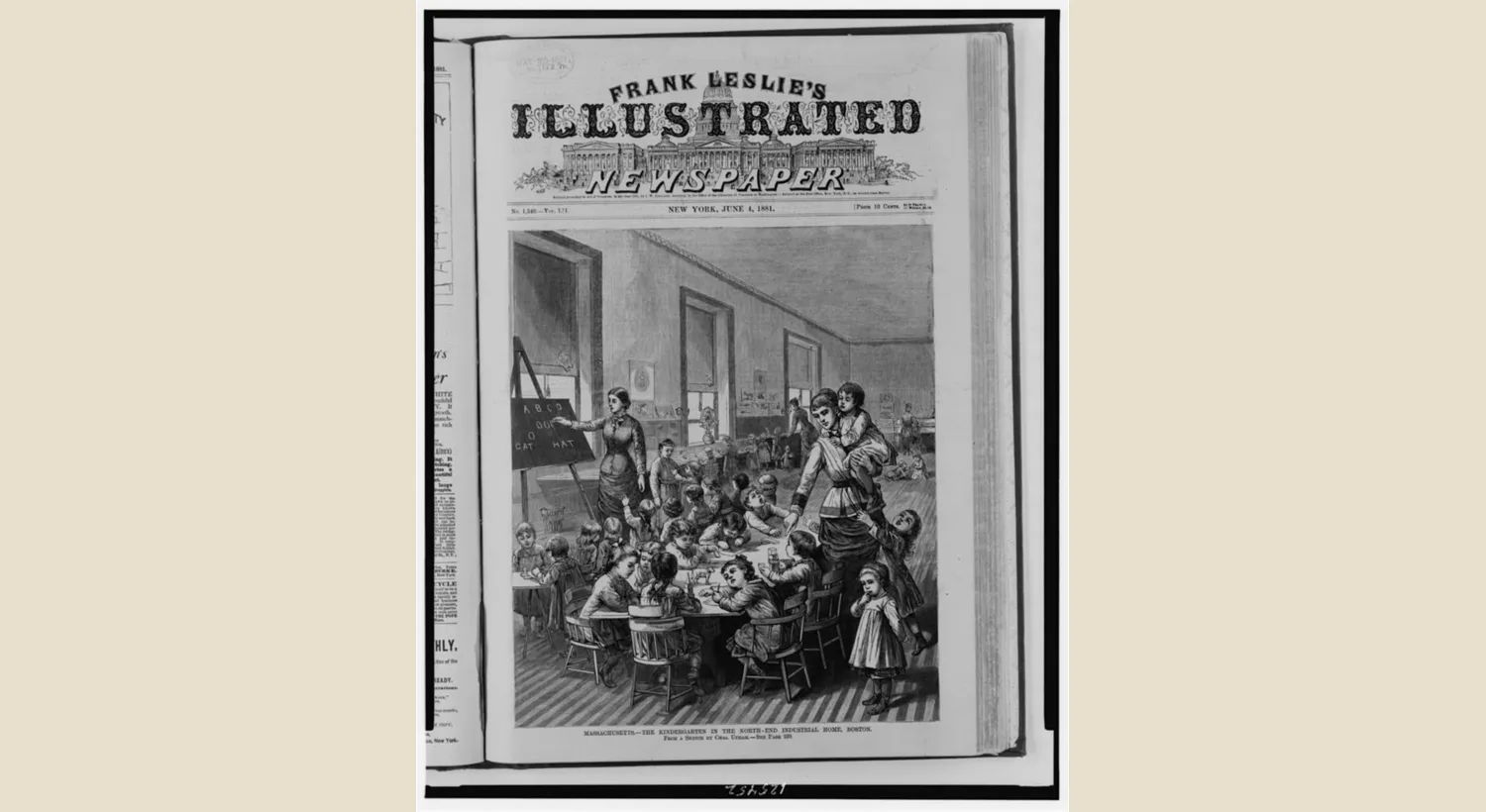
Private and charitable kindergartens often depended on tuition, philanthropy or reform organizations. Public-school adoption promised wider access, but it also brought administrative control. School boards had to decide who qualified, how teachers would be paid, which language would be used and how kindergarten related to primary grades.
Those choices could widen opportunity while narrowing cultural difference. A German-origin method might be welcomed because it helped children adapt to English-language schooling. Immigrant families could value the classroom and still experience pressure to leave home language outside it.
The same institution therefore carried two stories: German educational influence on the United States, and American institutions reshaping immigrant knowledge to fit national goals.
The movement influenced ideas beyond one school year
Kindergarten helped strengthen the claim that early childhood was a distinct developmental period. It encouraged educators to take play, movement, objects and social interaction seriously as forms of learning.
Later programs did not preserve every Fröbelian practice. Child-development research, progressive education and local school priorities changed the classroom. Yet the broad principle—that young children should learn through age-appropriate activity rather than only recitation—became deeply influential.
This legacy should be described with proportion. Kindergarten did not solve inequality, and early programs were not universally accessible. The movement nevertheless gave American educators a durable institutional language for discussing the education of young children.
A better way to describe the contribution
The most accurate sentence is not that one German immigrant “gave” kindergarten to America. German-speaking educators transmitted a developed educational tradition; American advocates translated it; women built training networks; public systems institutionalized it; and later teachers revised it.
That wording is less dramatic than a founder story, but it gives more people their real place in the history. It also shows why immigrant influence can be powerful even when the resulting institution no longer looks foreign.
An optional expression after the education history
Carry a German-American connection forward
These are modern heritage designs, not classroom materials or claims of educational authenticity.


Frequently asked questions
Common questions
Who opened the first kindergarten in America?
Margarethe Schurz is associated with an early German-language kindergarten in Watertown, Wisconsin; other “first” labels apply to English-language advocacy and public-school programs.
Was kindergarten invented in America?
No. Friedrich Fröbel developed the concept in Germany; American educators adapted it.
Why is the German word still used?
The institution spread under its German name even as American programs changed its curriculum and administration.