
On this pageChoose a small, specific first collection
A family story is easiest to lose when everyone assumes someone else already knows it. Preservation does not require a finished genealogy book. It begins by capturing voices, identifying objects, labeling uncertainty and making copies that another relative can understand without the original organizer present.
If you have only a few names or an unlabeled box, first use the German roots beginner guide to create a one-page family snapshot and choose the first unanswered question.
A seven-step preservation workflow
Set the scope
Choose one person, branch, box or event and define what a finished first pass will include.
Make an inventory
List the items before rearranging them, including their source, current holder and physical condition.
Capture the story
Record memories and family explanations with consent, keeping the speaker’s wording and uncertainty visible.
Create preservation copies
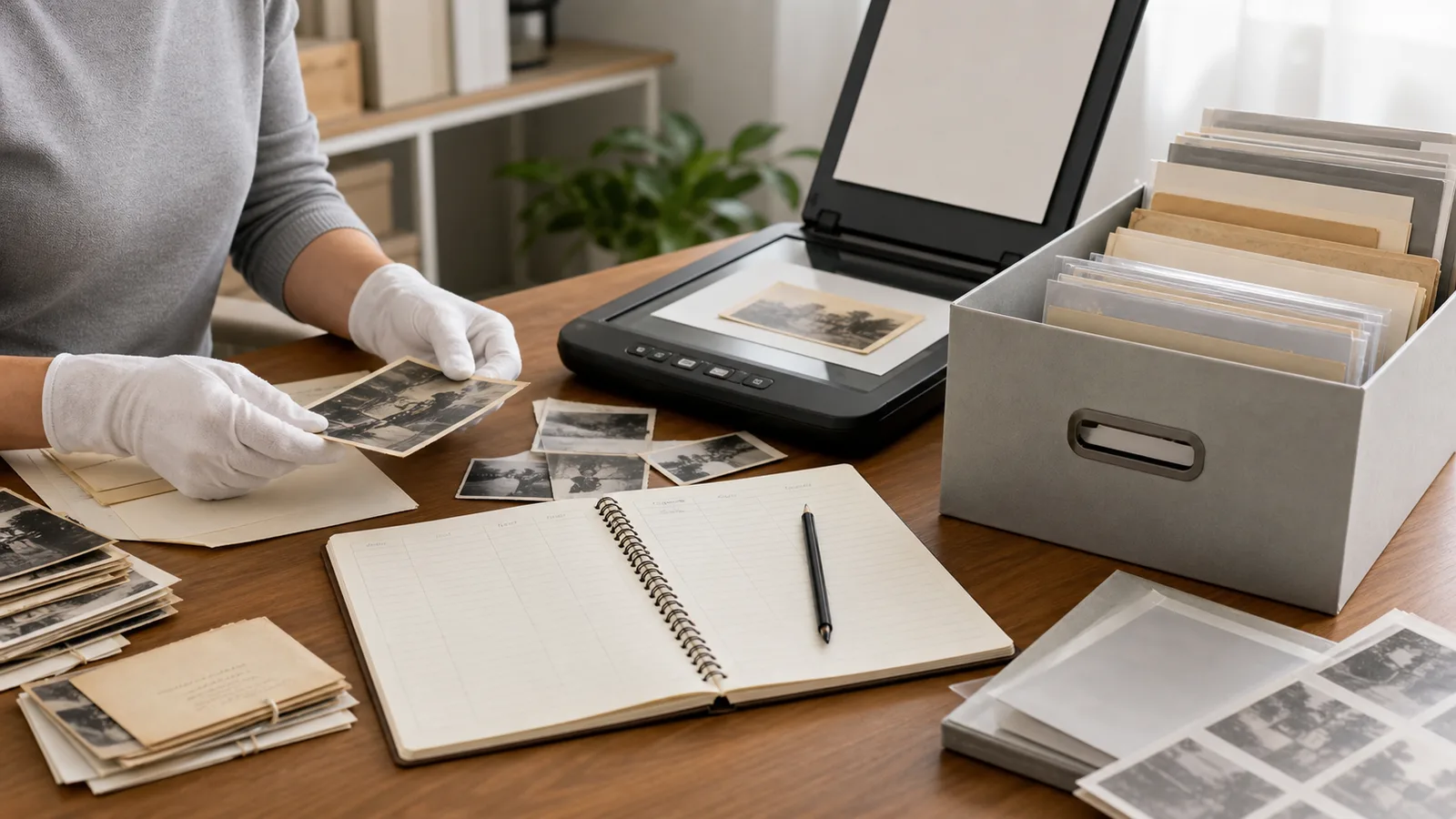
Scan photographs and papers without discarding or altering the originals.
Add names and context
Use a stable filename plus an index that records people, place, approximate date, source and confidence.
Back up and restrict
Keep copies in separate locations and document which material is private, family-only or shareable.
Publish a small finding aid
Give relatives a one-page folder map or inventory so they can discover and understand the collection.
Choose a small, specific first collection
Start with one person, one branch, one box or one event. A narrow scope makes it possible to finish a first pass and exposes the naming and storage decisions you will need before the archive grows.
Create a simple inventory before rearranging anything. Record what exists, where it came from and who currently holds it. Provenance can be as important as the image or story itself.
Do not begin by renaming every file or separating photographs from the envelopes in which they arrived. First photograph or note the existing order. An envelope, album page, handwritten grouping or box label may show relationships that become invisible once the items are sorted by date.
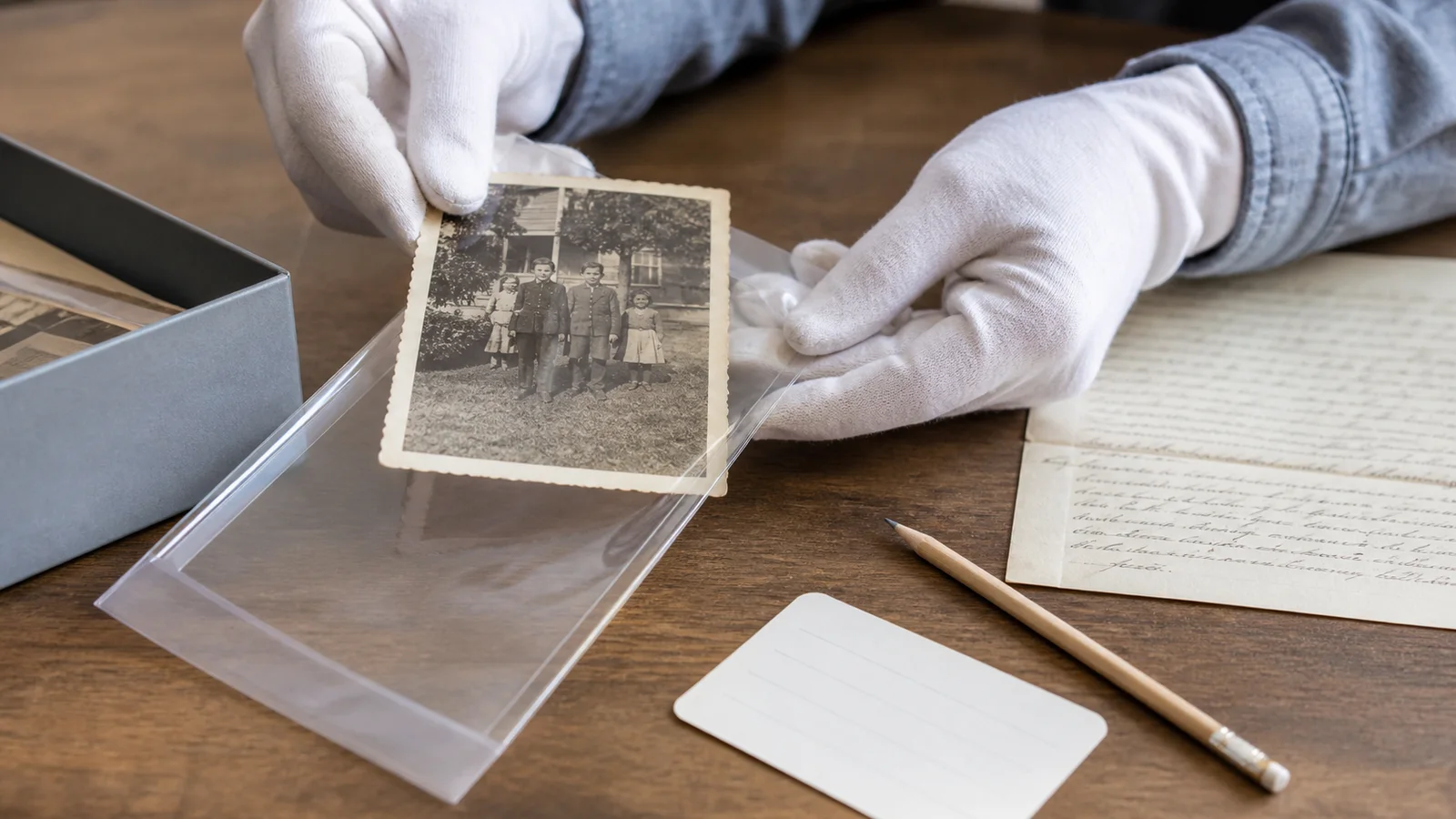
After documenting that original order, use preservation tools only when they match the material. Photo-safe enclosures help protect ordinary loose prints; a flatbed scanner can create access copies without feeding originals through rollers. For oral history, a tested phone may be enough, but a dedicated recorder can reduce interruptions and a phone tripod can keep video steady. Oversized, bound, damaged or unusually fragile items may require a conservator or specialist instead.
Browse Acid-Free Photo Storage
Search Walmart for photo-safe boxes and sleeves, then compare materials, dimensions, capacity, seller, and return terms.
Best for: Families organizing loose photographs after documenting their original orderBrowse Flatbed Photo Scanners
Search Amazon for flatbed scanners and compare scan area, optical resolution, software compatibility, file formats, seller, and returns.
Best for: Families scanning loose photographs, letters, and documents that fit safely on a flat bedBrowse Digital Voice Recorders
Search Amazon for a recorder and compare controls, supported file formats, battery life, storage, and computer transfer.
Best for: Families recording a focused conversation in a quiet roomBrowse Phone Tripods
Search Walmart for an adjustable phone tripod and compare device fit, height, stability, controls, seller, and return terms.
Best for: Families recording a seated video interview with a phone they already know how to useGive the first collection a finish line. For example: “Twenty photographs from Oma Ruth’s album, scanned on both sides, with known names and a one-page index.” That scope is small enough to complete and clear enough for another relative to review.
The broader reconnection workflow can help you decide whether the next lane should be records, language, food, place or community after this first collection is stable.
Record memory without turning it into proof
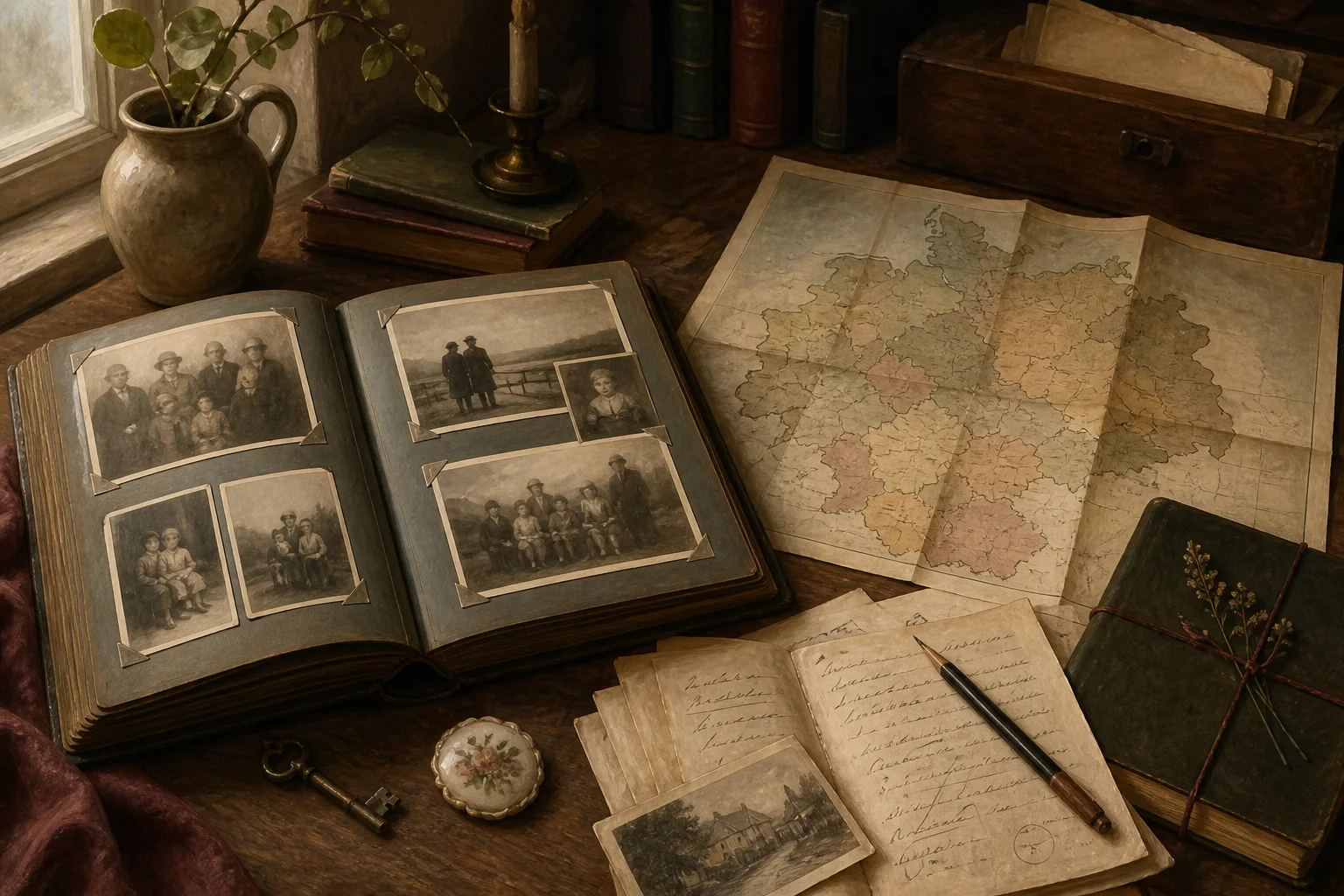
Ask open questions and preserve the speaker’s wording. Record uncertainty, pauses and alternative versions when they matter. Do not silently rewrite a remembered village, date or name to match the first search result.
After the interview, create a separate verification note. Family memory is valuable evidence about relationships and lived experience, but records are needed for precise genealogical claims.
If two relatives remember an event differently, preserve both accounts with the speaker and date attached. Do not merge them into a smooth narrative merely because one version reads better. A later record may clarify part of the disagreement, while the difference itself may reveal how the family understood the event.
Consent also belongs in the archive. Record whether an interview is private, family-only or available for wider use, and revisit that choice if sensitive material appeared unexpectedly. For a structured conversation, use the questions for Opa and Oma guide before pressing record.
Digitize and label responsibly
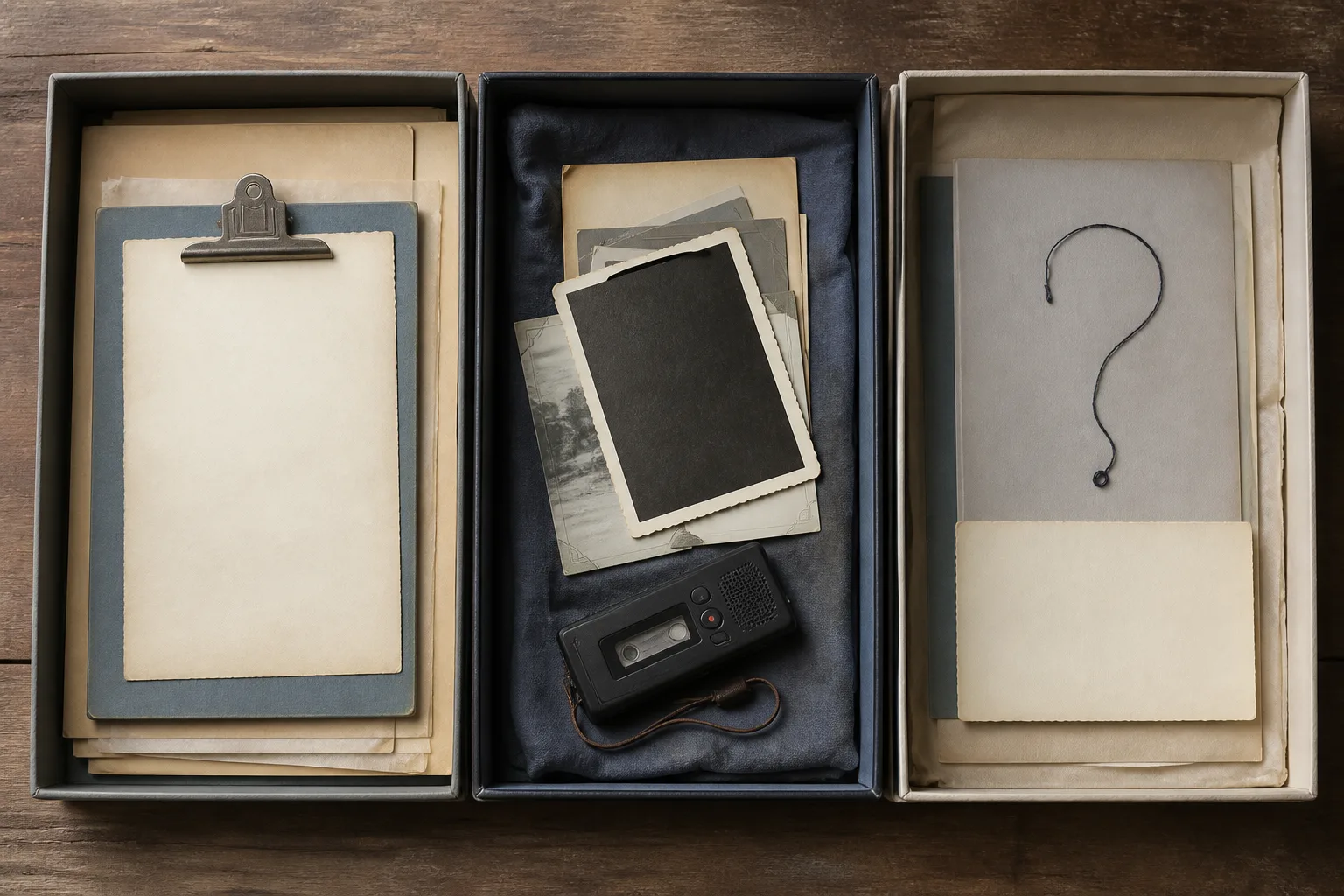
Scan photographs and papers at a useful resolution, keep filenames stable and store descriptive metadata outside the image as well as in the folder structure. Avoid destructive cleaning, lamination and adhesives on originals.
Scan the back of a photograph when it contains handwriting, a studio mark or residue from an earlier album position. Keep the front and back connected through the same base filename. If an item is fragile, curled, moldy or stuck to another surface, stop rather than forcing it flat; a conservator or archive may be able to advise on safe handling.
A practical filename can include date, family name, place and sequence number, but filenames alone are not enough. Maintain a small index explaining abbreviations, uncertain dates and the source of each item.
Use brackets or a confidence field for uncertainty instead of making a guess look settled. “Possibly Anna Weber, about 1910; identified by Mark Weber in 2026” is more useful than a confident filename with no source. Record historical place wording as it appears, then add the modern place name separately when verified.
This distinction mirrors German ancestry versus German heritage: records can establish relationships and places, while stories and practices preserve what those connections meant in family life.
Protect privacy and access
Living people may not want medical, financial, adoption or relationship information shared broadly. Decide what is family-private, what may be shared with named relatives and what may eventually be public.
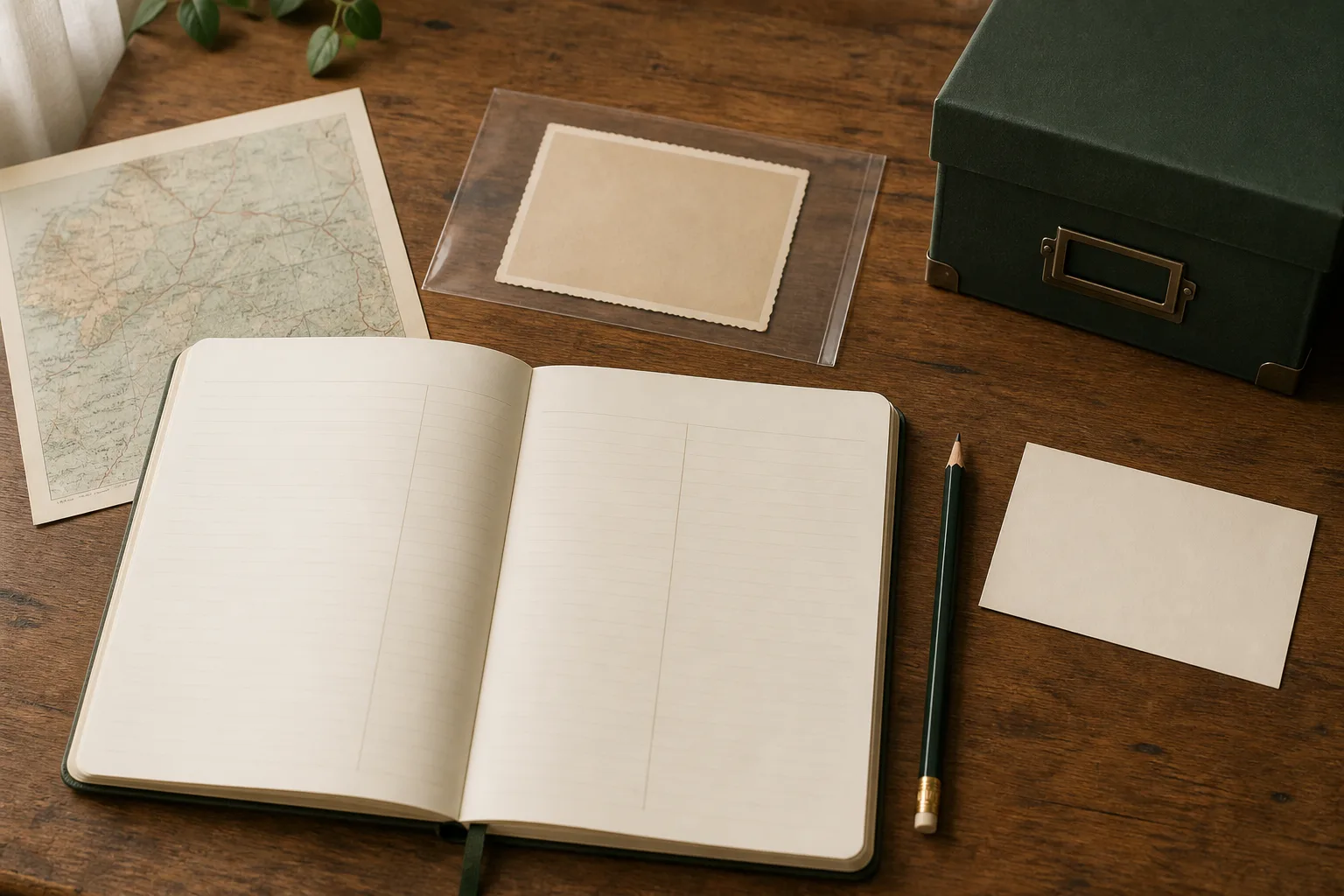
Keep at least two digital copies in different locations. Give one trusted relative the folder map and basic instructions. An archive no one else can open is not truly preserved.
Check the copies, not only the copy command. Open a sample of photographs, play the full beginning and ending of an audio file, and confirm that the index traveled with the media. Storage devices and online services change, so schedule a simple annual check and migrate files before a device or format becomes difficult to use.
Privacy labels should be visible in the index rather than remembered only by the organizer. Avoid placing medical, adoption, financial or relationship details about living people into public filenames or shared folder titles. When access is uncertain, preserve privately first and make a later sharing decision.
Share a useful first version
A one-page timeline, labeled photo folder or ten-minute audio excerpt can be more useful than an unfinished grand project. Share the first coherent unit and invite corrections with a clear method for submitting them.
Once the archive is understandable, sharing German heritage with grandchildren offers ways to introduce one story or object without overwhelming the relationship.
Preservation is iterative. Keep the original memory, the later correction and the source that supports the correction rather than replacing one layer with another.
Before you call the first collection preserved
- The original order was documented
Envelope, album, folder and box relationships were recorded before rearrangement.
- Every item has provenance
The index says who supplied it, who holds the original and when the copy was made.
- Uncertainty remains visible
Approximate dates, doubtful identities and conflicting memories are labeled rather than silently resolved.
- Originals are protected
Scanning did not lead to unnecessary disposal, lamination, adhesive labels or damaging cleaning.
- Access choices are recorded
Private and family-only material is separated from anything intended for public sharing.
- A second checked copy exists
Another copy is stored separately and a sample of its files has been opened successfully.
- Someone else can navigate it
A trusted relative has the index, folder map and enough context to continue the work.
A careful next step
Pick one photograph or document today. Write who supplied it, what the family says it shows, what remains uncertain and where the original is stored. That single complete record is the model for the rest of the archive.
Frequently asked questions
Common questions
Should I correct a relative during an interview?
Usually no. Record the memory first, then add a separate research note if records disagree.
Can I discard originals after scanning?
Not by default. A scan improves access but may not preserve physical evidence, handwriting, paper, annotations or provenance.
What information should every file include?
At minimum include who or what it shows, an approximate date, place, source, current owner and confidence level.