
On this pageDecide what only you can add
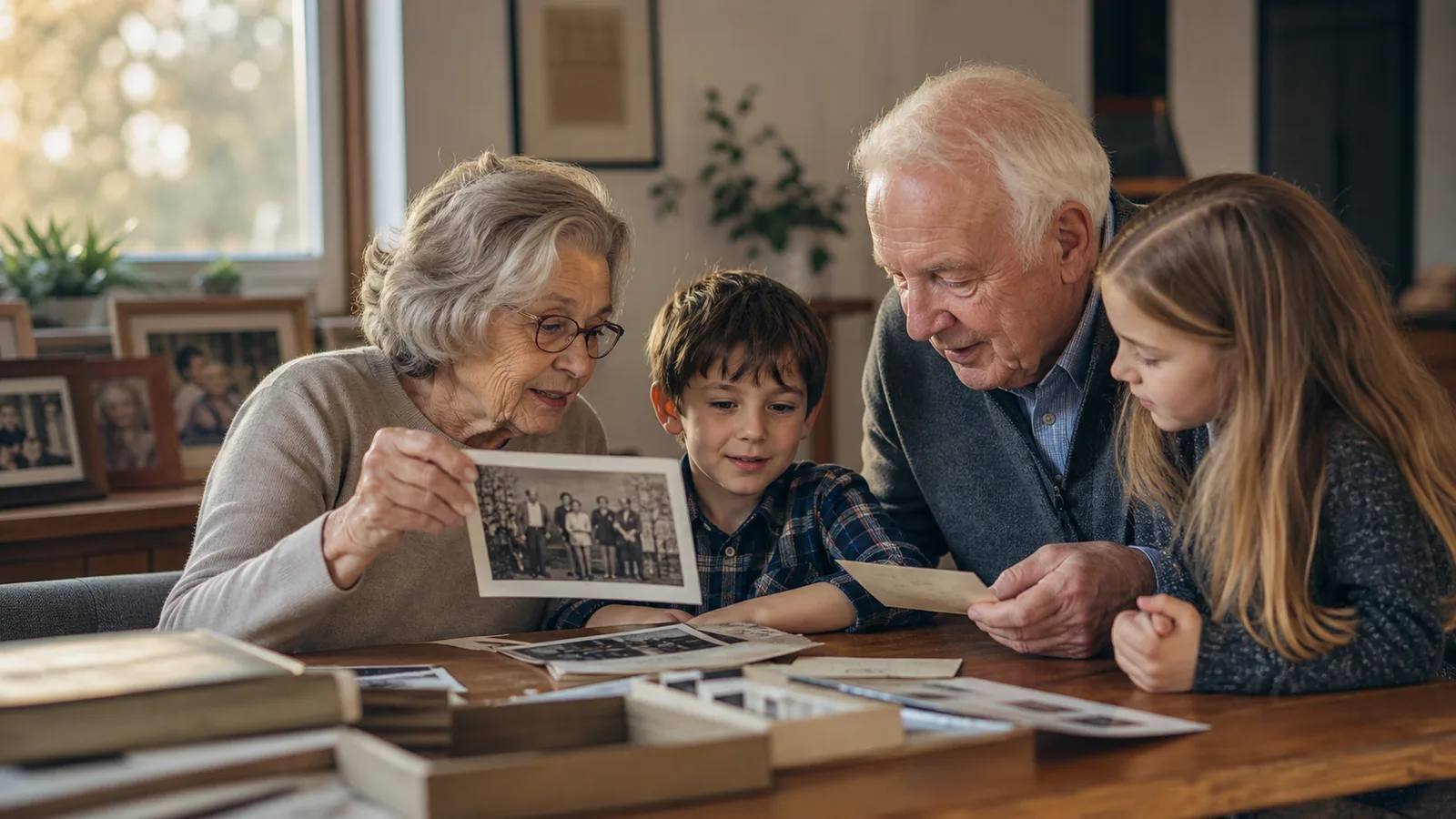
Grandparents often hold the details that make heritage personal: which relative used a nickname, why a dish appeared on one holiday, what a hometown sounded like, or which family object survived a move. The most useful way to share those details is not to deliver everything at once. It is to create small moments in which a grandchild can hear, ask, make and choose.
If the family uses “German” in several different ways, German ancestry versus German heritage gives you simple language for separating origin, memory and present-day practice.
A grandparent’s role is different from a parent’s. You can offer memory, time and a direct connection to an older generation. You do not need to control how the household defines identity or how quickly the grandchild becomes interested.
Decide what only you can add
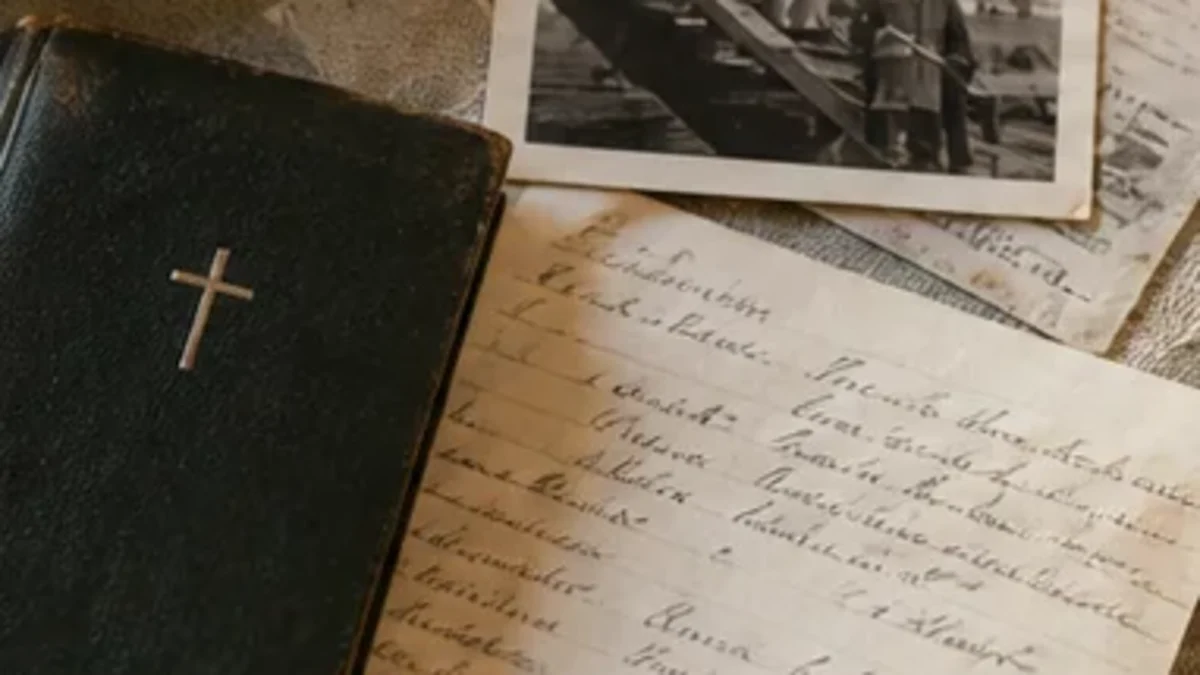
Begin with material that would be hard to recover without you. That may be the identity of people in a photograph, the sound of a relative’s name, the reason a family moved, a recipe variation, a saying, or the memory of how a tradition felt inside the household.
Separate memory from research as you speak:
- “I remember…” identifies your own experience.
- “My mother told me…” identifies an inherited account.
- “A record later showed…” identifies documented information.
- “I am not sure, but…” preserves uncertainty instead of hiding it.
This language is simple, but it protects the grandchild from inheriting a confident story that no one can later trace. It also gives them permission to ask questions without appearing disrespectful.
Ask the parents before making a plan
When names or dates are still unclear, use the German roots starting guide to label what is documented, remembered and assumed before presenting a family story as fact.
Grandparents do not need formal permission to tell a family story during an ordinary visit, but coordination matters when an activity affects the household. Ask before arranging religious observances, posting photographs, serving unfamiliar foods, creating travel plans, recording a child, or introducing a tradition the parents have chosen not to continue.
A useful question is: “I would like to share this part of our family story. Is there a way that would work well for you and the children?” That keeps the conversation practical. It also makes space for allergies, privacy limits, schedules, mixed-family traditions and previous experiences you may not know about.
Parents may prefer a different word, timing or level of detail. That does not erase the grandparent’s history. It simply recognizes that the parents manage the child’s daily life.
A grandparent-to-grandchild heritage routine
Choose one path and repeat it lightly. The aim is familiarity and trust, not coverage.
Pick one story-sized subject
Choose one person, object, place, phrase, recipe or tradition that can be explained in a few minutes.
Give the relationship first
Tell the grandchild who the subject was to you or to their parent before adding dates and wider history.
Add one shared action
Look at a photograph, make one step of a recipe, mark a map, repeat a song line, label an object or compare two family versions.
Invite one real question
Ask what the grandchild notices or wants to know. Do not quiz them on what they were supposed to remember.
Leave something understandable
Send a labeled copy, short note, voice recording or recipe card with enough context that it still makes sense later.
Return only when there is room
Continue at the next visit or call if interest remains. Let the relationship lead the pace.
Choose an activity that fits the relationship
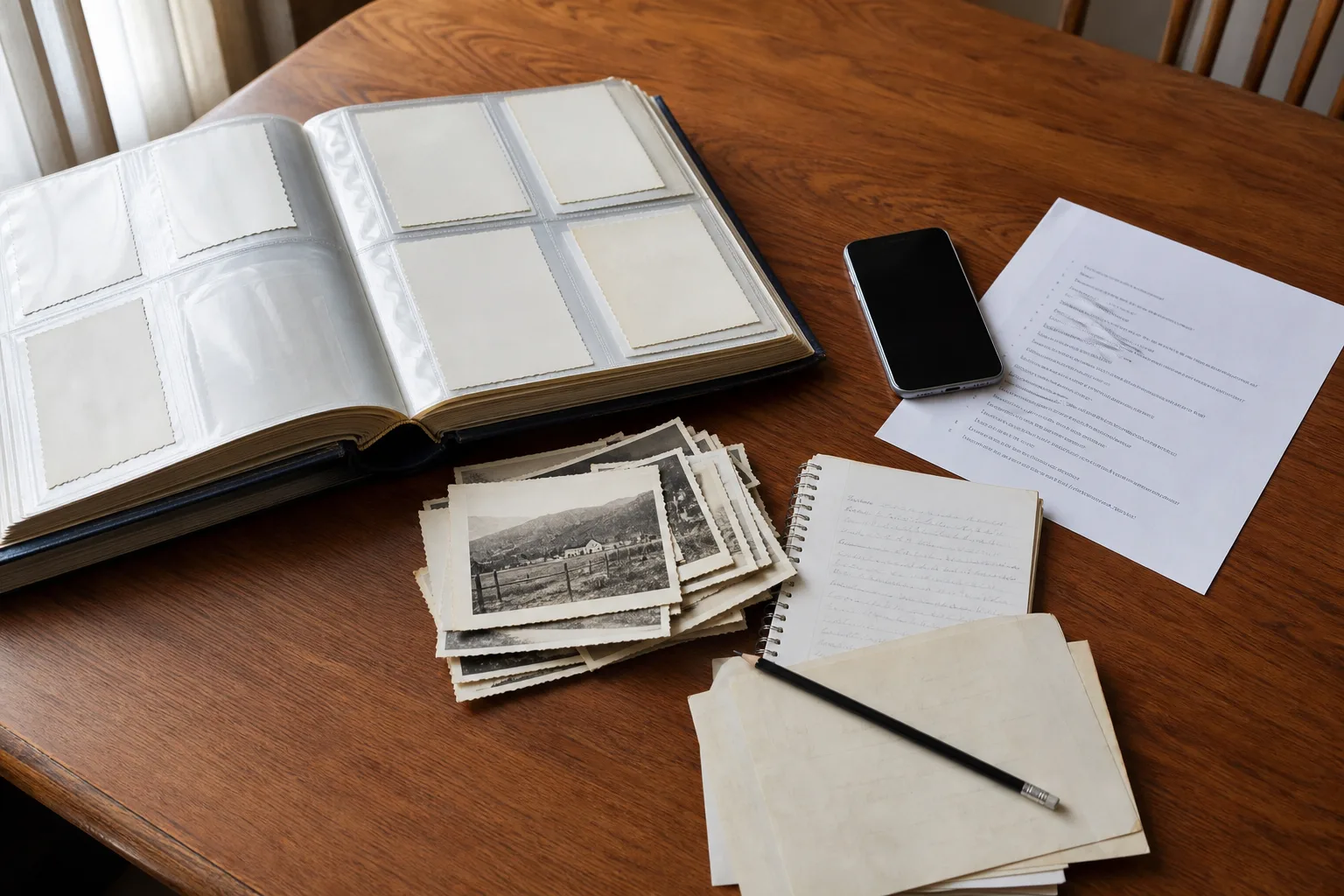
For younger grandchildren, a physical object and a short story usually work better than a long explanation. Let them hold a safe copy of a photograph, stir an ingredient, point to a town on a map or hear a familiar family word in a sentence.
School-age grandchildren can help caption photographs, compare how holidays were observed in two generations, build a simple family timeline, or ask prepared questions. They may also enjoy finding what changed after the family came to the United States. The point is not to prove that one version is more authentic; it is to notice adaptation.
Teenagers may value choice, privacy and intellectual honesty more than a planned “heritage activity.” Offer source material, explain what remains uncertain and invite them to help with a task that has a real output: digitizing one album, checking a place name, editing a transcript or choosing which recording should remain private.
Adult grandchildren may finally ask questions that did not interest them earlier. Resist the urge to answer every missed opportunity in one sitting. Start with the question they brought and preserve the rest in a form they can return to.
Share language as a living detail
A grandparent may be the last person in the family who remembers a pronunciation, prayer, song, dialect word or affectionate phrase. Say it clearly, explain where you heard it and note whether it was standard German, regional speech or simply your family’s wording when you know the difference.
The loss of wider fluency has a history of its own. Why a German-American family may have stopped speaking German can help an older grandchild place a surviving word inside that generational story.
A grandchild does not need to repeat the word perfectly for the exchange to matter. Record the pronunciation with permission, write the spelling you believe is correct, and mark uncertainty where needed. Avoid decorative translations that sound appealing but have not been checked.
The same care applies to Opa and Oma. These words can carry a relationship even in a family that no longer speaks German. They should not be treated as proof that the family retained every other part of the language or culture.
Keep distance from becoming absence
When grandchildren live far away, heritage can still travel in small units:
- a photograph with a one-minute voice note;
- a short video call centered on one object;
- a photocopy of a recipe with handwritten context;
- a postcard from a family town or community;
- one question sent in advance, answered when there is time;
- a shared digital folder containing copies, not the only surviving originals.
Avoid sending an unexplained folder containing hundreds of files. Volume is not the same as preservation. A grandchild is more likely to understand “This is your great-grandfather at the bakery in 1948; I identified him” than scan_0047.jpg among dozens of unlabeled images.
When technology is difficult, ask a parent or another relative to help with copying and storage. The grandparent’s most important contribution is the context, not mastery of a particular app.
Let low interest stay low-pressure
A grandchild may be tired, shy, busy, skeptical or more interested in another side of the family. That is not rejection of the grandparent. Shorten the activity and protect the relationship.
For a menu of alternatives, meaningful ways to celebrate German roots includes private, creative and community-based options rather than one required tradition.
One sentence can be enough: “This photograph matters because that was my Oma, and she taught me this recipe.” Then let the conversation move on. The labeled photograph can wait. A story preserved without pressure may become valuable years later.
If the grandchild disagrees with a family belief or does not want a story shared publicly, listen. Passing heritage forward does not require passing forward every expectation attached to it.
Offer the story without taking ownership of the child
Do
- Ask parents about schedules, privacy, food restrictions and household boundaries
- Tell the grandchild which details are memory, family tradition or documented fact
- Use copies for handling and preserve the original separately
- Make room for the child’s other grandparents, cultures and family histories
Avoid
- Compete with another side of the family for cultural importance
- Use gifts, language practice or public participation as proof of affection
- Post a grandchild’s image, recording or family detail without permission
- Correct every question into a lecture or treat uncertainty as disrespect
Know when a conversation should become an interview
An ordinary story at the table does not need equipment or a formal question list. A planned recording is different. Once the family intends to preserve a person’s voice, discuss consent, access and sensitive details before pressing record.
Questions to ask your German Opa and Oma provides that consent-first process. It helps the narrator decide what may be recorded, who may hear it and what should remain private. Use it when the conversation is becoming a family source rather than a passing moment.
Parents who want to build these ideas into everyday household routines can use how to pass German heritage to your children. That guide owns the parent-led plan; this one protects the distinct contribution a grandparent can make.
A respectful grandparent plan is ready when
- You chose one specific subject
The story is small enough to share without overwhelming the visit or call.
- The parents know the plan
Any schedule, recording, food, religious or privacy concern has been discussed.
- The grandchild can participate by choice
They may ask, make, listen, help or decline without being tested.
- Memory and fact are labeled
You have not turned an uncertain recollection into a definite family claim.
- Something understandable remains
A labeled copy, note or recording has enough context to be useful later.
- The relationship still comes first
The activity ends before heritage becomes an argument or obligation.
Grandparents do not need to recreate an entire culture for the next generation. They can do something more personal: identify the people, explain the family version, preserve the sound of a voice and show that the story is offered with care rather than demanded as proof.
Optional gifts for the storyteller
A small nod to Opa and Oma
These family designs fit best after the relationship and story are already present; they are not a substitute for time together.

Frequently asked questions
Common questions
What if my grandchild is not interested in German heritage?
Keep the invitation small and specific, then let it rest. Save names, photographs and stories with clear labels so the grandchild can return later without feeling that they failed a family test.
Can I teach a tradition the parents do not practice?
Ask first, especially when the practice affects religion, food restrictions, schedules, privacy or public posting. Grandparents can add family context without taking over household decisions.
What works when grandchildren live far away?
Use short video calls, a photograph with a voice note, a mailed copy of a recipe, or one recorded story at a time. A small recurring exchange is easier to sustain than a large digital archive sent without explanation.
Should I speak German even if my grandchildren do not understand it?
A few familiar words can be meaningful when you explain them and use them naturally. Do not make pronunciation or memorization a condition for belonging.